The Revolution Will Be Screen-Printed: How Protest Aesthetics Became the New Underground Currency

Beyond the Barricades: When Resistance Gets a Rebrand

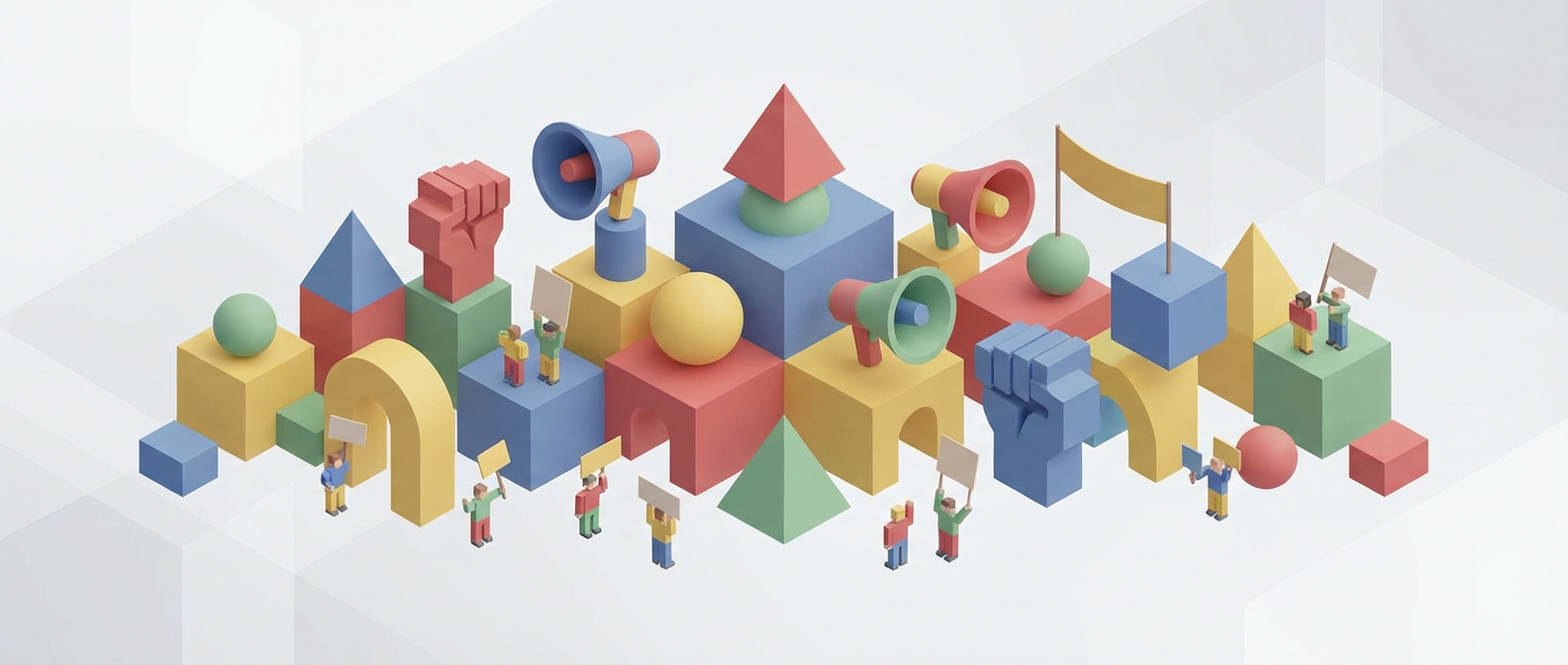
Walk through any major city right now and you’ll spot them: the wheat-paste posters with razor-sharp typography, the hand-painted banners that somehow look more polished than most corporate campaigns, the protest signs that double as museum-worthy design pieces. What we’re witnessing isn’t just political mobilization. It’s the full aesthetic weaponization of dissent.
The Revolution Will Be Screen-Printed: How Protest Aesthetics Became the New Underground Currency

This isn’t your parents’ protest art. Gone are the days of hastily scrawled cardboard and spray-painted bed sheets. Today’s activist design borrows from street art, luxury branding, and punk zine culture with surgical precision. The visual language of resistance has transformed into something far more sophisticated than most people realize.

Take the work coming out of collectives like Justseeds or the Design Action Collective. These aren’t amateur hour operations. We’re talking about designers who cut their teeth at agencies before turning their skills toward dismantling the very systems that trained them. The irony is delicious. The execution? Flawless.
Illustration for The Revolution Will Be Screen-Printed: How Protest Aesthetics Became the New Underground Currency

The Toolkit of Tactical Media

Smart activists know that aesthetics aren’t superficial. They’re strategic. The visual codes of protest communicate faster than any manifesto, create instant community markers, and most importantly, they get shared. In the attention economy, ugly doesn’t trend.

The current gold standard involves clean sans-serif typography, bold color blocking, and imagery that works equally well on a poster and as an Instagram story. Think about the visual consistency of movements like Extinction Rebellion with their hourglass logo, or the way Black Lives Matter imagery created a cohesive visual ecosystem across thousands of independent creators.

But here’s what’s really wild: the tools themselves are being democratized. Canva templates for revolution. Adobe Creative Suite meetups that double as organizing spaces. TikTok tutorials on banner-making that rack up millions of views. The masses have seized the means of aesthetic production, and they’re using them better than most marketing departments.

The underground printmaking scene deserves special mention here. Studios like Spudnik Press in Chicago or Women’s Studio Workshop in New York are churning out work that would make any gallery curator weep. Screen-printing has become the vinyl record of visual media: tactile, authentic, and impossible to replicate digitally.

When the Medium Becomes the Movement

But there’s a tension brewing beneath all this beautiful resistance. As protest aesthetics get slicker, they also get easier to steal. Nike’s Colin Kaepernick campaign, anyone? When your revolutionary imagery looks identical to brand activation, what exactly are you revolting against?

The smartest collectives are already thinking three moves ahead. Groups like the Guerrilla Girls have been playing this game for decades, constantly shifting their visual language to stay ahead of commercial appropriation. Their gorilla masks weren’t just about anonymity, they were about creating imagery too weird and specific for corporate consumption.

Meanwhile, newer collectives are building obsolescence into their aesthetics. They’ll flood social media with a particular visual style, watch it get picked up by brands, then immediately pivot to something completely different. It’s aesthetic guerrilla warfare, and honestly, it’s brilliant to watch unfold in real time.

The Economics of Engagement

Let’s talk money, because everything always comes back to money. Professional activist design costs resources that many grassroots movements simply don’t have. This creates a two-tier system where well-funded causes get museum-quality visuals while scrappier organizations are stuck with whatever volunteers can produce on their lunch breaks.

The response has been typically ingenious. Mutual aid networks for design services. Open-source graphic libraries. Skill-sharing workshops that double as political education. The same gift economy principles that fuel underground music scenes are being applied to visual resistance.

Some of the most effective work is coming out of these resource-constrained environments. When you can’t afford a professional photographer, you get creative with phone cameras and found imagery. When you can’t hire a graphic designer, you learn to make beauty from whatever tools you have access to. Constraints breed innovation, and the aesthetic results often surpass anything that comes out of traditional design processes.

Future Visions and Present Tensions

The next frontier is already emerging in augmented reality activism and NFT-based organizing tools. Imagine protest signs that come alive when viewed through a phone camera, or blockchain-verified authenticity for movement imagery. The technology exists. The question is whether underground communities will embrace it or reject it as another Silicon Valley colonization attempt.

What excites me most is watching how global movements are cross-pollinating aesthetically. Hong Kong umbrella imagery showing up in climate protests. Indigenous design principles informing anti-pipeline campaigns. Black Lives Matter typography inspiring labor organizing visuals. We’re witnessing the birth of a truly international visual language of resistance.

The challenge moving forward will be maintaining aesthetic integrity while scaling impact. How do you keep protest design sharp and subversive when everyone from politicians to pizza companies wants to borrow your visual vocabulary? How do you preserve the underground when the underground keeps getting excavated and strip-mined by the mainstream?

These questions matter more than they might initially seem. In a world where politics is increasingly about narrative and aesthetics, the visual language of resistance becomes a form of power unto itself. The groups that master this language will shape how we see current movements, but also how we imagine future possibilities for change. Keep watching the walls, the screens, and the spaces between. That’s where the real revolution is being designed.
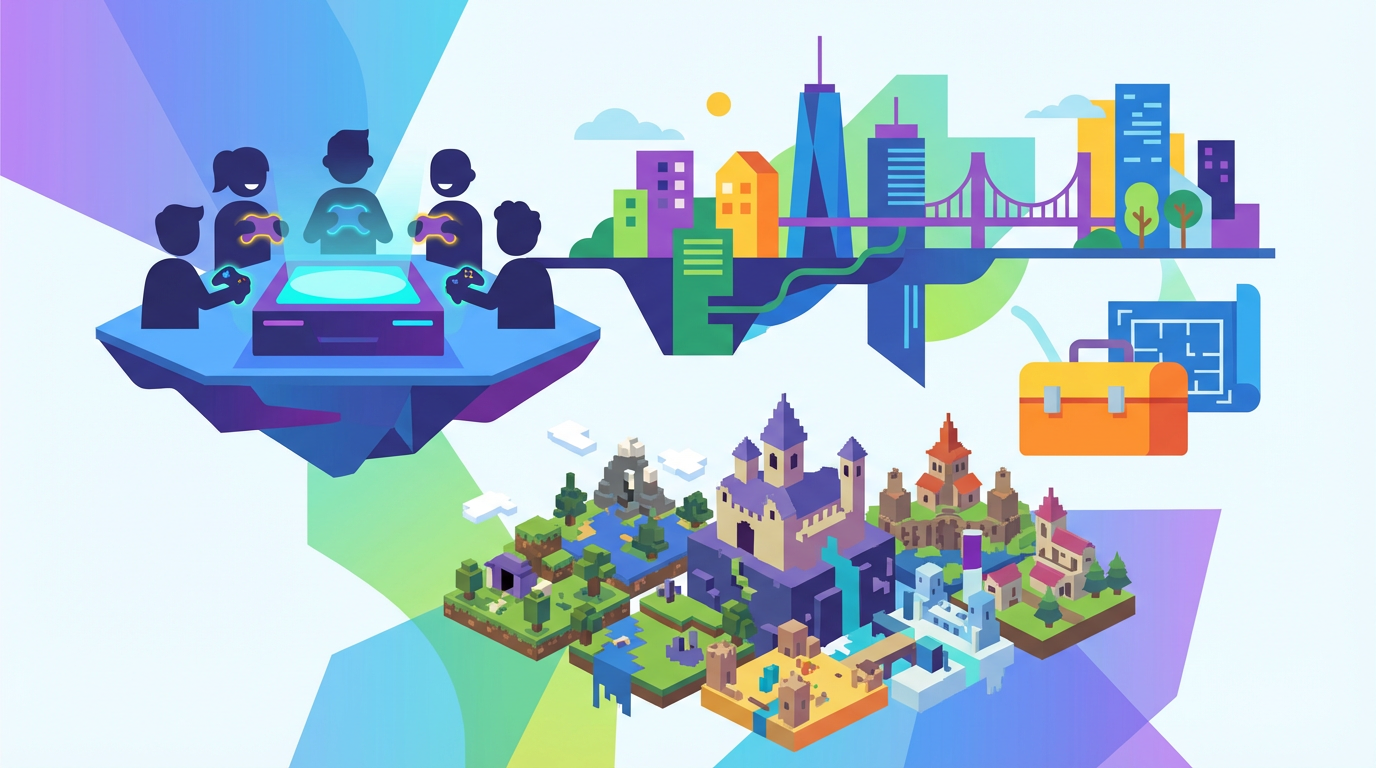

The Death and Resurrection of Virtual Worlds: How Minecraft Saved the Metaverse from Corporate Hell

The Corporate Wasteland We Almost Got Stuck With

Remember when Mark Zuckerberg tried to convince us that the future of human interaction involved legless avatars in sterile conference rooms? That billion-dollar fever dream wasn’t an anomaly. It was where we were headed after a decade of tech giants hijacking virtual world building and nearly killing the entire medium. By 2021, every corporate behemoth was drooling over their own sanitized version of Ready Player One, complete with branded virtual real estate and NFT marketplaces.

The Death and Resurrection of Virtual Worlds: How Minecraft Saved the Metaverse from Corporate Hell

The metaverse pitch deck became Silicon Valley’s most recycled PowerPoint. Virtual worlds got rebranded as productivity tools, social media extensions, and investment opportunities. What got lost in all those boardroom presentations was the fundamental appeal of virtual spaces: the ability to escape, experiment, and exist outside the suffocating logic of late-stage capitalism.

This wasn’t the first time virtual worlds faced an existential crisis. Second Life peaked in 2006 before media hype and corporate land grabs turned it into a digital strip mall. World of Warcraft perfected the addiction economy but reduced exploration to optimized quest chains. The pattern was clear: corporate involvement meant death by a thousand microtransactions.

Illustration for The Death and Resurrection of Virtual Worlds: How Minecraft Saved the Metaverse from Corporate Hell

The Accidental Revolution in Your Little Cousin’s Bedroom

While executives were sketching out their dystopian office parks in VR, something radical was happening in Minecraft servers around the world. Kids were building functioning democracies. Teenagers were recreating historical civilizations with obsessive accuracy. Artists were crafting impossible architectures that made Frank Gehry look conservative.

The genius of Minecraft wasn’t its blocky aesthetic or survival mechanics. It was the complete absence of prescribed meaning. No quest markers. No achievement systems. No corporate overlords dictating how creativity should be monetized. Just infinite digital Lego blocks and the simple promise that anything you could imagine, you could build.

This wasn’t just a game. It was a cultural laboratory. Minecraft servers became testing grounds for governance models, economic systems, and social experiments that would make political science professors weep with envy. The Uncensored Library circumvented authoritarian censorship by hiding banned journalism inside a game. Block by Block used the platform for participatory urban planning in marginalized communities. These weren’t marketing stunts. They were proof that virtual worlds could help humanity instead of exploiting it.

The Underground Networks That Corporate Couldn’t Control

The real action was happening in spaces that major publishers couldn’t understand, let alone control. Roleplay servers where teenagers were writing better narratives than Netflix originals. Modding communities that transformed basic survival games into complex social simulations. Discord servers where builders shared techniques that would change architecture if anyone in the industry was paying attention.

These communities developed their own economies based on reputation and skill rather than payment processing. They created governance systems that actually functioned, using democracy and consensus-building instead of the feudal hierarchies that defined most online spaces. They proved that virtual worlds didn’t need billion-dollar budgets or venture capital funding to create meaningful experiences.

The most innovative virtual world building was happening in modified versions of games that were never designed for it. Garry’s Mod. VRChat. Even Fortnite’s Creative Mode became a canvas for digital architects who understood space and community better than anyone working at Meta. These platforms succeeded because they prioritized tools over profits, creativity over conversion rates.

The Technical Poetry of Wild Design

What separated the authentic virtual worlds from their corporate counterparts wasn’t just philosophy. It was technical architecture that enabled genuine creativity rather than manufactured engagement. Minecraft’s server structure allowed for infinite modification without breaking the core experience. VRChat’s SDK empowered users to create worlds without requiring computer science degrees. These platforms understood that the best virtual spaces grow organically from their communities.

The technical decisions that enabled this creativity were often invisible to users but remarkable in their implications. Procedural generation that created unique experiences for every player. Modular building systems that made complex construction accessible to everyone. Open-source foundations that prevented any single entity from controlling the entire ecosystem.

This technical openness created a feedback loop between creators and players that corporate platforms couldn’t replicate. Features emerged from community needs rather than marketing requirements. Innovation happened at the speed of inspiration rather than quarterly earnings reports. The result was virtual worlds that felt alive and responsive instead of predetermined and hollow.

The Cultural Moment That Changed Everything

The pandemic created the perfect conditions for this underground renaissance to go mainstream. Suddenly, everyone needed virtual spaces for connection, creativity, and escape. But instead of flocking to the sanitized metaverse offerings, people discovered the rich ecosystem of community-driven virtual worlds that had been thriving in the shadows.

This wasn’t just demographic expansion. It was cultural validation. Academic conferences moved to Minecraft. Art galleries opened in VRChat. Political organizing happened in Animal Crossing. Virtual world building revealed itself as a legitimate medium for serious cultural work, not just escapist entertainment.

The moment crystallized when corporate metaverse projects started copying the aesthetics and mechanics of these grassroots successes while completely missing their essential spirit. The sanitized imitations only highlighted how radical the originals had become. Virtual world building had evolved beyond corporate comprehension.

What we’re witnessing isn’t just a gaming trend or a tech fad. It’s a new medium for human expression and community formation emerging right in front of us. The most interesting virtual worlds aren’t being built by billion-dollar corporations. They’re being crafted by teenagers with unlimited imagination and adults who remember what the internet felt like before it became a shopping mall. The revolution is already here. It just doesn’t look like what the executives expected.

The Death of Digital Natives: How Gen Z Killed the Subculture and What’s Rising From the Ashes

The Last Dance of Authentic Rebellion

By 2019, the writing was already on the TikTok wall. I watched it happen in real time from the sweaty basement of a venue that’s now a WeWork. The kids showing up to hardcore shows weren’t discovering bands through seven degrees of separation from that one guy who knew someone in the scene. They were pulling up Spotify playlists titled “dark academia core” and asking if anyone knew where to buy the exact thrift store flannel they saw in a YouTube aesthetic video.

The Death of Digital Natives: How Gen Z Killed the Subculture and What's Rising From the Ashes
The Death of Digital Natives: How Gen Z Killed the Subculture and What’s Rising From the Ashes

The mechanics of subcultural formation that defined youth identity from the 1950s through the early 2010s have been completely broken. What used to take months of social archaeology, finding the right record store, befriending the intimidating older kid with the good taste, earning your way into basement shows, now happens in a 15-second algorithm push. The gatekeepers are gone, but so is the gate.

This isn’t nostalgia talking. The data backs it up. Music discovery studies show that by 2020, over 75% of Gen Z found new artists through social media platforms, compared to just 23% through friends or live venues. The social friction that once created authentic community formation has been algorithmically optimized away.

Platform Capitalism and the Commodification of Cool

Here’s where it gets properly dystopian. Every youth movement now exists within the infrastructure of surveillance capitalism from day one. There’s no incubation period. No time to develop authentic identity markers before they’re harvested, repackaged, and sold back as #aesthetic content.

Take the cottage core phenomenon of 2020-2021. What started as genuine pandemic-era escapism among queer youth got monetized so fast it gave you whiplash. Within six months, Target was selling “cottage core starter packs” and lifestyle influencers were hawking $200 “authentic” vintage dresses mass-produced in factories. The subculture was strip-mined before it could develop actual cultural staying power.

The same pattern repeated with dark academia, goblincore, and whatever micro-trend TikTok blessed this week. Platform algorithms don’t just document youth culture anymore, they actively shape it, pushing users toward content that drives engagement metrics rather than genuine community formation. The result is a series of rapidly cycling aesthetic identities that feel more like consumer choices than cultural movements.

Meanwhile, the actual underground keeps going deeper underground. The venues that matter don’t have Instagram accounts. The artists worth following aren’t on Spotify. There’s still real culture happening, but it requires increasingly sophisticated cultural radar to locate.

The Fragmentation and the New Tribes

But here’s what the think pieces miss: Gen Z isn’t failing at subculture, they’re creating something entirely different. The old model of youth rebellion was built around rejection of mainstream culture, but when the mainstream has infinite niches and the algorithm serves you exactly what you want, traditional rebellion becomes incoherent.

Instead, I’m seeing the emergence of what cultural theorists are calling “micro-communities.” Hyper-specific identity clusters that form around incredibly niche interests. Discord servers with 200 members who are deeply invested in obscure Japanese noise musicians. Group chats that organize around specific intersections of politics, aesthetics, and shared trauma. These aren’t subcultures in the traditional sense, but they’re creating genuine cultural innovation.

The most interesting developments are happening in the spaces between platforms. Ephemeral communities that form around specific events, causes, or creative projects, then dissolve and reform elsewhere. These groups have learned to be platform-agnostic, moving fluidly between Discord, BeReal, private Instagram accounts, and whatever new app emerges.

They’re also increasingly location-based again. The smartest young creatives I know are organizing physical spaces, pop-up galleries, underground venues, community gardens, precisely because digital spaces have become so corporatized. There’s a growing understanding that authentic culture requires some level of inaccessibility, some barrier to entry that algorithms can’t easily cross.

The Post-Subculture World

What’s emerging isn’t the death of youth culture, but its radical evolution. The new model is more fluid, more intersectional, and more consciously anti-corporate than anything the previous generation created. These kids have grown up watching their aesthetic choices get monetized in real time. They’re developing sophisticated resistance strategies.

The most successful emerging movements are the ones that actively resist commodification. Mutual aid networks that organize through encrypted messaging apps. Creative collectives that refuse brand partnerships and platform monetization. Political organizing that happens in physical spaces with phones locked away.

There’s also a growing sophistication around cultural critique. These aren’t just consumers of culture, they’re active media critics who understand how platform capitalism works and are developing creative strategies to subvert it. They’re creating culture that’s explicitly designed to lose something essential when it gets captured and repackaged.

The timeline is accelerating. What used to be generational shifts now happen every three to four years. Each new cohort of teenagers develops increasingly sophisticated strategies for maintaining authentic cultural spaces within an attention economy that wants to harvest everything they create.

What Comes Next

If I had to bet on the next phase, I’d put money on radical localization. The global monoculture that social media created is starting to fracture, and the smartest young people are investing in hyper-local scenes that can’t be easily replicated or exported. Urban gardening collectives, neighborhood repair cafes, block-level organizing that builds real community infrastructure.

There’s also growing interest in slow culture. Movements that explicitly reject the accelerated pace of digital trends. Zines that take six months to produce. Events that don’t get documented online. Art projects that exist only in physical space and can’t be reproduced digitally.

The future of youth culture won’t look like the subcultures that defined the 20th century, but it might be more genuinely radical. When everything is potentially content, creating spaces that resist documentation becomes a revolutionary act.

I’m curious what patterns you’re seeing in your local scenes. Are the kids in your city developing interesting strategies for maintaining authentic cultural spaces? Drop me a line, I’m always looking for the next underground venue three months before everyone else finds out about it.

The Sound of Spaces That No Longer Exist

When Buildings Hold More Than Memories

The Camel was never supposed to matter. Tucked between a check-cashing place and a Dominican barbershop on Northern Boulevard, the 200-capacity room looked like every other failed restaurant in Queens. Peeling paint, questionable electrical work, a sound system held together by duct tape and prayer. But for eight years, it incubated something that streaming algorithms can’t replicate: the messy, electric communion between artists who had nowhere else to go and audiences who didn’t know they needed to be there.

The Sound of Spaces That No Longer Exist

The venue closed last month. Not from gentrification or noise complaints, but from the slow financial strangulation that’s killing independent spaces across the country. The landlord needed the insurance money more than he needed the culture. The band that was supposed to headline the final show posted a three-word Instagram story: “Another one down.”

What dies with venues like The Camel isn’t just a business model. It’s the irreplaceable ecosystem that turns bedroom producers into performers, that lets experimental sounds find their people, that creates the conditions for accidents that become movements. You can’t Zoom your way into discovering your new favorite band at 1am when the opener’s bass line hits different than it did on Bandcamp.

Illustration for The Sound of Spaces That No Longer Exist

The Geography of Underground Sound

Every city’s underground geography tells a story about who gets to make noise and where. Detroit’s electronic scene grew in abandoned warehouses because that’s what the city offered its young Black innovators. Austin’s punk history maps directly onto cheap rent and permissive noise ordinances. Brooklyn’s current scene exists in the gaps between luxury condos, constantly shifting as developers discover new neighborhoods to “revitalize.”

The Camel sat in one of these gaps. Too industrial for residential complaints but too residential for full warehouse freedom. That sweet spot that lets music get loud and weird. Maria Santos, the booker, had spent five years building relationships with touring acts who were too experimental for mainstream venues but too polished for pure DIY spaces. Bands that needed proper monitors and decent acoustics but couldn’t draw the 500-person minimum that bigger rooms demanded.

Santos thinks she introduced 200 new acts to New York audiences during The Camel’s run. Not household names, but artists who went on to sign with labels, tour internationally, influence other musicians. The ripple effects of a single venue’s programming decisions scatter across years and continents. When Spotify’s algorithm suggests your new favorite artist, it’s building on connections that were made in rooms like this one.

What the Data Doesn’t Capture

The streaming economy promises infinite discovery, but it’s built on engagement metrics that fundamentally misunderstand how underground music actually works. Platforms reward immediate hooks, consistent genre categories, and algorithmic friendliness. They’re optimized for the moment someone hits play, not for the slow burn of artistic development that happens when the same 50 people show up every month to hear something they’ve never heard before.

Independent venues work as quality filters in ways that digital platforms can’t replicate. When a booker puts an unknown band on stage, they’re staking their reputation on that choice. The audience trusts the curator’s taste in ways that playlist algorithms, no matter how sophisticated, can’t earn. The feedback loop between performer and crowd creates immediate, honest reactions that shape artistic decisions for years.

The Camel’s final show drew 180 people. The headliner, a Minneapolis duo called Soft Tissue, had played there four times over three years, watching their draw grow from 12 people to a sold-out room. Their sound evolved in conversation with that specific audience, that specific acoustics, that specific energy. Now they’re back to playing living rooms and house shows, hoping another venue somewhere will invest in the long process of building their following.

The Economics of Cultural Loss

The numbers that killed The Camel tell a familiar story. Rent up 30% over five years. Sound permits cost double. Insurance premiums tripled after a neighboring building’s kitchen fire. The venue’s profit margins were always thin, but became impossible when beer prices couldn’t keep pace with operational costs. Santos was paying her sound engineer $100 per show out of her own pocket for the final six months.

These aren’t abstract market forces. They’re policy choices that prioritize property values over cultural production, that treat music venues as temporary land uses rather than community infrastructure. Cities that lose their venues don’t just lose entertainment options. They lose the spaces where local identity gets created and challenged, where visiting artists connect with new audiences, where the next generation of musicians learns by watching.

The pandemic accelerated these closures, but the underlying dynamics were already in motion. Commercial real estate treats venues as their lowest and best use, something to upgrade once the area “improves.” The music industry’s increasing consolidation means fewer mid-level venues can survive on touring revenue alone. The result? A landscape with huge amphitheaters and tiny bars, but nothing in between.

What Comes After

The Camel’s closure creates a ripple effect that will take months to fully map. Three bands postponed album releases because they lost their planned launch shows. Two music photographers lost a significant source of portfolio work. A dozen sound engineers and bartenders need new gigs. Maria Santos is already fielding calls from musicians asking where they should play instead. But there isn’t an easy answer.

Some scenes adapt by going fully DIY, operating in legal gray areas with house shows and popup events. Others migrate to more expensive venues, pricing out younger and more experimental artists. Many simply disperse, their energy scattered across platforms that can distribute music but can’t recreate the social experience of discovery.

The real question isn’t whether venues like The Camel can be saved individually. It’s whether cities understand that cultural infrastructure requires the same intentional support as transportation or housing. Music venues aren’t luxuries that emerge naturally from market forces. They’re community investments that pay dividends in ways that don’t show up on tax rolls but define what makes a place worth living in.

If you’ve got thoughts on venue closures in your city, or know about spaces doing interesting work to stay sustainable, send them my way. This conversation needs to happen while there are still spaces left to save.

The Fandom Economy: How Internet Subcultures Became Big Business

From Basement Dwellers to Economic Powerhouses

The global fandom market now generates over $34 billion annually through merchandise sales, convention tickets, and digital experiences. This isn’t pocket change from awkward teenagers anymore. It’s a legitimate economic force that rivals entire industries.

The Fandom Economy: How Internet Subcultures Became Big Business

What started as niche communities sharing fan art in forums has become complex ecosystems where passion turns directly into purchasing power. Major corporations now dedicate entire departments to “fandom engagement.” They’ve figured out that obsessive fans don’t just buy products, they become brand evangelists who drive organic marketing campaigns worth millions.

The transformation snuck up on everyone. While traditional media dismissed fan communities as fringe curiosities, those communities were building the infrastructure for what would become the creator economy. They developed the behavioral patterns, economic models, and cultural norms that now define how digital commerce works across platforms.

The Psychology of Digital Devotion

Parasocial relationships, the one-sided emotional connections fans form with creators, have become a serious area of academic study. These relationships mirror traditional celebrity worship but operate with unprecedented intimacy and frequency. Fans know their favorite YouTuber’s coffee order and their Twitch streamer’s sleep schedule.

This psychological phenomenon drives economic behavior in ways traditional advertising never could. When a creator mentions a product, it feels like a recommendation from a friend. When they launch merchandise, it’s not just commerce, it’s supporting someone you care about. The emotional investment creates purchasing decisions that bypass rational consumer behavior entirely.

The darker side emerges when these relationships get weaponized. Stan armies, organized fan groups, can manipulate streaming charts, trending topics, and public opinion with coordinated campaigns. The same emotional energy that drives support can quickly turn destructive, powering cancel culture movements that destroy careers overnight.

Creative Labor in the Digital Wild West

Fanfiction platforms now host over 10 million stories spanning every imaginable fandom. These aren’t just hobby projects anymore. They’re training grounds for professional writers, artists, and game designers. The fandom-to-professional pipeline has become one of the most reliable paths into creative industries.

But this system exploits creative labor in troubling ways. Fans produce massive amounts of content for free, driven by passion rather than compensation. Platforms profit from hosting this content while creators see nothing. The expectation that creative work should be freely shared “for the love of it” undermines professional standards across industries.

Major entertainment companies now monitor fanfiction and fan art communities for talent recruitment and trend identification. They’re basically getting market research and creative development for free while fans do the work of building audiences around intellectual properties. Fandom culture analysis at Vulture has documented how studios quietly harvest fan creativity without acknowledgment or compensation.

The Death of Geography in Community Formation

For Generation Z, online communities have largely replaced geographic ones. Kids who might have been isolated in small towns can now find their tribes in Discord servers, Reddit communities, and TikTok comment sections. Shared interests matter more than shared zip codes.

This shift creates new forms of belonging but also new vulnerabilities. Online communities can provide support and validation impossible to find locally. They can also become echo chambers that amplify harmful behaviors and beliefs. The intensity of digital community formation often exceeds anything possible in physical spaces.

The speed at which these communities form, grow, and dissolve mirrors the accelerated pace of internet culture itself. Know Your Meme culture tracking documents how internet communities create and abandon cultural touchstones in weeks rather than years. This creates a constant cycle of formation and abandonment that can be psychologically exhausting for participants.

The Commodification of Authentic Connection

The most uncomfortable truth about the fandom economy is how it commodifies genuine human needs for connection and belonging. What feels authentic to fans often functions as sophisticated marketing psychology designed to extract maximum emotional and financial investment.

Platforms and creators have learned to manufacture intimacy at scale. Personalized messages, inside jokes, and exclusive content create the illusion of special relationships with millions of people simultaneously. The business model depends on fans believing they matter individually while being treated as data points collectively.

This commodification extends beyond individual creator relationships into the communities themselves. Fan spaces become marketing targets. Organic enthusiasm gets channeled into promotional campaigns. The line between authentic fan expression and corporate manipulation has become nearly impossible to identify.

The fandom economy reveals both the power and the vulnerability of human connection in digital spaces. It demonstrates our profound need for community while showing how that need can be exploited. As this economy continues growing, we need honest conversations about where genuine culture ends and manufactured engagement begins. What aspects of fandom culture do you think have been most transformed by commercialization?