When Walls Become Voices: How Street Art Is Rewriting the Rules of Public Space

The Grammar of Rebellion

Walk through any major city and you’ll witness an ongoing conversation written in spray paint, wheat paste, and stenciled fury. Street art has grown far beyond simple graffiti tags into a sophisticated visual language that challenges who gets to speak in public spaces. While galleries sell rebellion and auction houses flip Banksy pieces for millions, the streets themselves remain the most democratic art venue we have.

When Walls Become Voices: How Street Art Is Rewriting the Rules of Public Space

This isn’t about vandalism versus legitimate art anymore. That debate died around the time Basquiat’s SAMO© tags started selling for more than most people’s houses. What we’re seeing now is something messier: a systematic reclamation of urban space through visual intervention. Every mural, every stencil, every carefully placed installation is a small act of territorial reclaim.

The most compelling work happens in the margins. Not the sanctioned mural districts that cities love to tout for tourism, but the guerrilla installations that appear overnight in forgotten corners. These pieces carry different weight because they exist outside permission structures entirely.

Beyond the Instagram Moment

Social media killed and saved street art at the same time. Instagram transformed temporary interventions into permanent documentation, but it also turned radical gestures into content. The same piece that once existed solely for those who stumbled upon it now gets photographed, hashtagged, and absorbed into the attention economy within hours.

Yet something interesting happens when you look beyond the viral moments. The most meaningful work often resists easy photography. Interactive pieces that only reveal themselves through participation. Augmented reality layers that exist purely in digital space. Time-based installations that decay deliberately. These approaches suggest artists are finding ways to work with and against social media’s flattening effect.

The smart artists understand this tension. They create work that functions on multiple levels: immediate visual impact for the casual passerby, deeper meaning for the initiated, and enough photogenic appeal to ensure digital spread without losing conceptual integrity.

Territory and Permission

Every city has its invisible maps of power. Property lines, surveillance zones, gentrification frontiers. Street artists read these maps differently than urban planners or real estate developers. They see blank walls where others see private property. They find possibility in neglected spaces that capital hasn’t yet figured out how to monetize.

The tension between sanctioned and unsanctioned work reveals everything about how power operates in urban space. Municipal mural programs offer artists walls and legitimacy while maintaining control over message and location. Meanwhile, the most politically charged work continues happening in spaces where permission was never asked or given.

Gentrification adds another layer of mess. Street art can signal neighborhood coolness that drives property values up, ultimately displacing the communities that created the culture in the first place. Some artists refuse commissioned work in rapidly changing neighborhoods. Others use their platform to explicitly critique the forces reshaping their communities.

Tools of Transformation

The technology of street art keeps changing. Digital projections turn entire building facades into temporary canvases. QR codes link physical interventions to online experiences. Augmented reality apps overlay digital artwork onto specific locations, creating pieces that exist only when viewed through the right lens.

But the most powerful tool remains the simplest: access to public space itself. Every person walking through a city becomes part of the audience whether they choose to engage or not. Unlike gallery exhibitions or online content, street art demands nothing from its viewers except presence in shared space.

The democratizing potential goes beyond viewership to creation. Wheat paste requires minimal skill and expense. Stencils can be cut at home and deployed quickly. Street art’s low barrier to entry means anyone with something to say can potentially say it, though saying it well still requires skill, vision, and courage.

The Underground Above Ground

The most interesting development might be how street art now functions as cultural infrastructure. Certain neighborhoods have developed visual ecosystems where new work builds on existing pieces, creating ongoing conversations across months or years. These spaces become galleries without walls, exhibitions that shift organically based on who shows up with paint.

Documentation efforts by photographers and archivists preserve temporary work while raising questions about ownership and consent. When someone photographs a piece, are they preserving it or extracting it from its context? The answer varies by artist, location, and intention.

Cities increasingly recognize street art’s economic value even as they struggle with its legal status. The same administrations that prosecute graffiti writers also hire muralists for downtown revitalization. This contradiction speaks to deeper tensions about who gets to determine how public space looks and feels.

Street art’s future lies not in resolution of these tensions but in continued negotiation of them. As long as cities exist, there will be walls that speak and people who write on them. The conversation continues in every abandoned building turned gallery, every legal wall that goes rogue, every piece that appears overnight and changes how we see a familiar corner. If you know where to look, the city is always talking back.

The Last Dance at Silent Barn: When DIY Spaces Hit Peak Culture Before the Fall

The Algorithm of Cultural Death

Silent Barn closed on a Tuesday in 2017, and with it died something more than just another DIY venue in Ridgewood, Queens. The warehouse space that had hosted everyone from Grimes to Death Grips to countless no-name acts who would later headline Coachella captured a specific moment in urban cultural evolution. A moment when the conditions aligned perfectly for authentic underground culture to flourish, just before those same conditions guaranteed its destruction.

The Last Dance at Silent Barn: When DIY Spaces Hit Peak Culture Before the Fall

This is the paradox of peak cultural moments in gentrifying cities. The very factors that make a space creatively fertile are the same ones that mark it for elimination. Cheap rent attracts artists. Artists create culture. Culture attracts attention. Attention brings money. Money destroys everything that made the space special in the first place. It’s a feedback loop as predictable as venture capital destroying every app you actually enjoyed using.

The Perfect Storm of Possibility

Silent Barn emerged during a specific window when multiple factors came together in Brooklyn and Queens. The 2008 financial crisis had left industrial spaces empty and desperate landlords willing to look the other way on zoning violations. Social media existed but hadn’t yet fully commodified underground culture. The music industry was crumbling in ways that actually benefited weird artists for once. Most importantly, there was still a critical mass of working-class residents and immigrants who weren’t actively hostile to late-night noise and strange art installations.

The venue operated in legal gray areas that required community tolerance and municipal neglect. When gentrification accelerated around 2015, that tolerance evaporated. New residents who paid $3,000 for studios suddenly cared deeply about noise ordinances and property values. The same people who moved to the neighborhood for its “authentic” character immediately began calling 311 about the very activities that created that character.

This wasn’t unique to Silent Barn. Market Hotel, 285 Kent, Death by Audio, Glasslands, and dozens of smaller venues all followed similar trajectories. Each captured a brief moment when economic conditions, cultural energy, and municipal indifference aligned to create something genuinely transformative.

The Documentation Trap

Peak cultural moments are impossible to recognize in real time because documentation kills spontaneity. The moment Rolling Stone writes about your underground venue, it’s already over. But Silent Barn existed during the transition from word-of-mouth culture to algorithmic discovery, which created a strange temporal lag. Events could build genuine communities for months or even years before being “discovered” by cultural tourists and real estate speculators.

Instagram Stories and Snapchat actually helped extend this lag by making documentation more ephemeral. When your only record of last night’s show was a blurry video that disappeared in 24 hours, it couldn’t be easily commodified or replicated. The culture remained semi-permeable, accessible to anyone willing to make an effort but resistant to passive consumption.

Compare this to today’s scene, where TikTok can turn an underground venue into a tourist destination overnight. The feedback loop from authentic culture to commodified experience has accelerated beyond any community’s ability to adapt or protect itself.

Economics of the Underground

Silent Barn’s business model was impossibly delicate. Cover charges barely covered utility bills. Bar sales subsidized sound equipment. Art installations happened because someone had access to materials through their day job. Everything depended on volunteer labor from people who genuinely cared about the culture being created.

This economic fragility was both a feature and a bug. It kept out purely profit-motivated actors but made the space vulnerable to any external pressure. When insurance costs tripled after Ghost Ship, when new neighbors demanded police enforcement of noise ordinances, when landlords realized they could charge market rates, there was no financial cushion to absorb the impact.

The spaces that survived this transition did so by compromising their original missions. They raised prices, hired security, sanitized their programming. They became businesses instead of community spaces. The difference between a $5 cover and a $25 cover isn’t just twenty dollars. It’s the difference between culture made by and for working people versus culture consumed by people with disposable income.

What Conditions Look Like Now

Today’s underground culture operates under completely different constraints. Real estate prices have eliminated the possibility of accidentally affordable spaces in major cities. Social media algorithms have collapsed the lag time between authentic culture and commodified replication. Municipal governments have professionalized their approach to shutting down unlicensed venues. The regulatory apparatus that once operated through benign neglect now runs on automated enforcement.

But new conditions create new possibilities. Streaming platforms have democratized distribution in ways that reduce dependence on physical venues. Remote work has spread cultural producers across wider geographic areas. Climate change is emptying some previously desirable neighborhoods faster than gentrification can fill them.

The next Silent Barn won’t look like the last one. It might be a Discord server that occasionally manifests as popup events. It might be a network of living rooms connected by encrypted messaging apps. It might be something we can’t imagine yet, built on technological and economic conditions that don’t exist today.

Understanding how cultural peaks form and dissolve isn’t about nostalgia. It’s about recognizing the specific conditions that enable authentic culture to emerge, so we can identify and protect those conditions when they appear again. Because they will appear again. They always do. Usually in places we’re not looking, created by people we’ve never heard of, using methods that make no sense until they suddenly make all the sense in the world.

The Three-Month Window: Why Underground Scenes Die the Moment You Hear About Them

The Obituary Always Comes Too Late

By the time Rolling Stone ran that breathless piece about “Brooklyn’s hottest new warehouse scene,” the last good party had already happened three weeks prior. The venue got shut down, the core crew scattered to different boroughs, and what remained was a hollow shell of Instagram accounts posting throwback photos with captions like “remember when.” This is the cruel math of underground culture: the moment mainstream media discovers something, it’s already dead.

The pattern repeats with clockwork precision across cities and genres. Footwork in Chicago, gqom in Durban, UK drill before it got sanitized for playlist consumption. Each scene follows the same trajectory from organic emergence to commodified death. And the timeline keeps getting shorter.

The Gentrification Speed Run

Take the brief, beautiful moment when Ridgewood became Queens’ answer to Bushwick circa 2015. Cheap industrial spaces, a Dominican community that largely ignored what happened after midnight, and rent low enough that a collective could split a 4,000 square foot warehouse for what a studio cost in Manhattan. Papi Juice threw parties that felt like cultural ceremonies. The bug-eyed energy of ballroom met the cerebral architecture of experimental electronic music. Something genuinely new was happening.

The scene lasted exactly eighteen months. Property developers caught wind through the same Vice articles that introduced bridge-and-tunnel kids to the parties. Landlords tripled rents overnight. The community that created the culture got priced out while trust fund kids with modular synths moved in, posting carefully curated photos of “authentic NYC nightlife” to their 50K Instagram followers.

What killed Ridgewood wasn’t success, but the speed of its documentation. Social media collapsed the traditional three-year cycle of scene development into eight months. By the time a culture reaches viral velocity, the economic forces that destroy it are already in motion.

The Algorithm Eats Its Children

Spotify’s “Fresh Finds” playlist shows how streaming platforms have turned cultural discovery into a weapon. The platform’s algorithm scrapes SoundCloud uploads, Reddit threads, and even Discord servers to identify emerging artists before they hit 10,000 monthly listeners. Once an artist gets added to Fresh Finds, they’re immediately pushed to hundreds of thousands of users, generating streams that trigger the attention of labels, managers, and investors.

Baltimore club producer Lakim got picked up this way in 2019. His track “Ride the Wave” was bubbling in the local scene for months, filling dancefloors from East Baltimore to the Inner Harbor. Then Spotify’s algorithm caught it, Fresh Finds pushed it to 2.3 million followers, and within six weeks he had a development deal with Atlantic Records. The track got remixed for radio, stripped of its regional specificity, and turned into generic EDM fodder. Lakim moved to LA. The Baltimore scene lost one of its most innovative voices to the same system that supposedly championed underground music.

This acceleration doesn’t just affect individual artists. It compresses the entire lifecycle of scenes, preventing the slow accumulation of shared history that creates lasting cultural movements. When everything moves at algorithm speed, nothing has time to develop depth.

The Violence of Visibility

Underground scenes exist in the spaces that capital hasn’t noticed yet. Abandoned buildings, immigrant neighborhoods where zoning laws get loosely enforced, industrial districts that empty out after 6 PM. These geographical margins provide both cheap rent and benign neglect, the twin conditions necessary for cultural experimentation.

But visibility kills these ecosystems. When the New York Times runs a feature about “Mexico City’s thriving underground techno scene,” it doesn’t just describe Colonia Doctores warehouse parties, it maps them for real estate speculators. When Pitchfork profiles the “Queer art collective redefining Detroit’s electronic music,” it provides venture capitalists with coordinates for their next cultural arbitrage play.

The most successful underground scenes understand this dynamic and actively resist documentation. Mexico City’s Naafi collective spent years declining major label offers and restricting their releases to limited vinyl runs. They built a sustainable ecosystem by keeping one foot in the global electronic music conversation while maintaining deep roots in local reggaeton, cumbia, and noise traditions. When they finally did sign with a larger distributor, it was on terms that preserved artistic control and community investment.

Beyond the Commodity Form

The question isn’t whether underground scenes can survive mainstream attention, they can’t, at least not in their original form. The question is whether something valuable can emerge from their ashes. The most interesting developments happen when scenes consciously engineer their own transformation, rather than having change imposed from outside.

London’s grime scene provides a compelling model. When major labels came calling in the mid-2000s, artists like Dizzee Rascal and Wiley made strategic compromises that brought grime elements into pop music without completely abandoning the underground infrastructure. Pirate radio stations like Rinse FM went legal but maintained their commitment to breaking new artists. Independent labels like Boy Better Know figured out how to scale without selling out completely.

The key was maintaining parallel systems: accessible entry points for mainstream consumption alongside spaces where the culture could continue evolving on its own terms. This requires a level of strategic thinking that most scenes lack during their moment of emergence, when the focus is on creation rather than preservation.

What conditions allow some scenes to navigate this transition successfully while others get completely absorbed? The answer might have less to do with artistic integrity than with economic literacy, understanding how cultural value converts to financial value, and building structures that can channel that conversion toward community benefit rather than individual extraction. The scenes that survive aren’t necessarily the purest ones, but the smartest ones.

The Death of Weird: How Algorithms Killed Digital Counterculture

The Algorithm Ate My Underground

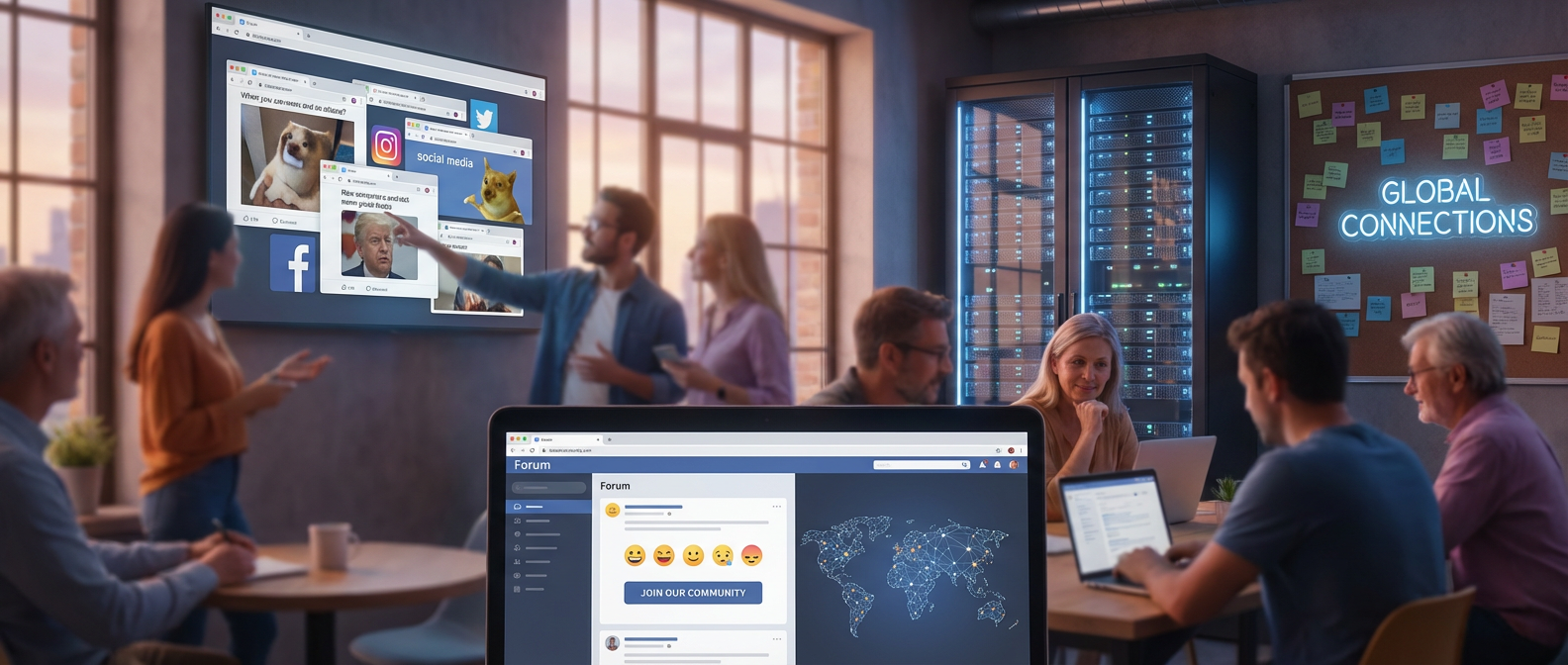
Remember when finding cool shit online required actual effort? When stumbling across a forum dedicated to experimental music or discovering a Discord server for people who collect vintage synths felt like archaeological work? Those days are dead. The platforms that once supported genuine digital subcultures have been strip-mined by engagement algorithms that prioritize virality over authenticity.

The Death of Weird: How Algorithms Killed Digital Counterculture

The transformation happened quietly. One day you’re deep in a rabbit hole of connected websites, each link leading to stranger and more specific communities. The next day, you’re trapped in a content carousel designed to keep you scrolling through algorithmically-selected posts that feel increasingly similar. The weird corners of the internet didn’t disappear overnight. They were systematically smoothed out by platforms that confused engagement with community.

Take TikTok’s “For You” page. It’s phenomenally good at showing you content you’ll watch, but catastrophically bad at building the kind of serendipitous discovery that created early internet culture. When every piece of content is optimized for maximum retention, everything starts looking the same. The algorithm doesn’t want you to find your tribe. It wants you to stay engaged long enough to see the next ad.

Illustration for The Death of Weird: How Algorithms Killed Digital Counterculture

The Commodification of Belonging

Digital communities used to form around shared obsessions, not shared demographics. Early forums and IRC channels were organized around interests so specific they bordered on the absurd. There were communities for people who modified GameBoys, for amateur radio enthusiasts in specific geographic regions, for fans of obscure Japanese noise bands. These spaces thrived because they had no commercial purpose beyond bringing together people who cared deeply about the same weird thing.

Now those same communities get absorbed into broader platforms where their conversations become data points in advertising profiles. Discord servers that started as genuine gathering places for niche interests get invaded by “growth hackers” looking to monetize engaged communities. Reddit communities that once felt like digital third places become testing grounds for viral marketing campaigns disguised as organic posts.

The shift isn’t just about advertising. It’s about the basic logic of how digital spaces operate. When platforms prioritize growth metrics over community health, they inevitably favor content that appeals to the broadest possible audience. The result is a race to the middle that leaves no room for the genuinely strange or challenging ideas that made early internet culture so alive.

Aesthetic Rebellion Without Cultural Substance

Don’t mistake the current wave of “alternative” aesthetics for genuine counterculture. The explosion of terms like “dark academia,” “cottagecore,” and “indie sleaze” represents something completely different from the organic subcultures that emerged from shared values and practices. These are lifestyle brands masquerading as movements, carefully packaged for consumption rather than participation.

Real digital counterculture was messy, unpolished, and often deeply uncomfortable. It emerged from people who had something to say, not something to sell. The websites looked terrible because no one cared about optimizing user experience. The music was unlistenable because it prioritized experimentation over accessibility. The writing was pretentious because the authors were working through complex ideas in public rather than crafting content for maximum shareability.

Today’s “alternative” online spaces feel like elaborate mood boards rather than genuine cultural laboratories. They’re aesthetically sophisticated but intellectually hollow. They reproduce the visual language of rebellion while stripping away everything that made underground culture actually threatening to mainstream sensibilities. When your subculture can be reduced to a Pinterest board, it’s not a subculture anymore.

The Platform Problem

The issue isn’t just that algorithms favor mainstream content. It’s that the dominant platforms are structurally incapable of supporting genuine community formation. Instagram’s emphasis on visual content prioritizes style over substance. Twitter’s character limit encourages hot takes over thoughtful discussion. TikTok’s endless scroll makes sustained engagement with specific communities nearly impossible.

These design choices aren’t accidental. They reflect the business models of companies that profit from attention rather than connection. The platforms that shaped early internet culture, from Usenet to LiveJournal to even early MySpace, were built around different principles. They prioritized tools for communication and self-expression over mechanisms for content discovery and viral distribution.

The result is a digital landscape where community formation happens despite the platforms rather than because of them. The most interesting online spaces today exist in the margins: invite-only Discord servers, private Slack workspaces, small forums that deliberately avoid growth. These communities survive by actively resisting the gravitational pull of mainstream platforms and the growth-at-all-costs mentality they represent.

Toward Digital Degrowth

The solution isn’t to abandon digital community entirely or retreat into nostalgia for the early internet. It’s to deliberately choose platforms and practices that prioritize depth over scale, connection over engagement, and sustainability over growth. This means supporting independent platforms that operate on different principles. It means participating in communities small enough that your absence would be noticed.

Most importantly, it means accepting that genuine digital culture might be incompatible with the current economic structure of the internet. The most alive online communities today are often the ones that explicitly reject monetization, growth hacking, and platform optimization. They exist because their members value the community itself more than its potential as a stepping stone to broader recognition or commercial success.

The future of digital counterculture doesn’t lie in competing with mainstream platforms on their own terms, but in building spaces that operate according to entirely different logic. This requires both technical innovation and cultural imagination. We need platforms designed for communities rather than audiences, tools that support genuine connection rather than parasocial relationships, and economic models that don’t require endless growth to survive.

What spaces have you found that still feel genuinely countercultural? Where do you go online when you want to discover something that will actually surprise you rather than confirm what the algorithm already knows about your preferences?

The Algorithm Won’t Save Us: Why Real Music Discovery Still Happens in Basements

The Death of Accidental Discovery

Spotify’s Discover Weekly thinks it knows you better than you know yourself. Last Tuesday, it confidently served me a playlist of “underground” tracks that included a song with 2.3 million streams and another that soundtracked a viral TikTok three months ago. The algorithm had confused popularity with authenticity, mistaking reach for relevance. This is the fundamental problem with letting machines curate culture.

The Algorithm Won't Save Us: Why Real Music Discovery Still Happens in Basements
The Algorithm Won’t Save Us: Why Real Music Discovery Still Happens in Basements

Real discovery doesn’t happen through recommendation engines optimized for engagement metrics. It happens when you follow that weird kid from your sociology class down a flight of sketchy stairs into a basement where someone’s set up a PA system between the water heater and a pile of laundry. It happens when you stumble across a Bandcamp page at 3am because you clicked through seventeen different artist collaborations like you’re following a Wikipedia rabbit hole.

The best music scenes have always existed in the margins, in spaces too small and too strange for algorithms to detect. They thrive on word-of-mouth networks, on the kind of social discovery that can’t be monetized or scaled. When platforms try to systematize this process, they inevitably kill what made it special in the first place.

Illustration for The Algorithm Won't Save Us: Why Real Music Discovery Still Happens in Basements
Illustration for The Algorithm Won’t Save Us: Why Real Music Discovery Still Happens in Basements

Mapping the Unmappable

Every city has its invisible music infrastructure. In Philadelphia, it’s the network of house venues that spring up and disappear like pop-up restaurants, operating in the gray areas of zoning laws and noise ordinances. Someone converts their living room into a DIY space for six months until the neighbors complain or the lease runs out, then the scene migrates somewhere else entirely.

These spaces don’t show up on venue listing websites. You find them through friends, through band Instagram stories, through cryptic posts in Facebook groups with names like “Philly Weird Stuff” or “DC Basement Shows.” The barrier to entry isn’t financial, most shows cost five to ten dollars. It’s social. You need to know someone who knows someone.

This friction isn’t a bug. It’s the whole point. It creates communities of people who are genuinely invested in the music rather than just looking for something to do on a Saturday night. When you have to work a little bit to find something, you’re more likely to pay attention when you get there.

The geography of these scenes follows patterns that real estate developers would recognize. Artists get priced out of neighborhoods, so scenes migrate to areas with cheaper rent and more tolerant landlords. What was once happening in warehouses in Bushwick is now happening in garages in Ridgewood. The music follows the money, or more accurately, it follows the absence of money.

The Economics of Staying Underground

Here’s the cruel math of independent music: the moment something becomes financially viable, it stops being underground. Success in the traditional sense requires a level of professionalization that fundamentally changes the art being made. Label deals, festival bookings, press coverage—they all come with strings attached.

I watched this happen to a band from Baltimore called Soft Torture. They started making these gorgeous, experimental noise-pop songs in their drummer’s attic studio. Their early releases felt like secrets you wanted to share with only your most trusted friends. Then they got picked up by a mid-tier indie label, started touring regularly, and began writing more accessible songs to pay for gas money and van repairs.

The music wasn’t worse, exactly. It was just different. More polished, more predictable, more designed for the kind of venues that have proper sound systems and alcohol licenses. They had to make compromises to survive as working musicians, and each compromise moved them a little further from the underground ecosystem that originally nurtured them.

This isn’t a moral judgment because artists deserve to make money from their work. But it illustrates the fundamental tension between underground culture and the economic systems that surround it. The most interesting art often happens in spite of capitalism, not because of it.

Digital Tools, Analog Communities

The internet hasn’t killed underground music scenes, but it has changed how they operate. Bandcamp remains the closest thing we have to a perfect platform for independent music because it takes a reasonable cut, pays artists quickly, and doesn’t try to impose algorithmic discovery on top of human curation.

Instagram has become the primary communication tool for DIY venues, but in ways that the platform’s designers probably never intended. Stories become event listings. Close Friends lists become guest lists. DMs become the new way to ask for someone’s address after 10pm when you can’t remember which house is hosting tonight’s show.

The most successful underground artists understand how to use these tools without being used by them. They treat social media as utility rather than performance space. They use streaming platforms for accessibility while maintaining direct relationships with their audience through email lists and physical releases.

What they don’t do is chase metrics. They don’t optimize for playlist placement or try to game the algorithm. They understand that building a sustainable underground music career means growing a small group of people who will follow you from platform to platform, from venue to venue, through whatever weird musical territory you decide to explore next.

The Persistence of the Physical

Despite everything being digital, the underground music economy still runs on physical objects. Cassette tapes have become the vinyl of DIY culture because they’re cheap to produce, easy to transport, and have their own aesthetic charm. Limited runs of 100 copies sell out in hours, creating a sense of scarcity that streaming can’t replicate.

Merchandise tables at basement shows function as micro-retail experiences. You’re not just buying a t-shirt; you’re making a small investment in an artist’s ability to keep making music. The transaction feels personal because it often is. You’re literally handing cash to the person who wrote the songs you just heard.

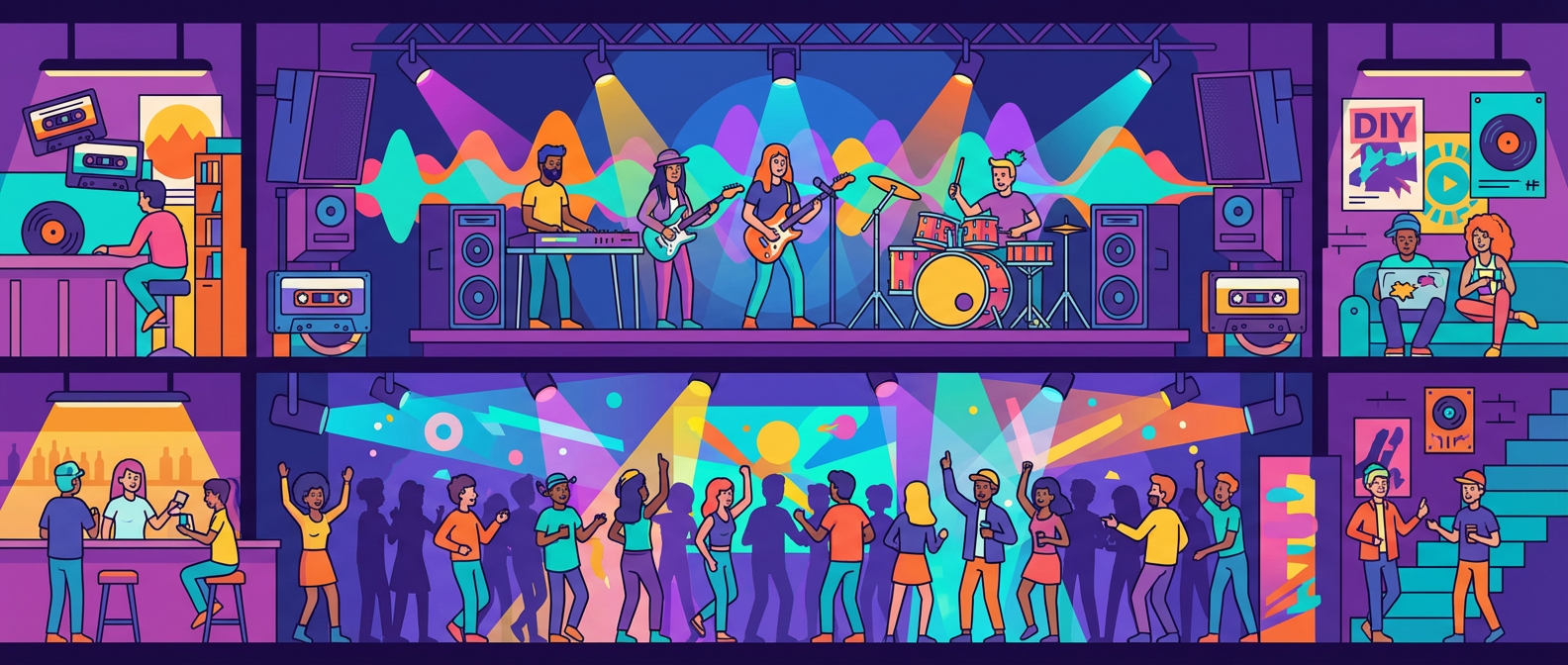
This physicality extends to the spaces themselves. There’s something irreplaceable about experiencing music in rooms that weren’t designed for it. The way sound bounces off concrete walls in a warehouse. The intimacy of watching someone perform three feet away from you in someone’s kitchen. The shared risk of being in a space that might not technically be legal. These elements can’t be digitized.

The underground persists because it offers something that algorithm-driven culture can’t: the possibility of genuine surprise. In a world where every experience is increasingly predictable and optimized, there’s radical value in not knowing what you’re going to get. If you want to find it, start paying attention to the margins. Look for the spaces that don’t advertise, the artists who don’t optimize, the communities that exist outside the reach of corporate curation. The best discoveries are still waiting in basements.