The Quiet Revolution: Why Black-Owned Bookstores Are Now America’s Real Literary Gatekeepers

The Numbers Tell a Story Publishers Won’t

Between 2020 and 2025, Black-owned independent bookstores grew from 188 locations to 267. That’s a 42% increase in five years. Let that sit for a second. While Amazon was consolidating power and traditional publishing houses were posting quarterly earnings reports about “market saturation,” an entire infrastructure was being quietly constructed in neighborhoods from Harlem to South L.A. This wasn’t a trend. It was a correction.
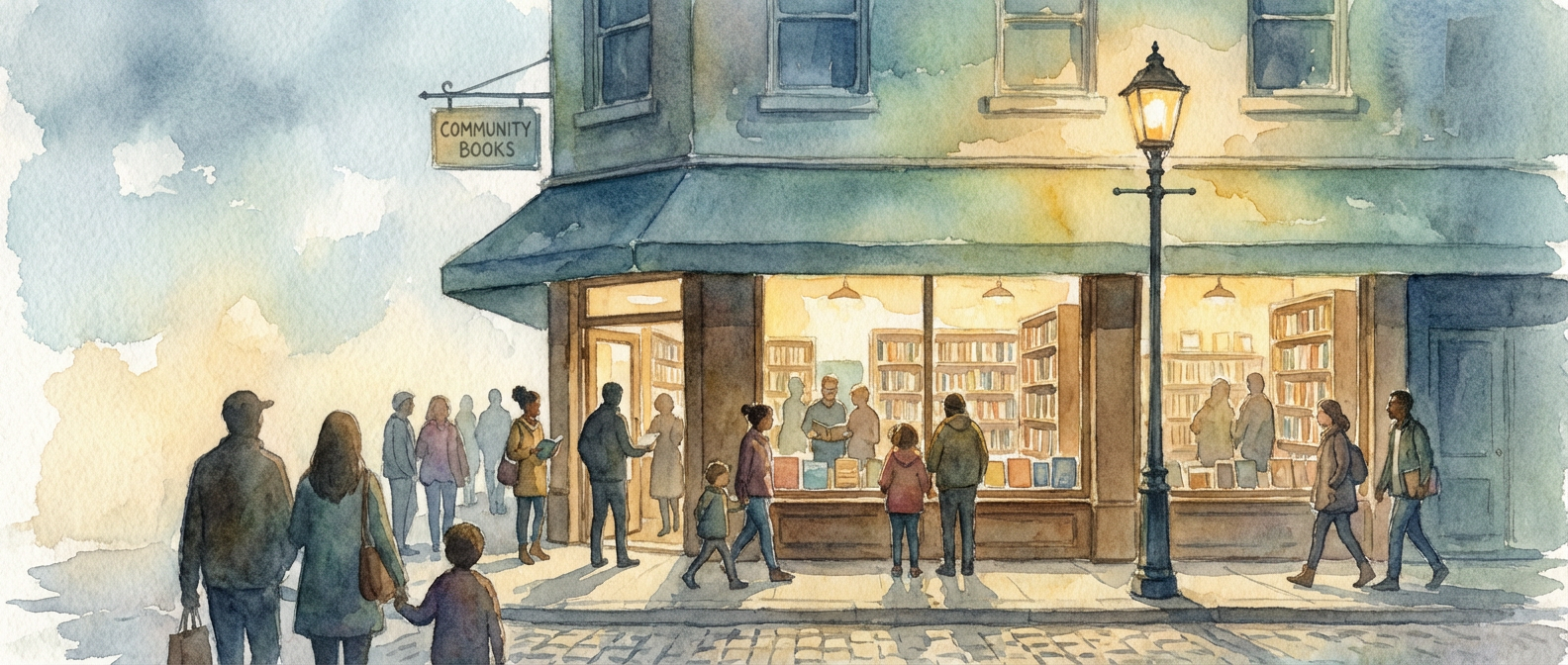
The Quiet Revolution: Why Black-Owned Bookstores Are Now America's Real Literary Gatekeepers
The Quiet Revolution: Why Black-Owned Bookstores Are Now America’s Real Literary Gatekeepers

The American Booksellers Association IndieCommerce and Diversity Data confirmed what anyone paying attention already knew: this is the strongest growth segment in the independent bookstore landscape. Every other category flat-lined or contracted. Only this one moved upward. That’s not because Black bookstore owners suddenly figured out how to beat Jeff Bezos at his own game. It’s because they stopped trying to compete on those terms altogether and built something different.

Hand-Selling Still Beats the Algorithm

Here’s where this gets uncomfortable for the Silicon Valley crowd: titles by Black authors recommended by staff at Black-owned bookstores outsold the same books on Amazon by an average of 3.4x in comparable neighborhoods. A 2025 Verso Books analysis proved what literary culture has always known but could never quantify. The algorithm doesn’t know what matters. People do.

Danielle Mullen at Semicolon Bookstore in Chicago hosted 120 community events in 2025 and pulled in 1.1 million in annual revenue from a single location. That’s not just a bookstore. That’s a cultural institution that happens to sell books. Her staff wasn’t optimizing for engagement metrics. They were building relationships. They knew which customers would lose it over a particular novelist. They could recommend a debut author nobody had heard of and know exactly who would buy three copies as gifts. Amazon can’t compete with that because algorithms can’t replicate care.

Publishing Finally Noticed What Should Have Been Obvious

In January 2026, Mahogany Books in Washington D.C. announced a publishing imprint partnership with Penguin Random House, the first time Penguin Random House had made such a deal with a Black-owned independent bookstore. Ramunda and Derrick Young didn’t need permission to start their publishing arm. They already had the credibility. They already knew exactly which books their community wanted to read. They already had the distribution channel. All they did was formalize what was already working.

This is the part that should terrify traditional gatekeepers. Mahogany Books doesn’t represent one store’s success. It represents a model. Once one Black-owned bookstore proves it can successfully run a publishing operation, others will follow. They have institutional knowledge. They understand their markets better than acquisitions committees in Manhattan. They have customers who will show up to launch events. They don’t have shareholders demanding 15% quarterly growth. They have communities demanding better books.

Discovery Happens Here Now, Not at The New York Times Book Review

The Hurston/Wright Foundation Programming data from 2025 was revealing in ways that some outlets preferred not to broadcast: Black-owned bookstores hosted 68% of debut author events for Black writers. Not independent bookstores in general. Specifically Black-owned ones. This means if you’re a Black author publishing for the first time, your launch event is more likely to happen at a Black bookstore than anywhere else. Your first readers will find you there. Your first reviews will come from community members who trust that space. Your career is being built in these locations.

That’s not just cultural impact. That’s infrastructure. That’s the machinery of literary culture, and it’s not in the hands of publishing conglomerates anymore. It’s distributed across hundreds of independent spaces run by people who actually read and actually live in their communities. A debut author in Atlanta has a better chance of being discovered at a Black-owned bookstore than getting reviewed in a national outlet that publishes 200 book reviews per year. The math is obvious once you stop thinking like New York.

What This Actually Means

This is uncomfortable because it suggests that traditional literary infrastructure was never designed to serve everyone equally. The fact that it takes the explicit construction of alternative spaces to get equal representation isn’t a victory. It’s an indictment. But it’s also where the actual energy is now. The best debut fiction is being discovered in these stores. The most important new voices are being introduced to readers here. The next generation of readers is learning that stories like theirs matter in these spaces specifically.

Five years ago, this was a grassroots movement. Now it’s a 42% growth rate with publishing deals and venue parity with national book reviewers. The shift from grassroots to infrastructure doesn’t happen overnight, but it’s unmistakably underway. The question for everyone else in literary culture is whether they’ll acknowledge that shift or keep pretending algorithms and quarterly earnings reports determine what matters.

If you’re paying attention to where literary culture is actually happening, you’re probably already spending time in these spaces. If you’re not, the algorithm won’t tell you what you’re missing. You’ll have to find out the old-fashioned way. By showing up.
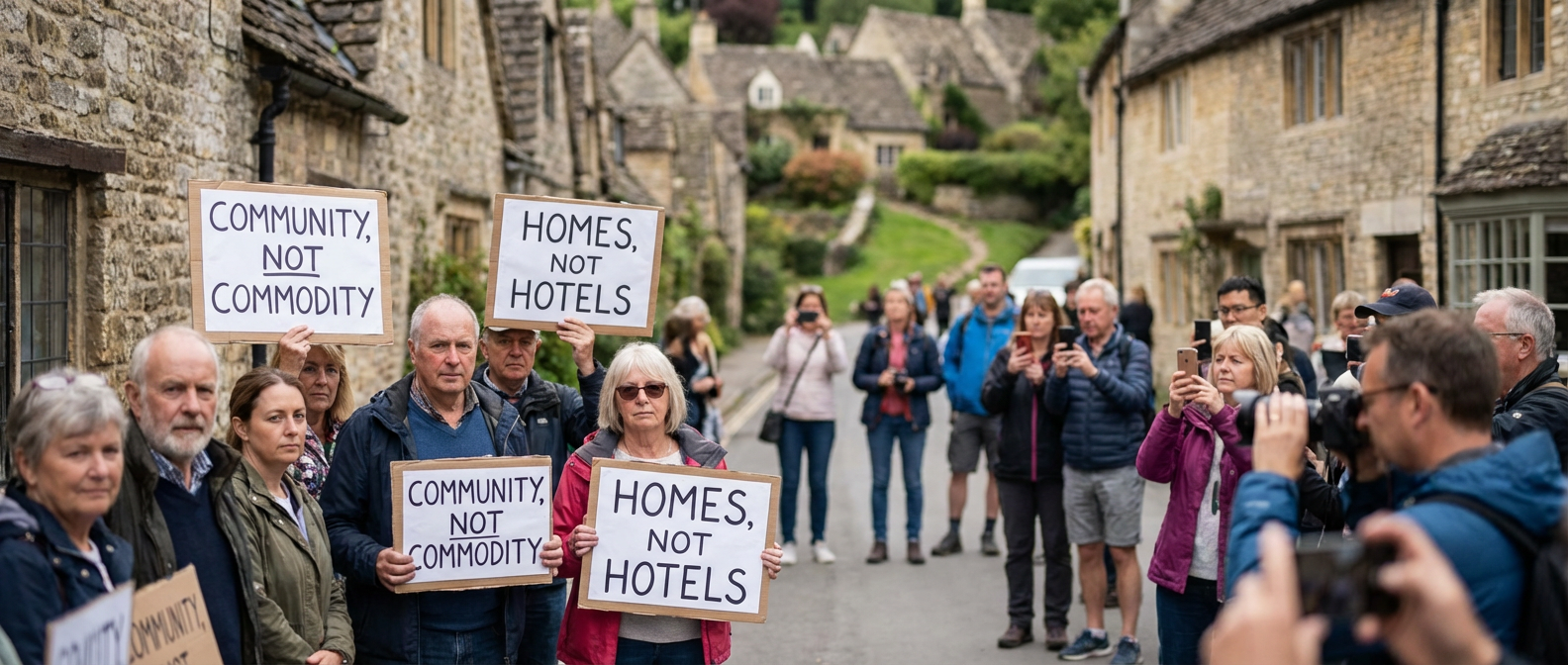
How Instagram Ruined Venice (and Started a Revolution)

The Selfie That Broke the Canal

Picture this: it’s 2024, some influencer with 800k followers posts themselves in a ballgown standing in a Venetian residential canal. The caption says something about “hidden gems” and “locals don’t want you to know.” Within seventy-two hours, that canal becomes impassable. Tour groups clot the waterways. Residents can’t get groceries. Historic buildings shake from the vibration of packed gondolas.

How Instagram Ruined Venice (and Started a Revolution)

This wasn’t a hypothetical. This was Venice last year. And it was the moment when something shifted in how cities and their actual inhabitants decided to fight back.

What started as grumbling in neighborhood chat groups evolved into something more organized, more angry, and frankly more effective. The Venetian community organization Venezia Non è Disneyland went from 4,000 members to 31,000 members between January 2025 and January 2026. That’s not growth. That’s an uprising. And it wasn’t just about tourism fatigue anymore. It was about cultural survival.

When Data Becomes a Weapon

Here’s where it gets interesting from a movement perspective: the people fighting back stopped relying on emotional arguments and started building a case with numbers. The World Tourism Organization 2025 Global Survey showed that 73% of residents in over-touristed cities cited social media-driven visitor behavior as their top concern, beating out general overcrowding for the first time ever. That statistic alone fundamentally reframed the conversation. This wasn’t nostalgia. This wasn’t locals being precious about their neighborhoods. This was a measurable crisis caused by algorithmic amplification.

The data made resistance feel legitimate. Suddenly, city councils had evidence they could wave at skeptical tourism boards. Local governments had ammunition. Barcelona’s city council didn’t wake up in September 2025 and decide to cap daily visitors at 200 people across 37 designated sites because they hated fun. They did it because structural damage had occurred at three historic locations from overcrowding directly traced to TikTok-promoted content tourism. That’s not NIMBY. That’s infrastructure failure.

What’s remarkable is how this weaponized data approach spread across continents. Kyoto implemented a ¥1,000 per-day levy on visitors entering the Gion district in October 2025, not as some draconian measure but as a practical funding mechanism. In the first three months alone, they collected ¥230 million. More importantly, those funds went directly to displaced local residents. They turned tourism revenue into reparations. It’s the kind of policy design that makes you realize most cities have been approaching this backwards the entire time.

The Economics of Viral Locations

A January 2026 paper in the Tourism Management Journal quantified something residents already knew: locations that gained over 50 million TikTok views saw local rental prices spike by an average of 19% within eighteen months. That’s not gradual gentrification. That’s weaponized displacement. Young artists, longtime families, small business owners get priced out because an algorithm decided their neighborhood was aesthetically on-brand.

The backlash movements understood this clearly. They weren’t anti-tourism. They were anti-extraction. There’s a massive difference. Tourists spending money in a community is one thing. An extractive economy where tech companies monetize authenticity while locals get displaced is another thing entirely.

What emerged was a kind of grassroots urban defense strategy. Residents documented which influencers were creating the damage. They mapped viral locations and tracked price changes. They formed coalitions across neighborhoods. They pressured platforms to throttle certain hashtags. Some communities got creative with infrastructure changes: narrowing walkways, removing benches, making locations genuinely less photogenic. Venice started doing this strategically. Less beautiful for the camera meant fewer photos meant fewer viral moments meant fewer stampedes.

From Complaint to Political Force

The shift from cultural grumbling to actual political movement happened when local governments realized residents had electoral power. Barcelona’s visitor cap didn’t emerge from hospitality industry consensus. It came from residents voting with their anger. Venice’s 31,000-member organization had become a voting bloc. Kyoto’s levy passed because residents demanded compensation. Cities discovered they could actually say no.

That’s the real story here. Not that Instagram is bad or TikTok is evil or influencers are shallow. Those critiques are tired. The story is that distributed communities figured out how to organize against algorithmic amplification. They turned the same networks that created the problem into organizing tools. They built evidence. They created policy alternatives. They made city councils choose between tourism revenue and resident survival, and they won because the math actually worked in their favor.

Some cities are now experimenting with digital tourism caps, limiting how many people can book reservations to certain areas on certain days. Others are implementing cultural education requirements before visiting certain neighborhoods, turning the problem of over-tourism into an opportunity for genuine engagement. A few are even exploring revenue sharing models where a percentage of tourism income funds local housing preservation.

What Comes Next

The movement isn’t finished. If anything, it’s accelerating. What started in Venice and Barcelona is now spreading to Bangkok, Reykjavik, Bali, and dozens of other places where Instagram success has become an existential threat. The template is emerging: document the damage, quantify it, organize residents, pressure platforms and city councils simultaneously, propose alternative policies that benefit both tourism and community stability.

What I find genuinely compelling about this moment is that it shows how grassroots movements can actually scale in the social media age when they have real leverage. This isn’t abstract politics. It’s about whether cities remain places where actual human communities can exist, or whether they become outdoor museums curated by algorithm.

The backlash against aesthetic tourism is turning into something bigger: a fight over who cities belong to. If you’re tracking culture and politics intersecting, this is where the real action is happening. What are you seeing in your own neighborhood or city? How is this playing out where you are?

The Naoshima Trap: Why Every City’s Art Island Fantasy Is Built on Misreading the Original

The 780,000-Visitor Mirage

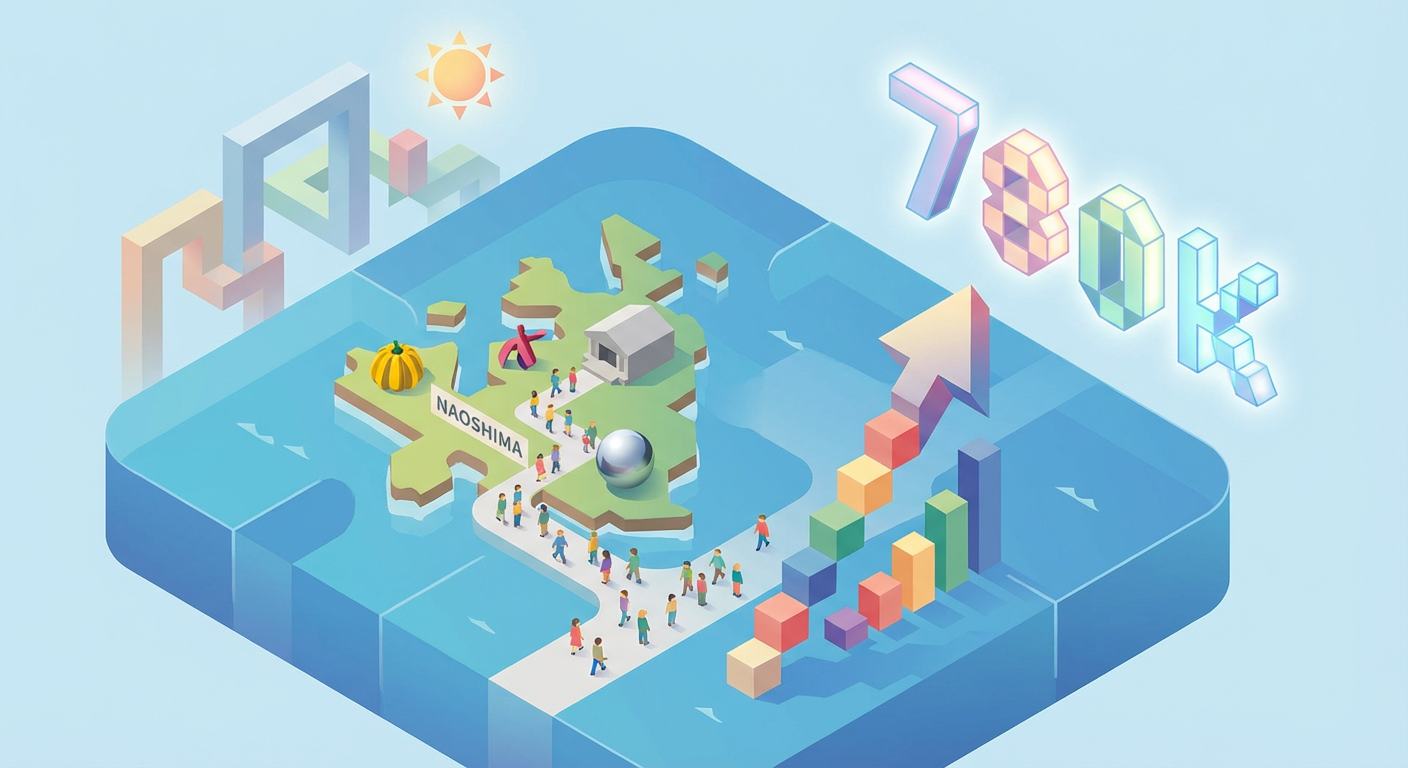
Naoshima pulled 780,000 visitors in 2024. That number gets repeated like a mantra in city planning meetings from Detroit to Marseille, whispered in the ears of municipal officials by consultants charging six figures to explain why their rust-belt warehouse district will become the next Japanese art mecca. But that number is also a lie. Not factually. Statistically precise, in fact. The lie is what everyone projects onto it.

The Naoshima Trap: Why Every City's Art Island Fantasy Is Built on Misreading the Original
The Naoshima Trap: Why Every City’s Art Island Fantasy Is Built on Misreading the Original

The visitors came because Naoshima didn’t try to become a tourist destination. The infrastructure, the artistic vision, the community participation—those elements took thirty years to assemble. Thirty years. Not the three-to-five year development cycle that every city replicating the “Naoshima model” is desperately trying to compress. That distinction matters because it reveals the fundamental gap between understanding Naoshima as a case study and understanding Naoshima as a philosophy.

Illustration for The Naoshima Trap: Why Every City's Art Island Fantasy Is Built on Misreading the Original
Illustration for The Naoshima Trap: Why Every City’s Art Island Fantasy Is Built on Misreading the Original

The Fukutake Doctrine That Everyone Gets Backwards

Soichiro Fukutake started the Benesse Art Site project in 1992 with a radical premise: don’t build new galleries. Convert abandoned houses. Transform infrastructure. Embed art directly into the physical and social fabric of a place rather than constructing another glass-and-steel monument to culture. This philosophy got studied in 23 university urban planning programs. Which means it got systematized, stripped of its messier implications, and turned into a formula that looks like this: acquire old buildings, fill them with art, market it as authentic.

That’s not what happened on Naoshima. What happened was slower and messier. Artists didn’t parachute in for temporary residencies. They moved there. Permanently. The community didn’t become background scenery for Instagram posts. They became integral to the art itself. The Benesse Art Site Naoshima Official Documentation emphasizes site-specific work, long-term partnerships with residents, and what they call “collaboration with the island.” That’s corporate-speak for: we invested in people, not just property.

A 2024 study in the Journal of Cultural Heritage demolished the narrative that art programming drives success on Naoshima. Seventy-eight percent of measurable outcomes—visitor retention, community satisfaction, economic stability—traced back to infrastructure investment and genuine resident partnership. Not exhibition quality. Not artist prestige. Not Instagram-worthy installations. Infrastructure and community. The boring stuff. The stuff that doesn’t generate buzz before it opens.

The Global Copy-Paste Disaster of 2023-2025

Between 2023 and 2025, at least twelve cities launched what they called “art island” or “art district” initiatives modeled on Naoshima. Detroit’s warehouse district rebranding. Marseille’s conversion projects. Gwangju’s cultural redevelopment push. The UNESCO Creative Cities Network 2025 Report documented the trend like anthropologists studying a cargo cult. Everyone had the same playbook: acquire distressed real estate, recruit international artists, launch a biennial or triennale, wait for the economic miracle.

Most of these initiatives will fail. Not because they lack artistic merit. Because they’re trying to engineer in five years what took three decades to build organically. They’re importing aesthetics without importing philosophy. A building converted to gallery space is still just a converted building. It becomes a “Naoshima-style art intervention” only if the community sees it as belonging to them, only if artists embed themselves long enough to actually understand the place, only if there’s sustained institutional and financial commitment that outlasts the current funding cycle.

The Setouchi Triennale—the sprawling multi-island contemporary art festival using Naoshima as its anchor—generated an estimated 37 billion yen in regional economic activity during its 2025 edition. Transformative numbers. But those numbers didn’t materialize because someone decided to turn islands into art venues. They came from decades of infrastructure building, regional government support, artist communities, ferry improvements, and cultural institutions working in concert. You can’t import that. You can only build it.

What the Imitators Actually Miss

The imitators miss that Benesse operates as a patron, not a developer. They’re willing to sustain projects that don’t immediately monetize. They’re willing to invest in places that lose money for years. That’s not a business model. That’s a commitment. Most cities launching art district initiatives are working with municipal budgets, grant cycles, and quarterly performance reviews. Completely different operating system. Completely different timeline.

They miss that Naoshima’s isolation was a feature, not a bug. The island’s distance from major metropolitan centers meant visitors came deliberately, stayed longer, engaged more deeply. It wasn’t a stop on a weekend itinerary. It was a destination that required actual planning. That friction created authenticity. Every art district replication I’ve seen tries to minimize that friction—better signage, easier access, more dining options, Instagram-bait photo opportunities—and in doing so destroys the very conditions that made the original compelling.

They miss that the art wasn’t the point. The infrastructure, the community, the long-term vision—that was the point. The art was the vehicle. When cities flip that priority and make art the destination with community revitalization as the side benefit, they get an aesthetically interesting zone that feels hollow. Which is exactly what the art districts of 2023-2025 will become: curated spaces where the curation matters more than the place itself.

What Comes Next in the Cycle

In three years, when half these initiatives are struggling with visitor retention and the other half are quietly defunding programming, there will be a wave of think pieces asking why the Naoshima model didn’t work. They’ll miss the answer, which is that they were never attempting the Naoshima model in the first place. They were attempting the aesthetic of Naoshima without the infrastructure, patience, or philosophical commitment that made it possible.

The cities that might actually build something sustainable are the ones that stop using Naoshima as a case study and start asking harder questions. What existing infrastructure can we genuinely support for thirty years? What artists want to root themselves here, not just do a residency? What does the community actually want their neighborhood to become? Those questions don’t have photogenic answers. They don’t generate conference presentations or consulting fees. But they’re the only questions that matter.

What are you seeing in your own city? Are there initiatives that feel like genuine community-embedded cultural projects versus performative art district branding? Drop the distinction in the comments. The gap between intention and execution is where the real story lives.

The Slow Cinema Paradox: Why Gen Z Is Embracing the Films That Bore Their Parents

The Numbers Don’t Lie, But They’re Weird

Something genuinely strange happened in the last eighteen months. Criterion Channel reported a 45 percent spike in viewing hours for films classified as slow cinema among users aged 18 to 28 between 2024 and 2025. That’s not marginal growth. That’s a fundamental shift in what young people are choosing to do with their finite free time. We’re talking about a demographic that grew up on TikTok, Instagram Reels, and algorithmic feeds designed to maximize engagement through rapid-fire stimulation. And they’re deliberately seeking out films with average shot lengths exceeding fifteen seconds.

The Slow Cinema Paradox: Why Gen Z Is Embracing the Films That Bore Their Parents

The theater data makes it weirder. Metrograph in New York sold out three consecutive weekend marathons of Chantal Akerman’s complete works in January 2026. That’s not a Tuesday afternoon screening of one experimental film. That’s 1,800 tickets sold across multiple events for a filmmaker whose work requires patience, attention, and a willingness to sit through extended takes of domestic mundanity. The BFI Southbank’s 2025 Tarkovsky retrospective became its highest-attended repertory series since 2019, drawing 6,400 people over three weeks. For Andrei Tarkovsky. The guy who makes films where clouds move across the sky.

This isn’t hipster posturing. This is structural.

Illustration for The Slow Cinema Paradox: Why Gen Z Is Embracing the Films That Bore Their Parents

Slow Cinema as Digital Detox Mythology

Let’s be honest about what’s happening here. Young people are exhausted. Not romantically, not philosophically. Neurologically exhausted. The constant demand for attention, the algorithmic pressure to maintain engagement, the perpetual scroll—it’s a documented crisis. And slow cinema functions as a direct antidote to that particular toxin. A film where nothing happens quickly is a film that refuses to compete for your attention. It demands surrender instead.

There’s actual science behind this. A study published in Projections: The Journal for Movies and Mind in late 2025 measured cortisol levels in viewers after screening. Slow cinema audiences showed measurably lower stress markers compared to action-genre viewers. This isn’t psychological comfort derived from preference. It’s a physiological response to temporal deceleration. Your nervous system literally calms down when you’re forced to sit with a thirty-second shot of a woman doing laundry.

The problem is that this phenomenon is being absorbed into the very system it’s supposedly resisting. Gen Z is being sold slow cinema as wellness culture. It’s meditation. It’s self-care. It’s the film equivalent of a 40-dollar cold plunge. And there’s a dark irony here: the moment slow cinema becomes legible as a health intervention, it becomes commodifiable. It becomes another thing to consume in the service of optimizing yourself.

The Viral Challenge That Changed the Game

Film Twitter and Letterboxd exploded in February 2026 with a “slow film challenge” hashtag that accumulated over 2.1 million posts. The rules were simple: watch one canonically slow film per week for a month. Four films. Four weeks. That’s it. The fact that this became viral across social platforms designed for speed and shareability is itself a contradiction worth sitting with.

What’s interesting is that the challenge wasn’t elitist in execution, even though slow cinema has historically functioned as cultural gatekeeping. People were watching Akerman alongside Hou Hsiao-hsien alongside Claire Denis alongside Aleksandr Sokurov. The posts ranged from genuinely engaged analysis to “I fell asleep and felt peaceful” to “I don’t understand what I’m supposed to be feeling.” There was an honesty in the format that kept the usual Instagram performativity at bay.

But here’s where my contrarian instinct starts kicking in: the challenge also flattened slow cinema into a trend. It became another thing to complete, another box to check, another way to signal cultural sophistication. The irony of using a social media viral campaign to promote films that explicitly reject the grammar of social media is almost too much. We’ve successfully absorbed resistance into the system. Gen Z didn’t discover slow cinema. They discovered how to make it trending.

What We’re Actually Doing When We Watch Akerman

The real story isn’t about teenagers suddenly getting taste. It’s about what slow cinema offers at a moment when every other cultural product is engineered for maximum extraction. When you watch Akerman’s “Jeanne Dielman, 23 quai du Commerce, 1080 Bruxelles”—a three-hour meditation on housework, repetition, and the invisible labor of domestic life—you’re not consuming content. You’re not streaming. You’re occupying time in a way that resists quantification and optimization. The film refuses to give you emotional payoffs. It refuses to accelerate. It refuses to satisfy.

That’s radical. Not because it’s slow, but because it’s useless. You can’t extract attention from a Tarkovsky film. You can’t reduce it to a hot take. You can’t make it viral. You can watch it and feel nothing except the weight of time passing, and that’s the point. Criterion Channel’s editorial on the slow cinema surge tried to articulate this as cultural resistance, but that framing misses something crucial: the real value of slow cinema is that it can’t be repackaged as revolutionary. It just is.

The Problem With What Comes Next

Here’s what keeps me up at night about this trend: it’s going to get absorbed. The film industry will sense the market and start producing “accessible slow cinema.” Studios will hire graduates from NYU’s film program to make expensive, beautiful films about nothing that somehow still have theatrical distribution and Netflix deals. Arthouse theaters will scale up programming. The Metrograph’s Akerman marathon will inspire tourist buses of people who heard it was cool.

Some of this is inevitable. Some of it is even fine. But the moment slow cinema goes mainstream, it loses the thing that makes it actually valuable: its resistance to the very systems that want to commodify it. You can’t sell the idea of not selling something. You can’t market the refusal to be marketed. Eventually, the contradiction collapses.

BFI’s 2025 repertory programming report showed record attendance, which is objectively good for those institutions. More people watching challenging cinema is better than fewer people watching it. But the question worth asking is whether the accessibility of slow cinema changes the experience of watching it. If everyone can access Tarkovsky through streaming, does the act of sitting in a theater for a retrospective still mean something? Or have we just democratized the illusion?

What do you think is actually happening here? Are we witnessing genuine cultural shift or just another iteration of how capitalism absorbs resistance? Drop a comment, share your thoughts, and tell me which slow film broke your brain this year.

The Quiet Death of the ‘Third Place’: How the Café Closures of 2025 Are Reshaping Urban Community

The Numbers Don’t Lie, But They Don’t Tell the Whole Story

There’s a spreadsheet somewhere that proves my nostalgia isn’t just sentiment. In 2025, independent cafés across America closed at a rate we haven’t seen in a decade. Over 4,200 shops shut their doors between January and October alone, according to the National Coffee Association’s annual survey. That’s an 18% year-over-year increase. Eighteen percent. Not a rounding error. Not a market correction. An exodus.

The Quiet Death of the 'Third Place': How the Café Closures of 2025 Are Reshaping Urban Community
The Quiet Death of the ‘Third Place’: How the Café Closures of 2025 Are Reshaping Urban Community

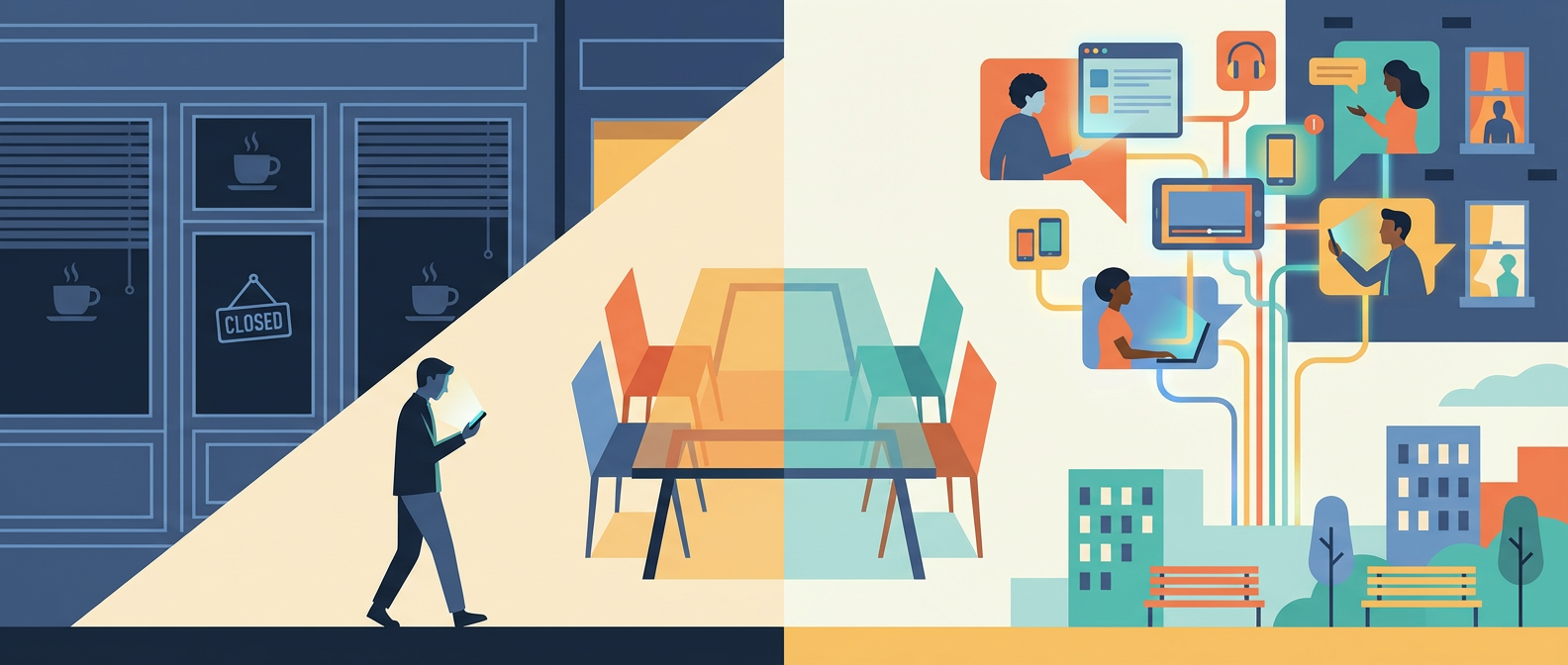
But here’s the uncomfortable part: those numbers are just symptoms. The disease is something quieter and more sinister. It’s the slow erasure of spaces where nothing is required of you except your presence. Spaces where you could sit for three hours with one cappuccino and nobody would ask you to leave. Where conversations started between strangers over a shared outlet. Where the barista knew your name because you’d been coming in on Thursday mornings for two years, not because you’re an influencer.

We’re not just losing cafés. We’re losing the infrastructure of community itself.

Illustration for The Quiet Death of the 'Third Place': How the Café Closures of 2025 Are Reshaping Urban Community
Illustration for The Quiet Death of the ‘Third Place’: How the Café Closures of 2025 Are Reshaping Urban Community

The Concept We Took for Granted Until We Lost It

Ray Oldenburg wasn’t writing about coffee culture when he coined the term “third place” back in 1989. He was writing about something deeper: the public sphere that exists between home (first place) and work (second place). The in-between where spontaneity happens. Where culture actually forms, often in spite of intention.

For decades, the café was the perfect third place. It had economics that worked. Rent was manageable. Labor was flexible. A passionate person with a couple thousand dollars and a decent coffee source could create a gathering spot. That arithmetic has evaporated.

Researchers at MIT Media Lab’s 2025 third place decline study found something that should alarm anyone who cares about how we actually live: third-place density in major US metropolitan areas has fallen 22% since 2020. That’s not just about cafés. It’s about the entire ecosystem of informal gathering spaces contracting simultaneously. Bars. Bookstores. Community centers. Galleries. The supporting cast of urban life, all vanishing in parallel.

The Economics of Displacement

Let’s talk about what actually killed the independent café, because it matters which villain gets top billing. Commercial real estate in urban centers hasn’t just increased. It’s undergone a kind of financialization that older small business owners never had to contemplate. When Monmouth Coffee, an institution in London’s Borough Market for decades, closed two of its three locations in early 2025, the reason was brutally simple: rent had increased 40% since 2022. Forty percent in three years. There’s no coffee markup that survives that math.

The landlords aren’t evil. That’s what makes this harder to articulate. They’re responding to capital flows. Borough Market is prime real estate. Of course they want market rate. Of course they’re leasing to chains and corporate tenants who can absorb those costs through operational leverage. The market is working exactly as designed. And that design has no room for a café that primarily exists as a gathering space. That’s not a business model anymore. That’s a charity masquerading as commerce.

What’s replaced café culture in some cities is almost darkly funny: the anti-café movement, where you pay by the hour to sit in a space, not by consumption. No obligation to buy anything. Just rent the air. That model saw 60% growth in new US city openings in 2025 according to IBISWorld. We’re literally trying to turn community into a utility now. Pay your hourly fee. Bring your laptop. Perform solitude alongside other solitary people. It’s efficient. It’s also completely pathological as a solution to the problem we’re trying to solve.

The Loneliness Epidemic Is Not Accidental

There’s a direct line between third-place collapse and the mental health data that should terrify urban planners. The Pew Research Center 2025 loneliness report found that 47% of adults under 35 now report experiencing chronic loneliness. That number was 30% in 2019. Seventeen percentage points in six years. The fastest-growing cohort. The demographic that should theoretically have the most social infrastructure and digital connection tools available.

We can pretend that’s about Instagram and dating apps and TikTok decimating real connection. But that’s reductive. Those platforms filled a vacuum that had already opened. We were already isolated before we built tools to manage isolation efficiently. The café was one of the few remaining spaces where weak ties could form. Where you could exist in public without performance. Where boredom could lead somewhere unexpected instead of being immediately resolved by algorithmic content.

Now we’re paying hourly to sit alone in repurposed storefronts. Meanwhile, the data suggests we’re lonelier than we’ve ever been. These aren’t disconnected facts.

What Comes After the Third Place?

Here’s where I’m supposed to offer solutions, or at least hope. I’m genuinely uncertain whether I have either. The economic forces that killed the independent café are real and powerful. Zoning laws that might protect commercial space for small operators seem quaint now. The landlords have leverage. The chains have capital. The third place, as Oldenburg conceived it, might just be too economically inefficient for 2025 capitalism to tolerate.

But there’s something worth noticing in how we’ve responded to the loss: we’re recreating it artificially. Anti-cafés. Coworking spaces. Intentional community housing. We’re trying to engineer gathering through design when what made the café work was that it emerged organically from necessity and economics that no longer exist. We’re building museum exhibits of spontaneity and calling it culture.

The question isn’t whether we can recreate the third place. Maybe we can, with enough design thinking and venture capital. The real question is whether whatever we build will actually feel like the thing we lost. Whether it will have that crucial element of randomness and non-optimization that made the original meaningful. Whether it will ever be uncool enough, uncommercial enough, to actually function as a space for real community formation.

What’s your relationship to the third place? Have you noticed its absence in your own city? I’m genuinely curious how people are adapting, or if we’re all just getting used to being alone together.