The Selfie That Broke the Canal
Picture this: it’s 2024, some influencer with 800k followers posts themselves in a ballgown standing in a Venetian residential canal. The caption says something about “hidden gems” and “locals don’t want you to know.” Within seventy-two hours, that canal becomes impassable. Tour groups clot the waterways. Residents can’t get groceries. Historic buildings shake from the vibration of packed gondolas.
This wasn’t a hypothetical. This was Venice last year. And it was the moment when something shifted in how cities and their actual inhabitants decided to fight back.
What started as grumbling in neighborhood chat groups evolved into something more organized, more angry, and frankly more effective. The Venetian community organization Venezia Non è Disneyland went from 4,000 members to 31,000 members between January 2025 and January 2026. That’s not growth. That’s an uprising. And it wasn’t just about tourism fatigue anymore. It was about cultural survival.
When Data Becomes a Weapon
Here’s where it gets interesting from a movement perspective: the people fighting back stopped relying on emotional arguments and started building a case with numbers. The World Tourism Organization 2025 Global Survey showed that 73% of residents in over-touristed cities cited social media-driven visitor behavior as their top concern, beating out general overcrowding for the first time ever. That statistic alone fundamentally reframed the conversation. This wasn’t nostalgia. This wasn’t locals being precious about their neighborhoods. This was a measurable crisis caused by algorithmic amplification.
The data made resistance feel legitimate. Suddenly, city councils had evidence they could wave at skeptical tourism boards. Local governments had ammunition. Barcelona’s city council didn’t wake up in September 2025 and decide to cap daily visitors at 200 people across 37 designated sites because they hated fun. They did it because structural damage had occurred at three historic locations from overcrowding directly traced to TikTok-promoted content tourism. That’s not NIMBY. That’s infrastructure failure.
What’s remarkable is how this weaponized data approach spread across continents. Kyoto implemented a ¥1,000 per-day levy on visitors entering the Gion district in October 2025, not as some draconian measure but as a practical funding mechanism. In the first three months alone, they collected ¥230 million. More importantly, those funds went directly to displaced local residents. They turned tourism revenue into reparations. It’s the kind of policy design that makes you realize most cities have been approaching this backwards the entire time.
The Economics of Viral Locations
A January 2026 paper in the Tourism Management Journal quantified something residents already knew: locations that gained over 50 million TikTok views saw local rental prices spike by an average of 19% within eighteen months. That’s not gradual gentrification. That’s weaponized displacement. Young artists, longtime families, small business owners get priced out because an algorithm decided their neighborhood was aesthetically on-brand.
The backlash movements understood this clearly. They weren’t anti-tourism. They were anti-extraction. There’s a massive difference. Tourists spending money in a community is one thing. An extractive economy where tech companies monetize authenticity while locals get displaced is another thing entirely.
What emerged was a kind of grassroots urban defense strategy. Residents documented which influencers were creating the damage. They mapped viral locations and tracked price changes. They formed coalitions across neighborhoods. They pressured platforms to throttle certain hashtags. Some communities got creative with infrastructure changes: narrowing walkways, removing benches, making locations genuinely less photogenic. Venice started doing this strategically. Less beautiful for the camera meant fewer photos meant fewer viral moments meant fewer stampedes.
From Complaint to Political Force
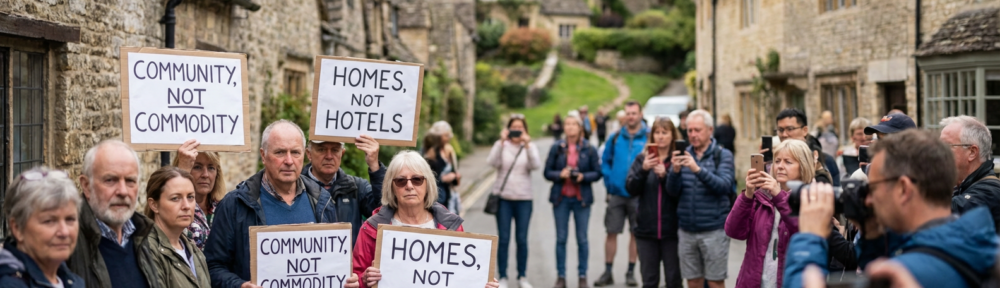
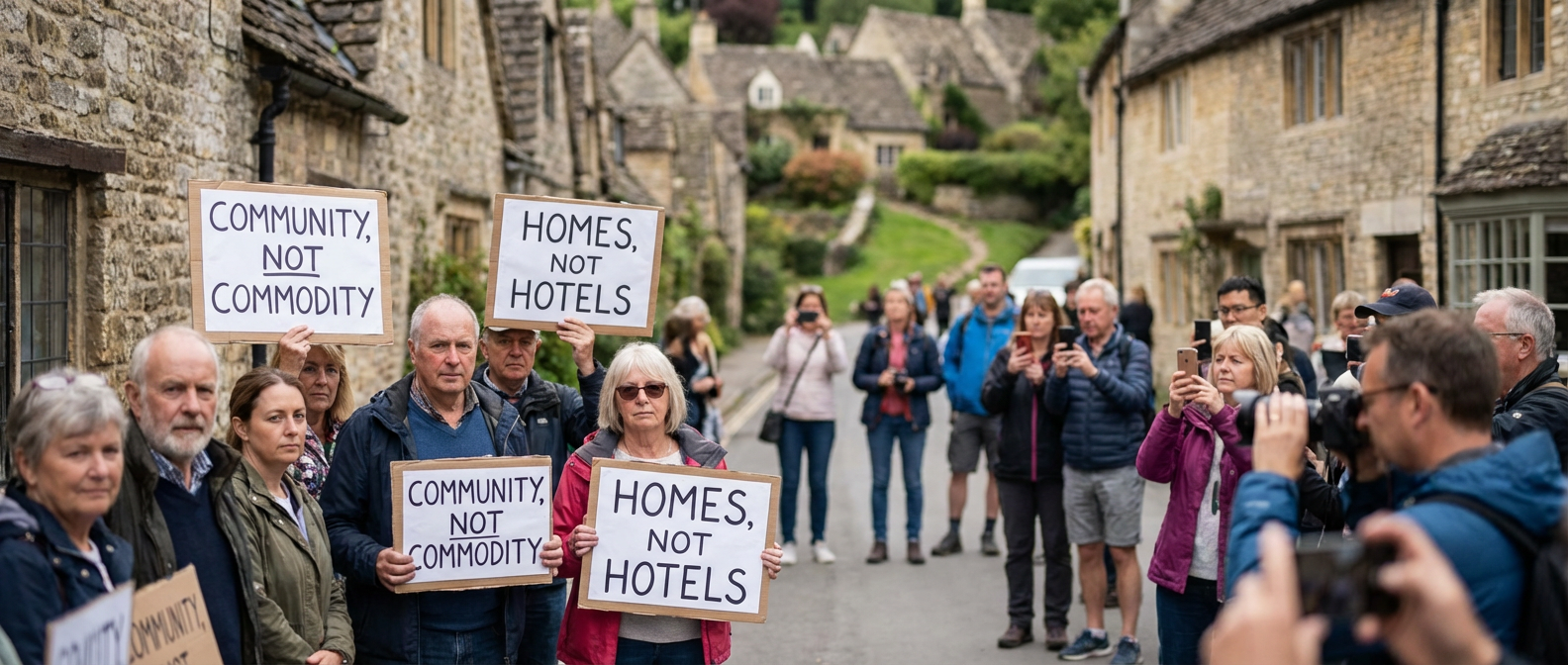
The shift from cultural grumbling to actual political movement happened when local governments realized residents had electoral power. Barcelona’s visitor cap didn’t emerge from hospitality industry consensus. It came from residents voting with their anger. Venice’s 31,000-member organization had become a voting bloc. Kyoto’s levy passed because residents demanded compensation. Cities discovered they could actually say no.
That’s the real story here. Not that Instagram is bad or TikTok is evil or influencers are shallow. Those critiques are tired. The story is that distributed communities figured out how to organize against algorithmic amplification. They turned the same networks that created the problem into organizing tools. They built evidence. They created policy alternatives. They made city councils choose between tourism revenue and resident survival, and they won because the math actually worked in their favor.
Some cities are now experimenting with digital tourism caps, limiting how many people can book reservations to certain areas on certain days. Others are implementing cultural education requirements before visiting certain neighborhoods, turning the problem of over-tourism into an opportunity for genuine engagement. A few are even exploring revenue sharing models where a percentage of tourism income funds local housing preservation.
What Comes Next
The movement isn’t finished. If anything, it’s accelerating. What started in Venice and Barcelona is now spreading to Bangkok, Reykjavik, Bali, and dozens of other places where Instagram success has become an existential threat. The template is emerging: document the damage, quantify it, organize residents, pressure platforms and city councils simultaneously, propose alternative policies that benefit both tourism and community stability.
What I find genuinely compelling about this moment is that it shows how grassroots movements can actually scale in the social media age when they have real leverage. This isn’t abstract politics. It’s about whether cities remain places where actual human communities can exist, or whether they become outdoor museums curated by algorithm.
The backlash against aesthetic tourism is turning into something bigger: a fight over who cities belong to. If you’re tracking culture and politics intersecting, this is where the real action is happening. What are you seeing in your own neighborhood or city? How is this playing out where you are?