The Numbers Don’t Lie, But They’re Weird
Something genuinely strange happened in the last eighteen months. Criterion Channel reported a 45 percent spike in viewing hours for films classified as slow cinema among users aged 18 to 28 between 2024 and 2025. That’s not marginal growth. That’s a fundamental shift in what young people are choosing to do with their finite free time. We’re talking about a demographic that grew up on TikTok, Instagram Reels, and algorithmic feeds designed to maximize engagement through rapid-fire stimulation. And they’re deliberately seeking out films with average shot lengths exceeding fifteen seconds.

The theater data makes it weirder. Metrograph in New York sold out three consecutive weekend marathons of Chantal Akerman’s complete works in January 2026. That’s not a Tuesday afternoon screening of one experimental film. That’s 1,800 tickets sold across multiple events for a filmmaker whose work requires patience, attention, and a willingness to sit through extended takes of domestic mundanity. The BFI Southbank’s 2025 Tarkovsky retrospective became its highest-attended repertory series since 2019, drawing 6,400 people over three weeks. For Andrei Tarkovsky. The guy who makes films where clouds move across the sky.
This isn’t hipster posturing. This is structural.
Slow Cinema as Digital Detox Mythology
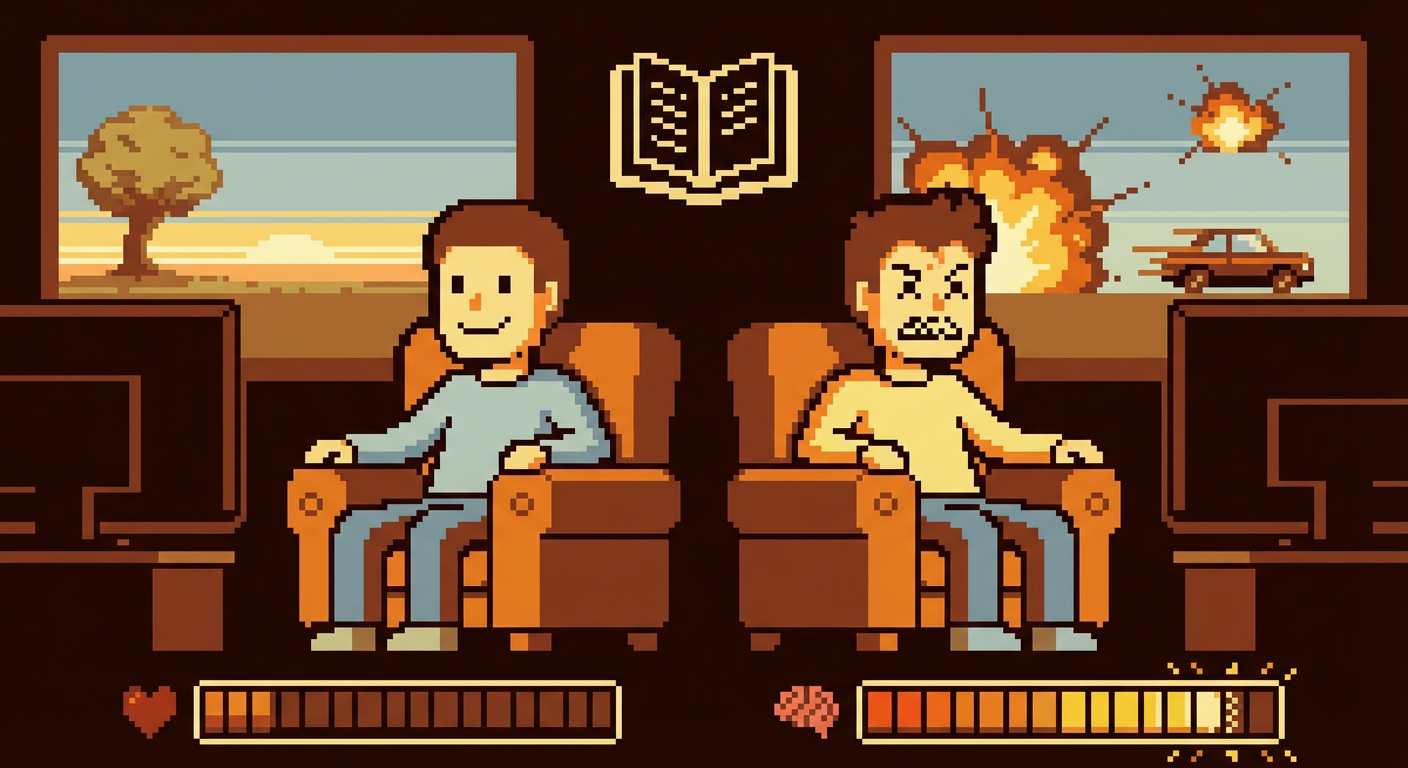
Let’s be honest about what’s happening here. Young people are exhausted. Not romantically, not philosophically. Neurologically exhausted. The constant demand for attention, the algorithmic pressure to maintain engagement, the perpetual scroll—it’s a documented crisis. And slow cinema functions as a direct antidote to that particular toxin. A film where nothing happens quickly is a film that refuses to compete for your attention. It demands surrender instead.
There’s actual science behind this. A study published in Projections: The Journal for Movies and Mind in late 2025 measured cortisol levels in viewers after screening. Slow cinema audiences showed measurably lower stress markers compared to action-genre viewers. This isn’t psychological comfort derived from preference. It’s a physiological response to temporal deceleration. Your nervous system literally calms down when you’re forced to sit with a thirty-second shot of a woman doing laundry.
The problem is that this phenomenon is being absorbed into the very system it’s supposedly resisting. Gen Z is being sold slow cinema as wellness culture. It’s meditation. It’s self-care. It’s the film equivalent of a 40-dollar cold plunge. And there’s a dark irony here: the moment slow cinema becomes legible as a health intervention, it becomes commodifiable. It becomes another thing to consume in the service of optimizing yourself.
The Viral Challenge That Changed the Game
Film Twitter and Letterboxd exploded in February 2026 with a “slow film challenge” hashtag that accumulated over 2.1 million posts. The rules were simple: watch one canonically slow film per week for a month. Four films. Four weeks. That’s it. The fact that this became viral across social platforms designed for speed and shareability is itself a contradiction worth sitting with.
What’s interesting is that the challenge wasn’t elitist in execution, even though slow cinema has historically functioned as cultural gatekeeping. People were watching Akerman alongside Hou Hsiao-hsien alongside Claire Denis alongside Aleksandr Sokurov. The posts ranged from genuinely engaged analysis to “I fell asleep and felt peaceful” to “I don’t understand what I’m supposed to be feeling.” There was an honesty in the format that kept the usual Instagram performativity at bay.
But here’s where my contrarian instinct starts kicking in: the challenge also flattened slow cinema into a trend. It became another thing to complete, another box to check, another way to signal cultural sophistication. The irony of using a social media viral campaign to promote films that explicitly reject the grammar of social media is almost too much. We’ve successfully absorbed resistance into the system. Gen Z didn’t discover slow cinema. They discovered how to make it trending.
What We’re Actually Doing When We Watch Akerman
The real story isn’t about teenagers suddenly getting taste. It’s about what slow cinema offers at a moment when every other cultural product is engineered for maximum extraction. When you watch Akerman’s “Jeanne Dielman, 23 quai du Commerce, 1080 Bruxelles”—a three-hour meditation on housework, repetition, and the invisible labor of domestic life—you’re not consuming content. You’re not streaming. You’re occupying time in a way that resists quantification and optimization. The film refuses to give you emotional payoffs. It refuses to accelerate. It refuses to satisfy.
That’s radical. Not because it’s slow, but because it’s useless. You can’t extract attention from a Tarkovsky film. You can’t reduce it to a hot take. You can’t make it viral. You can watch it and feel nothing except the weight of time passing, and that’s the point. Criterion Channel’s editorial on the slow cinema surge tried to articulate this as cultural resistance, but that framing misses something crucial: the real value of slow cinema is that it can’t be repackaged as revolutionary. It just is.
The Problem With What Comes Next
Here’s what keeps me up at night about this trend: it’s going to get absorbed. The film industry will sense the market and start producing “accessible slow cinema.” Studios will hire graduates from NYU’s film program to make expensive, beautiful films about nothing that somehow still have theatrical distribution and Netflix deals. Arthouse theaters will scale up programming. The Metrograph’s Akerman marathon will inspire tourist buses of people who heard it was cool.
Some of this is inevitable. Some of it is even fine. But the moment slow cinema goes mainstream, it loses the thing that makes it actually valuable: its resistance to the very systems that want to commodify it. You can’t sell the idea of not selling something. You can’t market the refusal to be marketed. Eventually, the contradiction collapses.
BFI’s 2025 repertory programming report showed record attendance, which is objectively good for those institutions. More people watching challenging cinema is better than fewer people watching it. But the question worth asking is whether the accessibility of slow cinema changes the experience of watching it. If everyone can access Tarkovsky through streaming, does the act of sitting in a theater for a retrospective still mean something? Or have we just democratized the illusion?
What do you think is actually happening here? Are we witnessing genuine cultural shift or just another iteration of how capitalism absorbs resistance? Drop a comment, share your thoughts, and tell me which slow film broke your brain this year.