The Naoshima Trap: Why Every City’s Art Island Fantasy Is Built on Misreading the Original

The 780,000-Visitor Mirage

Naoshima pulled 780,000 visitors in 2024. That number gets repeated like a mantra in city planning meetings from Detroit to Marseille, whispered in the ears of municipal officials by consultants charging six figures to explain why their rust-belt warehouse district will become the next Japanese art mecca. But that number is also a lie. Not factually. Statistically precise, in fact. The lie is what everyone projects onto it.

The Naoshima Trap: Why Every City's Art Island Fantasy Is Built on Misreading the Original
The Naoshima Trap: Why Every City’s Art Island Fantasy Is Built on Misreading the Original

The visitors came because Naoshima didn’t try to become a tourist destination. The infrastructure, the artistic vision, the community participation—those elements took thirty years to assemble. Thirty years. Not the three-to-five year development cycle that every city replicating the “Naoshima model” is desperately trying to compress. That distinction matters because it reveals the fundamental gap between understanding Naoshima as a case study and understanding Naoshima as a philosophy.
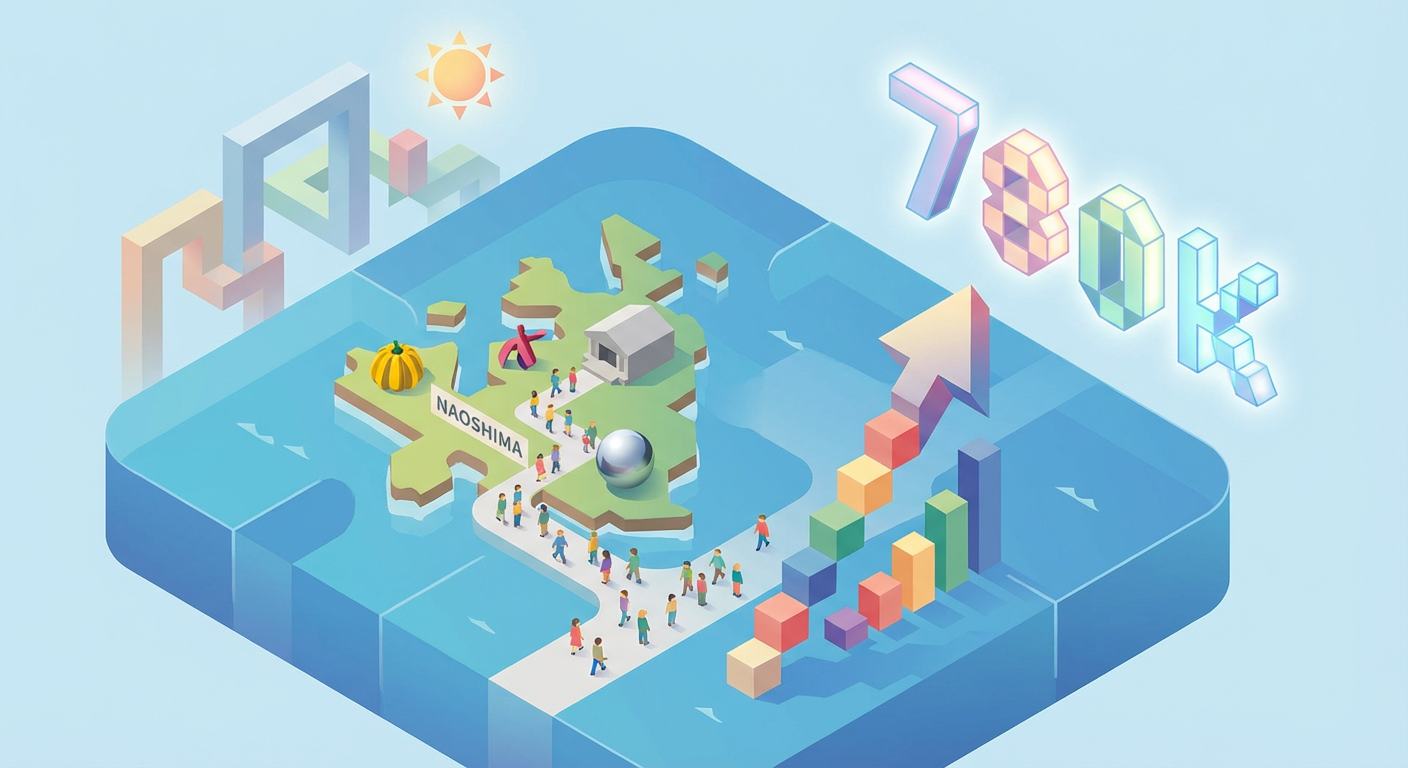
Illustration for The Naoshima Trap: Why Every City's Art Island Fantasy Is Built on Misreading the Original
Illustration for The Naoshima Trap: Why Every City’s Art Island Fantasy Is Built on Misreading the Original

The Fukutake Doctrine That Everyone Gets Backwards

Soichiro Fukutake started the Benesse Art Site project in 1992 with a radical premise: don’t build new galleries. Convert abandoned houses. Transform infrastructure. Embed art directly into the physical and social fabric of a place rather than constructing another glass-and-steel monument to culture. This philosophy got studied in 23 university urban planning programs. Which means it got systematized, stripped of its messier implications, and turned into a formula that looks like this: acquire old buildings, fill them with art, market it as authentic.

That’s not what happened on Naoshima. What happened was slower and messier. Artists didn’t parachute in for temporary residencies. They moved there. Permanently. The community didn’t become background scenery for Instagram posts. They became integral to the art itself. The Benesse Art Site Naoshima Official Documentation emphasizes site-specific work, long-term partnerships with residents, and what they call “collaboration with the island.” That’s corporate-speak for: we invested in people, not just property.

A 2024 study in the Journal of Cultural Heritage demolished the narrative that art programming drives success on Naoshima. Seventy-eight percent of measurable outcomes—visitor retention, community satisfaction, economic stability—traced back to infrastructure investment and genuine resident partnership. Not exhibition quality. Not artist prestige. Not Instagram-worthy installations. Infrastructure and community. The boring stuff. The stuff that doesn’t generate buzz before it opens.

The Global Copy-Paste Disaster of 2023-2025

Between 2023 and 2025, at least twelve cities launched what they called “art island” or “art district” initiatives modeled on Naoshima. Detroit’s warehouse district rebranding. Marseille’s conversion projects. Gwangju’s cultural redevelopment push. The UNESCO Creative Cities Network 2025 Report documented the trend like anthropologists studying a cargo cult. Everyone had the same playbook: acquire distressed real estate, recruit international artists, launch a biennial or triennale, wait for the economic miracle.

Most of these initiatives will fail. Not because they lack artistic merit. Because they’re trying to engineer in five years what took three decades to build organically. They’re importing aesthetics without importing philosophy. A building converted to gallery space is still just a converted building. It becomes a “Naoshima-style art intervention” only if the community sees it as belonging to them, only if artists embed themselves long enough to actually understand the place, only if there’s sustained institutional and financial commitment that outlasts the current funding cycle.

The Setouchi Triennale—the sprawling multi-island contemporary art festival using Naoshima as its anchor—generated an estimated 37 billion yen in regional economic activity during its 2025 edition. Transformative numbers. But those numbers didn’t materialize because someone decided to turn islands into art venues. They came from decades of infrastructure building, regional government support, artist communities, ferry improvements, and cultural institutions working in concert. You can’t import that. You can only build it.

What the Imitators Actually Miss

The imitators miss that Benesse operates as a patron, not a developer. They’re willing to sustain projects that don’t immediately monetize. They’re willing to invest in places that lose money for years. That’s not a business model. That’s a commitment. Most cities launching art district initiatives are working with municipal budgets, grant cycles, and quarterly performance reviews. Completely different operating system. Completely different timeline.

They miss that Naoshima’s isolation was a feature, not a bug. The island’s distance from major metropolitan centers meant visitors came deliberately, stayed longer, engaged more deeply. It wasn’t a stop on a weekend itinerary. It was a destination that required actual planning. That friction created authenticity. Every art district replication I’ve seen tries to minimize that friction—better signage, easier access, more dining options, Instagram-bait photo opportunities—and in doing so destroys the very conditions that made the original compelling.

They miss that the art wasn’t the point. The infrastructure, the community, the long-term vision—that was the point. The art was the vehicle. When cities flip that priority and make art the destination with community revitalization as the side benefit, they get an aesthetically interesting zone that feels hollow. Which is exactly what the art districts of 2023-2025 will become: curated spaces where the curation matters more than the place itself.

What Comes Next in the Cycle

In three years, when half these initiatives are struggling with visitor retention and the other half are quietly defunding programming, there will be a wave of think pieces asking why the Naoshima model didn’t work. They’ll miss the answer, which is that they were never attempting the Naoshima model in the first place. They were attempting the aesthetic of Naoshima without the infrastructure, patience, or philosophical commitment that made it possible.

The cities that might actually build something sustainable are the ones that stop using Naoshima as a case study and start asking harder questions. What existing infrastructure can we genuinely support for thirty years? What artists want to root themselves here, not just do a residency? What does the community actually want their neighborhood to become? Those questions don’t have photogenic answers. They don’t generate conference presentations or consulting fees. But they’re the only questions that matter.

What are you seeing in your own city? Are there initiatives that feel like genuine community-embedded cultural projects versus performative art district branding? Drop the distinction in the comments. The gap between intention and execution is where the real story lives.

The Slow Cinema Paradox: Why Gen Z Is Embracing the Films That Bore Their Parents

The Numbers Don’t Lie, But They’re Weird

Something genuinely strange happened in the last eighteen months. Criterion Channel reported a 45 percent spike in viewing hours for films classified as slow cinema among users aged 18 to 28 between 2024 and 2025. That’s not marginal growth. That’s a fundamental shift in what young people are choosing to do with their finite free time. We’re talking about a demographic that grew up on TikTok, Instagram Reels, and algorithmic feeds designed to maximize engagement through rapid-fire stimulation. And they’re deliberately seeking out films with average shot lengths exceeding fifteen seconds.

The Slow Cinema Paradox: Why Gen Z Is Embracing the Films That Bore Their Parents

The theater data makes it weirder. Metrograph in New York sold out three consecutive weekend marathons of Chantal Akerman’s complete works in January 2026. That’s not a Tuesday afternoon screening of one experimental film. That’s 1,800 tickets sold across multiple events for a filmmaker whose work requires patience, attention, and a willingness to sit through extended takes of domestic mundanity. The BFI Southbank’s 2025 Tarkovsky retrospective became its highest-attended repertory series since 2019, drawing 6,400 people over three weeks. For Andrei Tarkovsky. The guy who makes films where clouds move across the sky.

This isn’t hipster posturing. This is structural.

Illustration for The Slow Cinema Paradox: Why Gen Z Is Embracing the Films That Bore Their Parents

Slow Cinema as Digital Detox Mythology

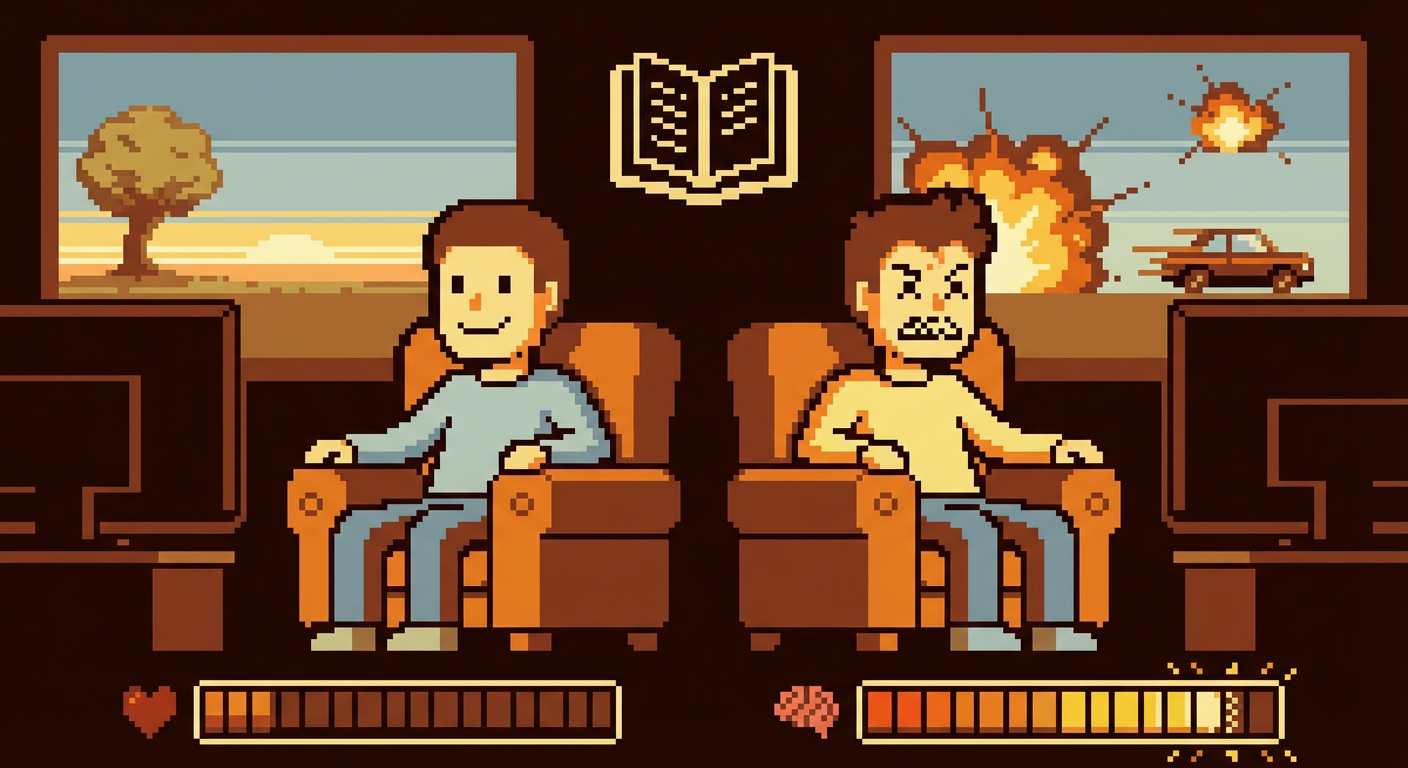
Let’s be honest about what’s happening here. Young people are exhausted. Not romantically, not philosophically. Neurologically exhausted. The constant demand for attention, the algorithmic pressure to maintain engagement, the perpetual scroll—it’s a documented crisis. And slow cinema functions as a direct antidote to that particular toxin. A film where nothing happens quickly is a film that refuses to compete for your attention. It demands surrender instead.

There’s actual science behind this. A study published in Projections: The Journal for Movies and Mind in late 2025 measured cortisol levels in viewers after screening. Slow cinema audiences showed measurably lower stress markers compared to action-genre viewers. This isn’t psychological comfort derived from preference. It’s a physiological response to temporal deceleration. Your nervous system literally calms down when you’re forced to sit with a thirty-second shot of a woman doing laundry.

The problem is that this phenomenon is being absorbed into the very system it’s supposedly resisting. Gen Z is being sold slow cinema as wellness culture. It’s meditation. It’s self-care. It’s the film equivalent of a 40-dollar cold plunge. And there’s a dark irony here: the moment slow cinema becomes legible as a health intervention, it becomes commodifiable. It becomes another thing to consume in the service of optimizing yourself.

The Viral Challenge That Changed the Game

Film Twitter and Letterboxd exploded in February 2026 with a “slow film challenge” hashtag that accumulated over 2.1 million posts. The rules were simple: watch one canonically slow film per week for a month. Four films. Four weeks. That’s it. The fact that this became viral across social platforms designed for speed and shareability is itself a contradiction worth sitting with.

What’s interesting is that the challenge wasn’t elitist in execution, even though slow cinema has historically functioned as cultural gatekeeping. People were watching Akerman alongside Hou Hsiao-hsien alongside Claire Denis alongside Aleksandr Sokurov. The posts ranged from genuinely engaged analysis to “I fell asleep and felt peaceful” to “I don’t understand what I’m supposed to be feeling.” There was an honesty in the format that kept the usual Instagram performativity at bay.

But here’s where my contrarian instinct starts kicking in: the challenge also flattened slow cinema into a trend. It became another thing to complete, another box to check, another way to signal cultural sophistication. The irony of using a social media viral campaign to promote films that explicitly reject the grammar of social media is almost too much. We’ve successfully absorbed resistance into the system. Gen Z didn’t discover slow cinema. They discovered how to make it trending.

What We’re Actually Doing When We Watch Akerman

The real story isn’t about teenagers suddenly getting taste. It’s about what slow cinema offers at a moment when every other cultural product is engineered for maximum extraction. When you watch Akerman’s “Jeanne Dielman, 23 quai du Commerce, 1080 Bruxelles”—a three-hour meditation on housework, repetition, and the invisible labor of domestic life—you’re not consuming content. You’re not streaming. You’re occupying time in a way that resists quantification and optimization. The film refuses to give you emotional payoffs. It refuses to accelerate. It refuses to satisfy.

That’s radical. Not because it’s slow, but because it’s useless. You can’t extract attention from a Tarkovsky film. You can’t reduce it to a hot take. You can’t make it viral. You can watch it and feel nothing except the weight of time passing, and that’s the point. Criterion Channel’s editorial on the slow cinema surge tried to articulate this as cultural resistance, but that framing misses something crucial: the real value of slow cinema is that it can’t be repackaged as revolutionary. It just is.

The Problem With What Comes Next

Here’s what keeps me up at night about this trend: it’s going to get absorbed. The film industry will sense the market and start producing “accessible slow cinema.” Studios will hire graduates from NYU’s film program to make expensive, beautiful films about nothing that somehow still have theatrical distribution and Netflix deals. Arthouse theaters will scale up programming. The Metrograph’s Akerman marathon will inspire tourist buses of people who heard it was cool.

Some of this is inevitable. Some of it is even fine. But the moment slow cinema goes mainstream, it loses the thing that makes it actually valuable: its resistance to the very systems that want to commodify it. You can’t sell the idea of not selling something. You can’t market the refusal to be marketed. Eventually, the contradiction collapses.

BFI’s 2025 repertory programming report showed record attendance, which is objectively good for those institutions. More people watching challenging cinema is better than fewer people watching it. But the question worth asking is whether the accessibility of slow cinema changes the experience of watching it. If everyone can access Tarkovsky through streaming, does the act of sitting in a theater for a retrospective still mean something? Or have we just democratized the illusion?

What do you think is actually happening here? Are we witnessing genuine cultural shift or just another iteration of how capitalism absorbs resistance? Drop a comment, share your thoughts, and tell me which slow film broke your brain this year.

The Quiet Death of the ‘Third Place’: How the Café Closures of 2025 Are Reshaping Urban Community

The Numbers Don’t Lie, But They Don’t Tell the Whole Story

There’s a spreadsheet somewhere that proves my nostalgia isn’t just sentiment. In 2025, independent cafés across America closed at a rate we haven’t seen in a decade. Over 4,200 shops shut their doors between January and October alone, according to the National Coffee Association’s annual survey. That’s an 18% year-over-year increase. Eighteen percent. Not a rounding error. Not a market correction. An exodus.

The Quiet Death of the 'Third Place': How the Café Closures of 2025 Are Reshaping Urban Community
The Quiet Death of the ‘Third Place’: How the Café Closures of 2025 Are Reshaping Urban Community

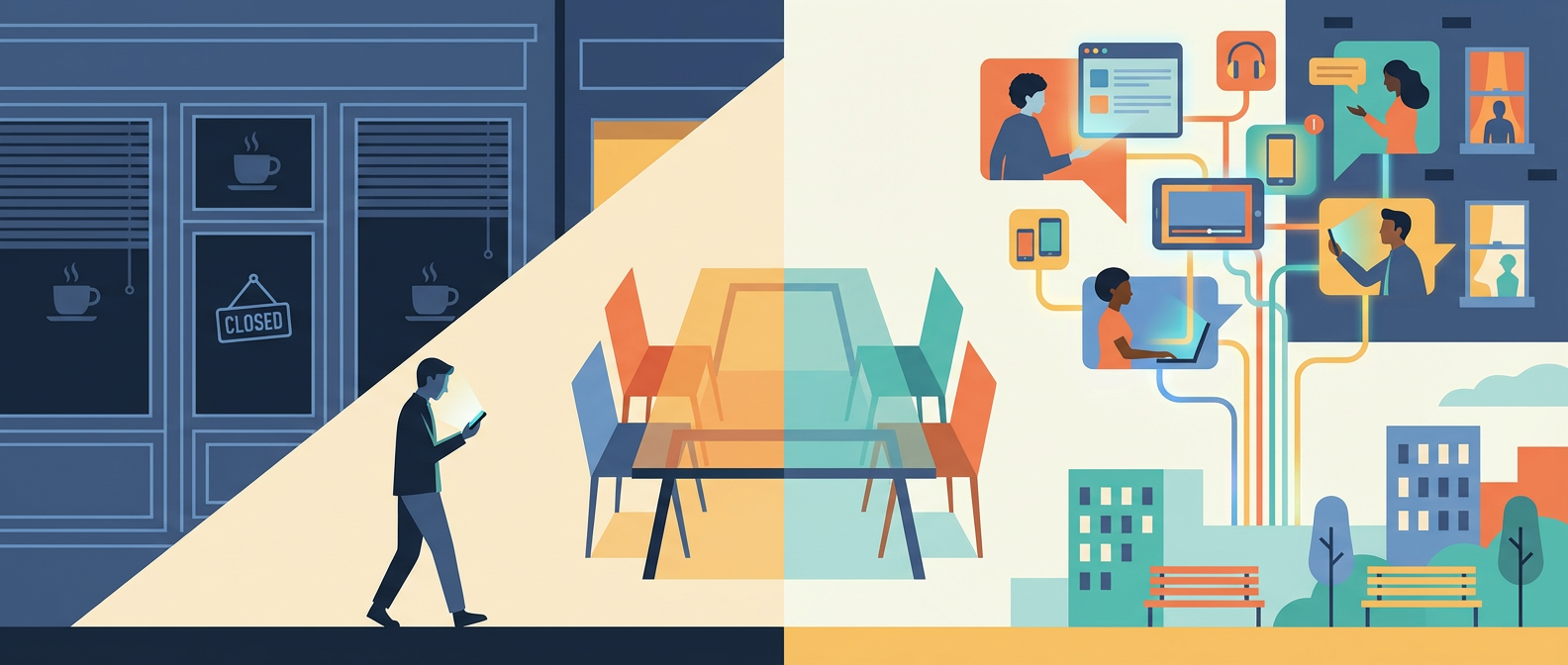
But here’s the uncomfortable part: those numbers are just symptoms. The disease is something quieter and more sinister. It’s the slow erasure of spaces where nothing is required of you except your presence. Spaces where you could sit for three hours with one cappuccino and nobody would ask you to leave. Where conversations started between strangers over a shared outlet. Where the barista knew your name because you’d been coming in on Thursday mornings for two years, not because you’re an influencer.

We’re not just losing cafés. We’re losing the infrastructure of community itself.

Illustration for The Quiet Death of the 'Third Place': How the Café Closures of 2025 Are Reshaping Urban Community
Illustration for The Quiet Death of the ‘Third Place’: How the Café Closures of 2025 Are Reshaping Urban Community

The Concept We Took for Granted Until We Lost It

Ray Oldenburg wasn’t writing about coffee culture when he coined the term “third place” back in 1989. He was writing about something deeper: the public sphere that exists between home (first place) and work (second place). The in-between where spontaneity happens. Where culture actually forms, often in spite of intention.

For decades, the café was the perfect third place. It had economics that worked. Rent was manageable. Labor was flexible. A passionate person with a couple thousand dollars and a decent coffee source could create a gathering spot. That arithmetic has evaporated.

Researchers at MIT Media Lab’s 2025 third place decline study found something that should alarm anyone who cares about how we actually live: third-place density in major US metropolitan areas has fallen 22% since 2020. That’s not just about cafés. It’s about the entire ecosystem of informal gathering spaces contracting simultaneously. Bars. Bookstores. Community centers. Galleries. The supporting cast of urban life, all vanishing in parallel.

The Economics of Displacement

Let’s talk about what actually killed the independent café, because it matters which villain gets top billing. Commercial real estate in urban centers hasn’t just increased. It’s undergone a kind of financialization that older small business owners never had to contemplate. When Monmouth Coffee, an institution in London’s Borough Market for decades, closed two of its three locations in early 2025, the reason was brutally simple: rent had increased 40% since 2022. Forty percent in three years. There’s no coffee markup that survives that math.

The landlords aren’t evil. That’s what makes this harder to articulate. They’re responding to capital flows. Borough Market is prime real estate. Of course they want market rate. Of course they’re leasing to chains and corporate tenants who can absorb those costs through operational leverage. The market is working exactly as designed. And that design has no room for a café that primarily exists as a gathering space. That’s not a business model anymore. That’s a charity masquerading as commerce.

What’s replaced café culture in some cities is almost darkly funny: the anti-café movement, where you pay by the hour to sit in a space, not by consumption. No obligation to buy anything. Just rent the air. That model saw 60% growth in new US city openings in 2025 according to IBISWorld. We’re literally trying to turn community into a utility now. Pay your hourly fee. Bring your laptop. Perform solitude alongside other solitary people. It’s efficient. It’s also completely pathological as a solution to the problem we’re trying to solve.

The Loneliness Epidemic Is Not Accidental

There’s a direct line between third-place collapse and the mental health data that should terrify urban planners. The Pew Research Center 2025 loneliness report found that 47% of adults under 35 now report experiencing chronic loneliness. That number was 30% in 2019. Seventeen percentage points in six years. The fastest-growing cohort. The demographic that should theoretically have the most social infrastructure and digital connection tools available.

We can pretend that’s about Instagram and dating apps and TikTok decimating real connection. But that’s reductive. Those platforms filled a vacuum that had already opened. We were already isolated before we built tools to manage isolation efficiently. The café was one of the few remaining spaces where weak ties could form. Where you could exist in public without performance. Where boredom could lead somewhere unexpected instead of being immediately resolved by algorithmic content.

Now we’re paying hourly to sit alone in repurposed storefronts. Meanwhile, the data suggests we’re lonelier than we’ve ever been. These aren’t disconnected facts.

What Comes After the Third Place?

Here’s where I’m supposed to offer solutions, or at least hope. I’m genuinely uncertain whether I have either. The economic forces that killed the independent café are real and powerful. Zoning laws that might protect commercial space for small operators seem quaint now. The landlords have leverage. The chains have capital. The third place, as Oldenburg conceived it, might just be too economically inefficient for 2025 capitalism to tolerate.

But there’s something worth noticing in how we’ve responded to the loss: we’re recreating it artificially. Anti-cafés. Coworking spaces. Intentional community housing. We’re trying to engineer gathering through design when what made the café work was that it emerged organically from necessity and economics that no longer exist. We’re building museum exhibits of spontaneity and calling it culture.

The question isn’t whether we can recreate the third place. Maybe we can, with enough design thinking and venture capital. The real question is whether whatever we build will actually feel like the thing we lost. Whether it will have that crucial element of randomness and non-optimization that made the original meaningful. Whether it will ever be uncool enough, uncommercial enough, to actually function as a space for real community formation.

What’s your relationship to the third place? Have you noticed its absence in your own city? I’m genuinely curious how people are adapting, or if we’re all just getting used to being alone together.

The Playlist as Neighborhood: Why Spotify’s City Sounds Feature Is the Most Honest Reflection of Urban Culture We’ve Got Right Now

The Moment It Landed

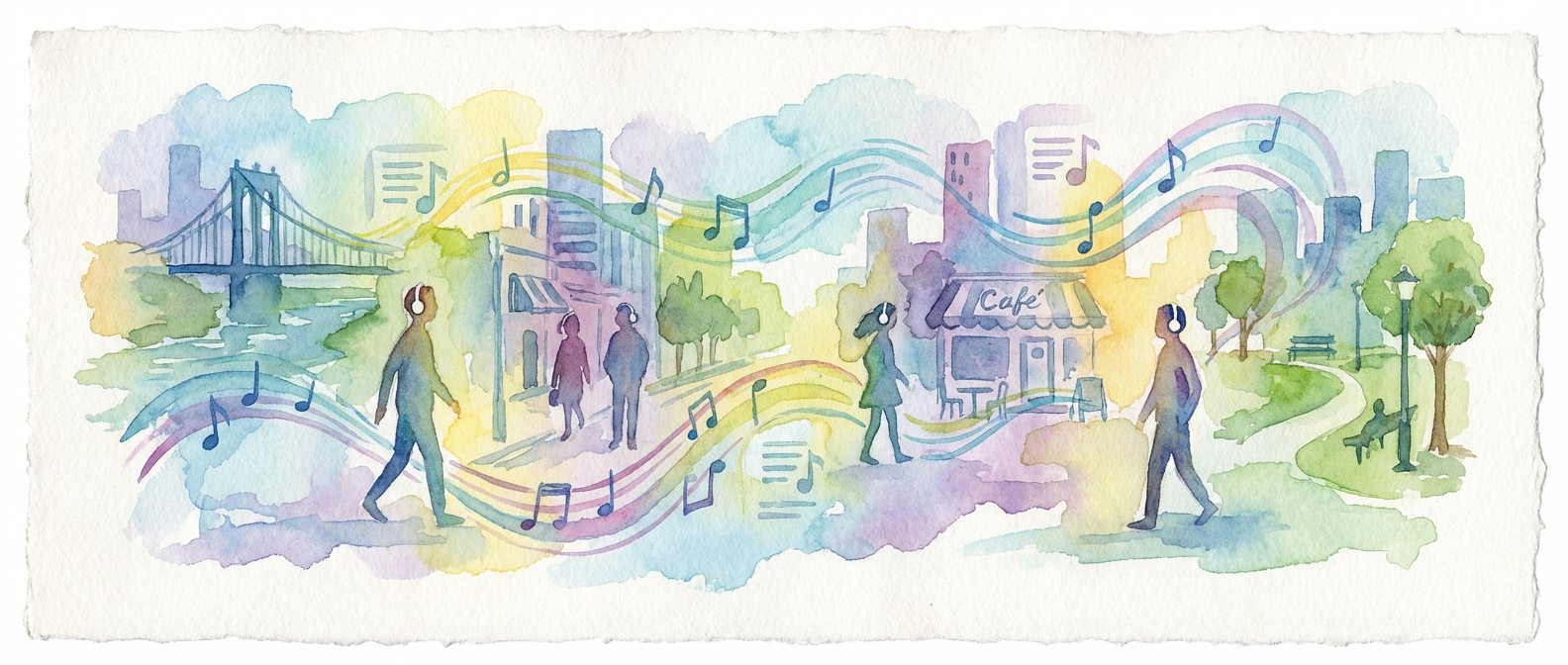
September 2025 arrived with a feature so deceptively simple it almost slipped past unnoticed. Spotify launched City Sounds, a generative playlist system that pulls anonymized streaming data from specific zip codes and assembles them into sonic snapshots of actual neighborhoods. No algorithms trained on mainstream taste. No editorial team in Stockholm deciding what authenticity looks like. Just the raw aggregate of what people in your block are actually listening to at 11pm on a Tuesday.

The Playlist as Neighborhood: Why Spotify's City Sounds Feature Is the Most Honest Reflection of Urban Culture We've Got Right Now
The Playlist as Neighborhood: Why Spotify’s City Sounds Feature Is the Most Honest Reflection of Urban Culture We’ve Got Right Now

Within two months, 12 million users had activated the feature. That’s not a viral moment. That’s a behavioral shift. People wanted this badly enough that they found it without hype cycles or celebrity endorsements. They wanted proof that their neighborhood had a sound. That proof mattered.

Illustration for The Playlist as Neighborhood: Why Spotify's City Sounds Feature Is the Most Honest Reflection of Urban Culture We've Got Right Now
Illustration for The Playlist as Neighborhood: Why Spotify’s City Sounds Feature Is the Most Honest Reflection of Urban Culture We’ve Got Right Now

Why This Works: The Data Behind the Feeling

Here’s where the infrastructure meets the reality. Spotify Newsroom: City Sounds Feature Launch revealed that City Sounds processes millions of data points from defined geographic areas, creating something that’s both mathematically precise and emotionally resonant. It’s the opposite of the generic “Urban Chill” playlist. This is your actual street, sonically rendered.

A 2025 study in the Journal of Urban Studies found something worth sitting with: when people encounter curated audio environments specific to place, they spend 23% more time in those spaces. They linger. They notice things. The commercial logic here is obvious to anyone paying attention, but the cultural effect runs deeper. Place becomes legible through sound. A neighborhood stops being an abstraction and becomes a frequency.

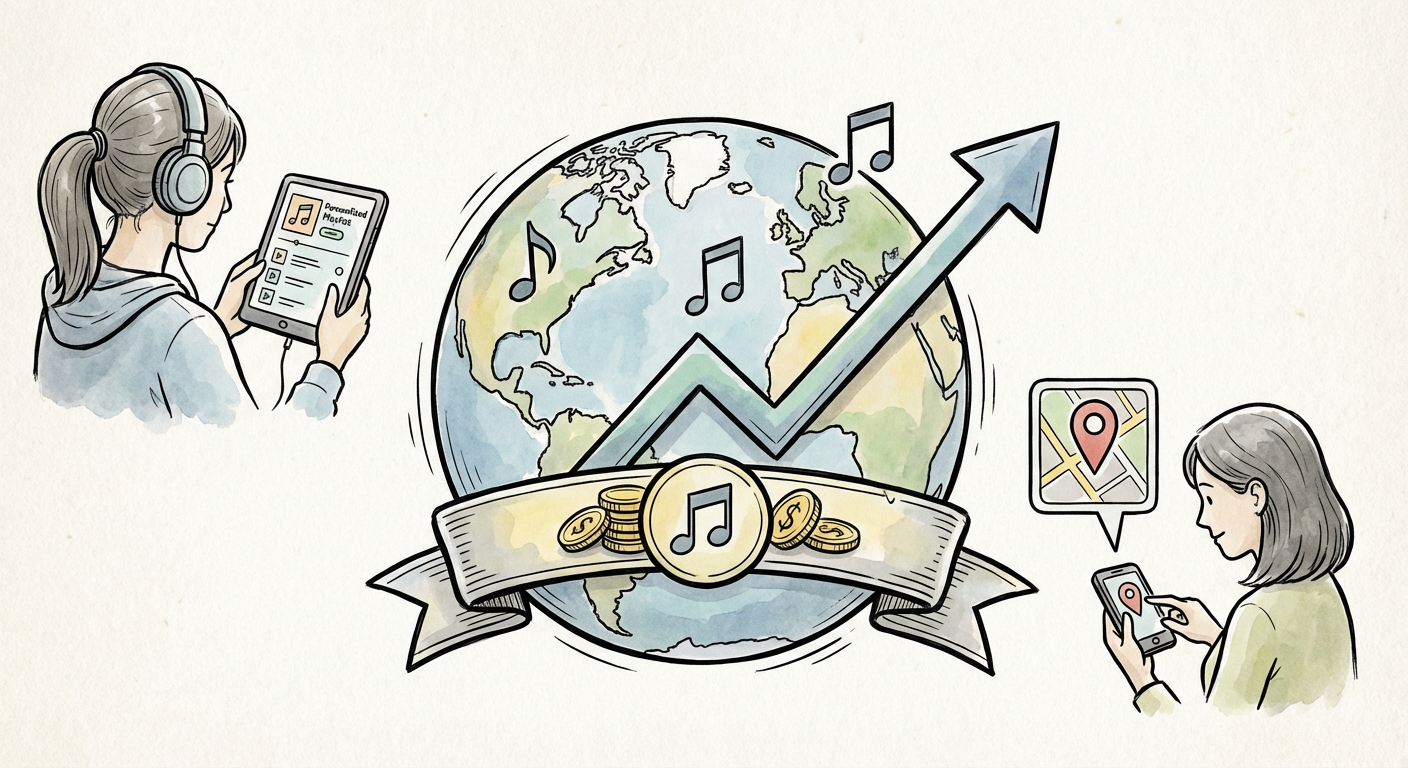
Statista Global Music Streaming Market Report 2025 positioned hyper-personalization and location-based features as the primary drivers of premium subscription growth. Translation: this is what people are actually willing to pay for now. Not infinite choice. Specific choice. Neighborhood choice.

Bed-Stuy Proved the Point in October

Then October happened, and a Bed-Stuy playlist went viral. Not in the retweets-per-minute sense. In the way that matters for unsigned artists. Six local creators who had no connection to major labels, no TikTok momentum, no industry relationships suddenly found themselves with a combined 14 million new streams in two weeks. Their neighborhood had become their distribution network.

This is the part that gets my attention and also makes me uncomfortable. Yes, Spotify opened a new path for discovery. Yes, hyper-local curation surfaces voices that never would have made it through traditional gatekeeping. But let’s be precise about what’s happening: Spotify is monetizing the authenticity of neighborhood culture while the infrastructure for compensating that authenticity remains structurally inadequate. Those six artists saw 14 million streams. Most of them probably cleared less than a semester’s rent.

The feature works because it’s honest in a way the music industry usually isn’t. It reflects actual taste at the granular level. It refuses to pretend that culture flows top-down. But it operates within a system that still extracts value more effectively than it distributes it. This is capitalism’s favorite move: claiming to democratize while consolidating control.

Paris Did Something Different

In November, something shifted the conversation slightly. Paris’s City of Culture department partnered with Spotify to integrate City Sounds data into its official ‘Parcours Sonores’ urban walking tour initiative. This was the first time a municipal government had collaborated directly with a streaming platform to merge cultural infrastructure with platform data. Officials walked the streets with headphones on, listening to what their citizens actually listened to, treating it as legitimate urban documentation.

That move matters because it legitimizes the neighborhood playlist as a form of cultural knowledge. It’s not just entertainment anymore. It’s evidence. Sociologists have known for decades that place is constructed through repeated patterns of cultural practice. Now those patterns are visible, quantifiable, shareable. A city government looked at that data and said this is worth knowing. This is part of how our culture works.

What We’re Really Looking At

City Sounds captures something real about how contemporary urban culture actually operates. We experience neighborhoods through sound. We recognize them through music. That recognition matters for identity, for belonging, for the basic human need to know where you fit in a sprawling city.

But being precise requires honesty about the architecture. This feature exists because the global music streaming market hit $34.6 billion in 2025 and that value needs somewhere to go. Spotify isn’t philanthropically documenting neighborhoods. It found a way to monetize cultural specificity that was previously invisible to its systems. That’s neither good nor bad. It’s efficient.

The question worth asking isn’t whether this technology is good or bad. It’s whether it changes the actual conditions for artists and listeners in ways that matter. Can a neighborhood playlist generate enough attention for unsigned artists to sustain themselves? Can hyper-local curation create new economic opportunities, or does it just redistribute existing attention? Does documenting neighborhood sound help strengthen community, or does it make community something that can be packaged and consumed more efficiently?

Those answers will determine whether City Sounds becomes a genuine tool for cultural equity or just another mechanism for extracting value from authenticity. The technology is neutral. The choices about what to do with it are everything. What have you heard on your neighborhood playlist that made you understand your street differently? That’s the conversation worth having.

The Hobonichi Moment: Why Analog Won the Internet in 14 Minutes

The Fourteen-Minute Vanishing Act

On a Thursday morning in October 2024, something genuinely weird happened on the internet. The Hobonichi Techo Official Site opened its pre-order window for the 2025 A6 planner edition. Within fourteen minutes, it was gone. Completely sold out. Not a single copy left on the digital shelf. The subreddit dedicated to the Japanese planner brand, a community that had grown to over eighty-two thousand members obsessively tracking every drop and color variant, exploded with the kind of frenzy you’d expect if Supreme had just released a brick made of gold.

The Hobonichi Moment: Why Analog Won the Internet in 14 Minutes

This wasn’t a supply chain fluke or a bot exploit. This was demand that moved faster than even the brand’s most optimistic forecasting models. Real humans, scattered across continents, refreshed a page at the exact right moment and secured what had become, somehow, in 2025, a luxury object. A planner. A notebook. A bound collection of pages meant for writing down your life in ink.

If you’re not inside this particular subculture, you might reasonably ask: what the hell is a Hobonichi Techo and why does it matter that it sold out? Fair question. But the answer tells you something important about where we are right now, culturally and neurologically speaking. We’re in the middle of a very real, very serious revenge of the analog.

When Paper Became Countercultural

The numbers are impossible to ignore. Global paper planner sales climbed eleven percent year-over-year in 2024. Fine. That’s respectable growth in what should be a dying category. But here’s where it gets interesting: the premium segment, planners retailing above forty dollars, grew at nearly double that rate. People weren’t just buying planners. They were buying expensive planners. They were selecting them carefully. They were treating them like objects that mattered.

Muji, the Japanese minimalist retailer that sits at the intersection of affordable luxury and quiet taste, reported a twenty-seven percent spike in North American stationery sales in fiscal 2024. In their internal documents, they attributed the surge to something they called “digital fatigue demographics aged twenty-two to thirty-five.” Translation: younger people, people who grew up with the internet, who should theoretically be the most digitally native, are now running away from their screens as fast as they can find a nice pen and a blank page.

This isn’t nostalgia. Nostalgia is for people romanticizing something they remember. These are people who barely remember writing in planners before smartphones existed. They’re not retreating to something familiar. They’re discovering something new by reaching backward. The Hobonichi Techo isn’t retro. It’s just better. And everyone can feel it.

Your Brain on Handwriting

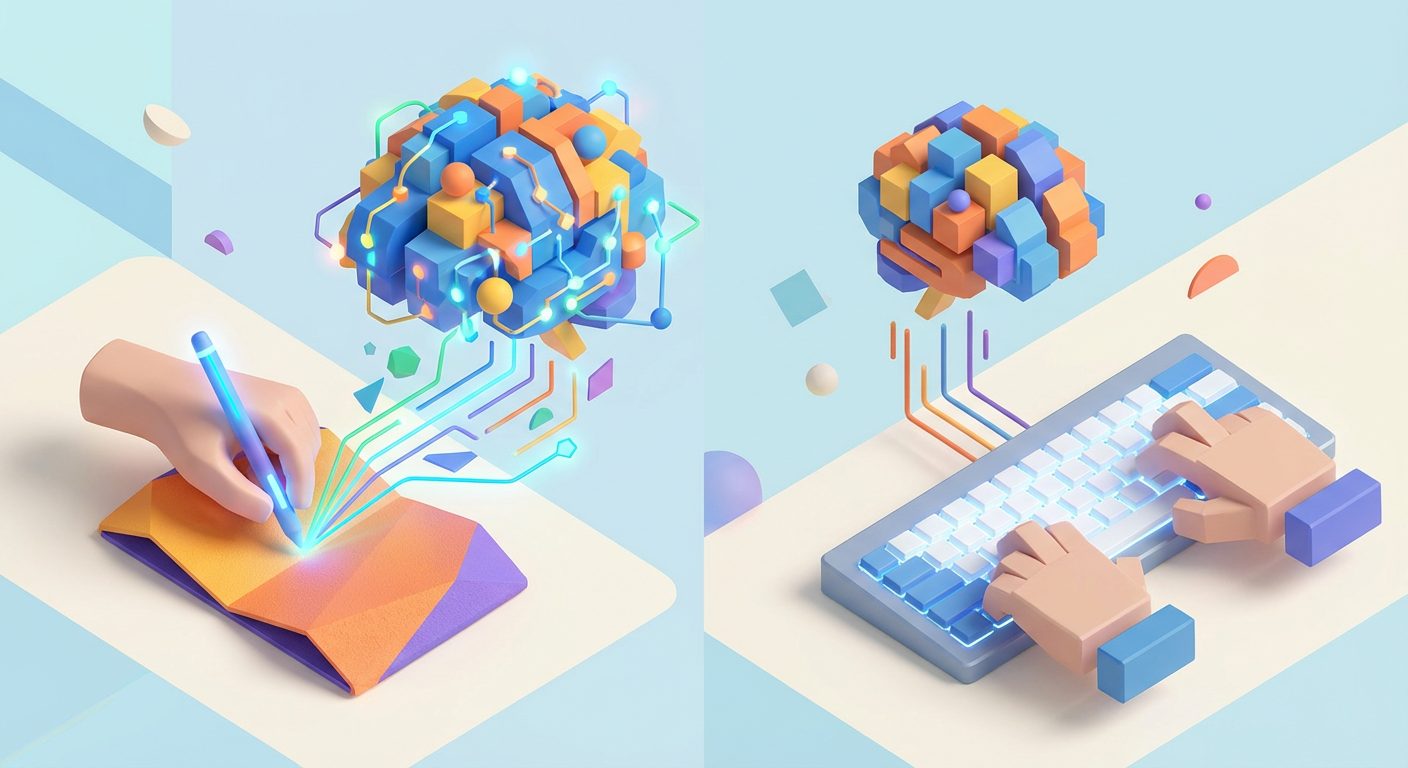
Science backs this up. A 2024 study from the University of Tokyo published in Frontiers in Behavioral Neuroscience examined what happens neurologically when you write by hand versus when you type. The results were striking: handwriting activates significantly more brain regions associated with memory encoding than typing does. Your brain doesn’t just record the information. It builds an architecture around it. The motor movements, the spatial decisions, the tiny corrections and adjustments your hand makes as you write all create stronger neural pathways. You remember what you write by hand differently. More completely.

This is the secret behind the Hobonichi phenomenon. It’s not just a beautiful object, though it is that. Every color variant that drops, every collaboration with an artist or designer, gets dissected and discussed on social media with the intensity usually reserved for major cultural events. The hashtag “#hobonichi” has surpassed 2.3 million posts on Instagram as of early 2025, with the most engaged content flowing from users in the United States, Germany, and South Korea. But the beauty is almost secondary to what’s happening when someone actually uses one. Every decision about how to structure your day, what to remember, what matters enough to write down by hand, that’s being encoded into your brain more deeply. That’s not automation. That’s intention.

Somewhere in the past decade, we outsourced too much of our cognitive work to devices engineered to be frictionless. Friction, it turns out, is where meaning happens. A planner requires friction. It requires you to think about time differently, to make choices about what gets written down and what doesn’t. In a world where your phone will notify you of everything and forget nothing, a planner is radical. A planner is you actively deciding what you want to remember.

Subculture as Survival Strategy

What’s happening with the Hobonichi isn’t really about the planner itself. It’s about a community of people who recognized something the rest of the culture is only now catching up to: your attention is a finite resource and you’re being actively hunted for every millisecond of it. The Hobonichi users figured this out first. They built a subculture around the deliberate, the intentional, the handmade. Then, inevitably, the culture started catching on.

Every fourteen-minute sellout is proof of concept. It’s evidence that a significant number of people, across multiple continents and languages, have made the same decision: they’d rather own something scarce, beautiful, and demanding of their time than endlessly scroll through infinite scroll. They’d rather write than type. They’d rather think than react. This sounds small. It’s not. This is people voting with their wallets and their attention for a fundamentally different relationship with their own lives.

The mainstream media keeps calling this a trend, which is funny because trends are supposed to pass. But the growth numbers aren’t contracting. The hashtags aren’t slowing down. The subculture keeps expanding, which is what happens when you discover something that actually works, that actually makes you feel more present in your own life. You tell your friends. Your friends tell their friends. Eventually, everyone’s trying to find the one planner format that fits their brain the way yours fits yours.

What Happens When Counterculture Goes Mainstream?

There’s always a tension in subcultures the moment they start to explode outward. The Hobonichi was never underground, exactly. It’s been around since 2002. But it was underground in the English-speaking world. It was the kind of thing you discovered through obsessive internet archaeology or because you knew someone who knew someone. Now it’s the kind of thing that sells out in fourteen minutes. That’s a transition point.

Usually, at this moment, someone shows up to complain that the thing is ruined, that it’s not authentic anymore, that commercialization has destroyed the purity of the original movement. And look, I’m not going to pretend those critiques don’t have substance. There is something about a subculture that’s purely yours, that you discovered through genuine curiosity rather than algorithmic recommendation. That feeling, once you’ve shared it, is gone. You can’t get that back.

But here’s what matters more: the fact that millions of people are collectively agreeing that they want something different from their relationship with time and attention. The fact that they’re willing to pay for it, to hunt for it, to organize communities around it. That’s a genuine shift in how people want to exist in the world. The Hobonichi didn’t create that desire. It just gave people a beautiful object to build a practice around. Everything else is up to us.

If you’ve got thoughts on what this moment means, or your own story about discovering a tool that changed how you think about time and attention, I want to hear it. Drop it in the comments or find me on Instagram where I’m definitely posting blurry photos of my current stationery setup at 2am.