The Fourteen-Minute Vanishing Act
On a Thursday morning in October 2024, something genuinely weird happened on the internet. The Hobonichi Techo Official Site opened its pre-order window for the 2025 A6 planner edition. Within fourteen minutes, it was gone. Completely sold out. Not a single copy left on the digital shelf. The subreddit dedicated to the Japanese planner brand, a community that had grown to over eighty-two thousand members obsessively tracking every drop and color variant, exploded with the kind of frenzy you’d expect if Supreme had just released a brick made of gold.
This wasn’t a supply chain fluke or a bot exploit. This was demand that moved faster than even the brand’s most optimistic forecasting models. Real humans, scattered across continents, refreshed a page at the exact right moment and secured what had become, somehow, in 2025, a luxury object. A planner. A notebook. A bound collection of pages meant for writing down your life in ink.
If you’re not inside this particular subculture, you might reasonably ask: what the hell is a Hobonichi Techo and why does it matter that it sold out? Fair question. But the answer tells you something important about where we are right now, culturally and neurologically speaking. We’re in the middle of a very real, very serious revenge of the analog.
When Paper Became Countercultural
The numbers are impossible to ignore. Global paper planner sales climbed eleven percent year-over-year in 2024. Fine. That’s respectable growth in what should be a dying category. But here’s where it gets interesting: the premium segment, planners retailing above forty dollars, grew at nearly double that rate. People weren’t just buying planners. They were buying expensive planners. They were selecting them carefully. They were treating them like objects that mattered.
Muji, the Japanese minimalist retailer that sits at the intersection of affordable luxury and quiet taste, reported a twenty-seven percent spike in North American stationery sales in fiscal 2024. In their internal documents, they attributed the surge to something they called “digital fatigue demographics aged twenty-two to thirty-five.” Translation: younger people, people who grew up with the internet, who should theoretically be the most digitally native, are now running away from their screens as fast as they can find a nice pen and a blank page.
This isn’t nostalgia. Nostalgia is for people romanticizing something they remember. These are people who barely remember writing in planners before smartphones existed. They’re not retreating to something familiar. They’re discovering something new by reaching backward. The Hobonichi Techo isn’t retro. It’s just better. And everyone can feel it.
Your Brain on Handwriting
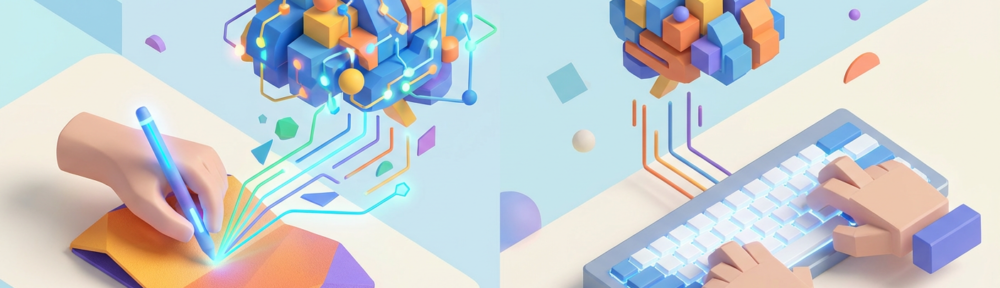
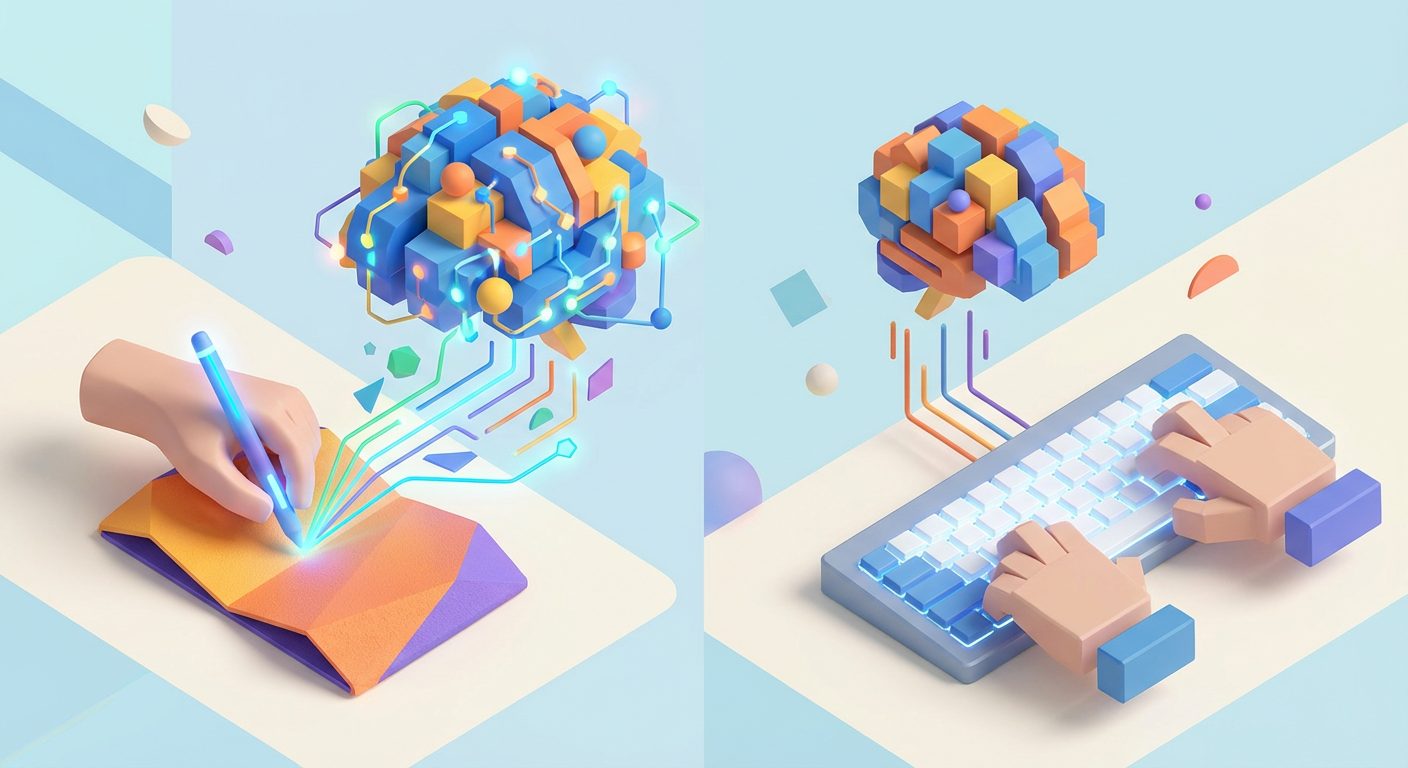
Science backs this up. A 2024 study from the University of Tokyo published in Frontiers in Behavioral Neuroscience examined what happens neurologically when you write by hand versus when you type. The results were striking: handwriting activates significantly more brain regions associated with memory encoding than typing does. Your brain doesn’t just record the information. It builds an architecture around it. The motor movements, the spatial decisions, the tiny corrections and adjustments your hand makes as you write all create stronger neural pathways. You remember what you write by hand differently. More completely.
This is the secret behind the Hobonichi phenomenon. It’s not just a beautiful object, though it is that. Every color variant that drops, every collaboration with an artist or designer, gets dissected and discussed on social media with the intensity usually reserved for major cultural events. The hashtag “#hobonichi” has surpassed 2.3 million posts on Instagram as of early 2025, with the most engaged content flowing from users in the United States, Germany, and South Korea. But the beauty is almost secondary to what’s happening when someone actually uses one. Every decision about how to structure your day, what to remember, what matters enough to write down by hand, that’s being encoded into your brain more deeply. That’s not automation. That’s intention.
Somewhere in the past decade, we outsourced too much of our cognitive work to devices engineered to be frictionless. Friction, it turns out, is where meaning happens. A planner requires friction. It requires you to think about time differently, to make choices about what gets written down and what doesn’t. In a world where your phone will notify you of everything and forget nothing, a planner is radical. A planner is you actively deciding what you want to remember.
Subculture as Survival Strategy
What’s happening with the Hobonichi isn’t really about the planner itself. It’s about a community of people who recognized something the rest of the culture is only now catching up to: your attention is a finite resource and you’re being actively hunted for every millisecond of it. The Hobonichi users figured this out first. They built a subculture around the deliberate, the intentional, the handmade. Then, inevitably, the culture started catching on.
Every fourteen-minute sellout is proof of concept. It’s evidence that a significant number of people, across multiple continents and languages, have made the same decision: they’d rather own something scarce, beautiful, and demanding of their time than endlessly scroll through infinite scroll. They’d rather write than type. They’d rather think than react. This sounds small. It’s not. This is people voting with their wallets and their attention for a fundamentally different relationship with their own lives.
The mainstream media keeps calling this a trend, which is funny because trends are supposed to pass. But the growth numbers aren’t contracting. The hashtags aren’t slowing down. The subculture keeps expanding, which is what happens when you discover something that actually works, that actually makes you feel more present in your own life. You tell your friends. Your friends tell their friends. Eventually, everyone’s trying to find the one planner format that fits their brain the way yours fits yours.
What Happens When Counterculture Goes Mainstream?
There’s always a tension in subcultures the moment they start to explode outward. The Hobonichi was never underground, exactly. It’s been around since 2002. But it was underground in the English-speaking world. It was the kind of thing you discovered through obsessive internet archaeology or because you knew someone who knew someone. Now it’s the kind of thing that sells out in fourteen minutes. That’s a transition point.
Usually, at this moment, someone shows up to complain that the thing is ruined, that it’s not authentic anymore, that commercialization has destroyed the purity of the original movement. And look, I’m not going to pretend those critiques don’t have substance. There is something about a subculture that’s purely yours, that you discovered through genuine curiosity rather than algorithmic recommendation. That feeling, once you’ve shared it, is gone. You can’t get that back.
But here’s what matters more: the fact that millions of people are collectively agreeing that they want something different from their relationship with time and attention. The fact that they’re willing to pay for it, to hunt for it, to organize communities around it. That’s a genuine shift in how people want to exist in the world. The Hobonichi didn’t create that desire. It just gave people a beautiful object to build a practice around. Everything else is up to us.
If you’ve got thoughts on what this moment means, or your own story about discovering a tool that changed how you think about time and attention, I want to hear it. Drop it in the comments or find me on Instagram where I’m definitely posting blurry photos of my current stationery setup at 2am.