How Fandoms Turn Entertainment Into Identity and Why That Gets Dangerous

I Watched a Woman Get Death Threats Over a Fictional Ship, and Now I Have Questions

There’s a particular kind of internet drama that hits different when you’ve been around long enough. You watch someone get called a Nazi sympathizer because they think two fictional characters shouldn’t kiss, and you think: we have lost the plot entirely. Not the television plot. The human plot. The one where we remember that entertainment is something we consume, not something we become.

Crowd of fans at a concert event with raised hands

Here’s the thing about fandom: it starts as affection. You watch something, it clicks, you find your people. That’s fine. That’s actually beautiful. But somewhere along the way—and I’ve watched this happen across Twilight stans, K-pop armies, Marvel obsessives, and yes, even the Sherlock Holmes slash fiction writers of 2012—affection curdles into identity. And identity, when it’s built on someone else’s intellectual property, gets ugly fast.

The Pipeline From “I Like This” to “I Am This”

Let me walk you through the transformation, because it’s remarkably consistent regardless of franchise.

Stage One: Consumption. You watch a show, listen to a band, read a book. You enjoy it. Normal. Healthy. The cultural equivalent of eating a sandwich.

Stage Two: Community. You find others who also ate the sandwich. You discuss the sandwich. You make sandwich memes. Still fine. Community built around shared interests is one of the better things humans do.

Stage Three: Identification. This is where the sandwich becomes part of your bio, your aesthetic, your personality. You don’t just like the thing; you are a person who likes the thing. The distinction matters more than you’d think.

Stage Four: Defense. Because the thing is now part of you, any attack on the thing is an attack on you. Criticism becomes violence. A bad review becomes a personal wound. Someone not liking the sandwich is an act of aggression that must be countered.

Stage Five: Purification. You start policing who’s a real fan. You create hierarchies of devotion. You expel people who engage with the thing wrong. The community becomes a gated compound with ever-shrinking criteria for entry.

I’ve watched this cycle play out dozens of times. The specific fandom changes. The pattern doesn’t.

The Psychology of Borrowed Identity

Here’s where I stop being flippant and start being genuinely concerned. There’s research on what psychologists call identity fusion—the phenomenon where people become so absorbed into a group that their personal and group identities literally merge. When that group is built around a commercial product, you’ve essentially let a corporation write a chunk of your personality.

This isn’t an exaggeration. I’ve seen people rearrange their entire lives—drop friends, change careers, relocate—based on their relationship to a fandom. The Twilight moms who left their husbands for the Facebook group weren’t just being eccentric. They had replaced their marriage with a parasocial commitment to a fictional vampire romance. That’s not quirky. That’s a psychological crisis wearing a Team Edward t-shirt.
Group of people gathered closely together in discussion

When “Protect the Thing” Becomes “Destroy the Person”

The danger I’m talking about isn’t hypothetical. Let me list some things that actually happened because people fused their identities with entertainment products:

  • K-pop stans doxxing and sending death threats to anyone who criticizes their idol, including other human beings who are also K-pop idols. The Sulli and Goo Hara suicides weren’t caused by fandom, but the harassment culture these women faced was enabled by fans who treated celebrities as extensions of themselves.
  • Gamergate—need I say more? A consumer identity movement that became a harassment campaign targeting women in games, all under the banner of “protecting gaming culture.”
  • The Star Wars fandom becoming so toxic toward actors of color that Kelly Marie Tran deleted her Instagram and compared the experience to being dehumanized by racism. For being in a space movie.
  • Rick and Morty fans harassingHarmon and Roiland’s social media, review-bombing episodes, and generally behaving like a cartoon had personally betrayed them.

These aren’t isolated incidents. They’re what happens when entertainment becomes identity. When the thing you love becomes the thing you are, you lose the ability to process criticism, change, or even basic reality-checking. The franchise didn’t just make a bad creative decision—it committed a personal violation against you.

Corporate America Loves Your Psychological Vulnerability

Here’s the part that makes me genuinely angry: this identity fusion isn’t an accident. It’s a business model.

Studios, labels, and publishers have figured out that fans who identify with a product will spend more money, defend the brand for free, and attack competitors without being asked. Fandom identity is free marketing, free PR, and free enforcement. You don’t need a crisis management team when you have thousands of unpaid superfans who will personally destroy anyone who says your movie is bad.

Marvel didn’t accidentally create the MCU’s obsessive fan culture. Disney didn’t stumble into turning Star Wars into a lifestyle brand. K-pop companies didn’t figure out by chance that training fans to see idols as personal relationships generates revenue that makes traditional music marketing look like a lemonade stand. This is deliberate. It’s profitable. And it relies on people being lonely enough, uncertain enough, and identity-hungry enough to merge themselves with a product.

Person standing in crowd illuminated by stage lights

The Loneliness Economy

I’m not going to pretend this happens in a vacuum. People fuse with fandoms because they’re missing something. Community. Purpose. A sense of self that feels stable. When the world is genuinely terrifying—and it is—losing yourself in a fictional universe where the rules are clear and your loyalty matters feels like relief.

But it’s relief that comes with a cost. When your identity is borrowed, you become defensive by necessity. You can’t just… stop being a fan. Walking away means losing yourself. So you stay in toxic communities. You defend indefensible creative decisions. You attack strangers on the internet. Not because you’re a bad person, but because you’ve been backed into a corner where leaving feels like dying.

The corporations know this. They count on it. Every limited edition merch drop, every exclusive fan club tier, every “only true fans will understand” marketing angle is designed to deepen the identity commitment until extraction becomes psychologically painful.

How to Like Things Without Becoming Them

I’m not anti-fandom. I’m anti-identity-fusion. There’s a difference between loving something and being consumed by it, and the line is easier to find than you’d think.

Check your bio. If your social media identity is 80%+ fandom references, you’ve outsourced your personality to a brand. Diversify. You are more than what you consume.

Notice your reaction to criticism. When someone says your favorite show has problems, do you feel personally attacked? That’s the identity fusion talking. A healthy fan can say “yeah, that season was weak” without existential distress.

Interrogate your spending. Are you buying things because they bring you joy, or because not buying them makes you feel like a bad fan? If the answer is the latter, you’re being emotionally extorted.

Maintain non-fandom relationships. If everyone in your life shares your exact media obsessions, you’ve built an echo chamber. You need people who don’t care about your ship wars. They’ll keep you human.

Be willing to walk away. This is the big one. If you cannot imagine leaving a fandom, the fandom has you. Healthy engagement includes the possibility of departure. You should be able to outgrow things without grief.

Frequently Asked Questions

Isn’t fandom identity just a new form of subculture? What’s the difference?

Subcultures create things—music, art, slang, fashion, philosophy. Fandoms, in their current hyper-identified form, primarily consume things that a corporation made. There’s a line between punk (which created its own culture) and a Marvel fan (who primarily purchases and defends culture created by Disney). When your identity is built around something you made, you own it. When it’s built around something you bought, it owns you.

Can fandom identity ever be positive?

Sure, when it stays at Stage Two—community. Fandoms have raised extraordinary amounts for charity, connected isolated people across geography, and created genuine art (fan fiction and fan art at their best are creative acts, not just consumption). The problem isn’t caring about something. The problem is when caring becomes being, because being is a lot harder to walk away from.

What if my fandom really is a huge part of who I am?

Then you need to ask what that means and whether you’re okay with it. If your fandom connection brings you joy, connection, and creative fulfillment without demanding that you defend, attack, or spend beyond your means—fine. But be honest with yourself about whether you chose that identity or whether it crept up on you while you were lonely and looking for somewhere to belong. The answer matters more than you want it to.

The Sandwich, Revisited

Go back to the sandwich metaphor for a second. You ate something. You liked it. You found other people who liked it. That’s where the story should end—or at least, where the story should stay a story and not become your autobiography.

Entertainment is a wonderful, necessary thing. It gives us comfort, escape, art, and connection. But it is not you. You are not your streaming subscriptions. You are not your merch shelf. You are not the fictional characters you relate to, the band you stan, or the franchise you defend. You are a person, messy and incomplete, and that’s actually a lot more interesting than being a brand ambassador for free.

Like things. Love things. But maybe keep a little distance between your heart and the intellectual property of multinational corporations. They won’t protect you when the fandom turns. And it always turns eventually.


Why Hate-Watching Is the Most Honest Form of Cultural Engagement

I have watched Emily in Paris twice. Not because I think it’s good—I think it’s a lavender-scented hand grenade lobbed at anyone who has ever visited France. I watched it because something in my brain needs to yell at Lily Collins’s beret collection. And I’m not alone. Every Monday, a quiet army logs into their streaming service of choice, loads a show they despise, and settles in for an hour of furious note-taking. We are the hate-watchers. And honestly? We might be the only ones paying attention.

Person watching television in dimly lit room

The Anti-Fan Is Still a Fan

Let’s get the obvious objection out of the way: if you hate something, why watch it? The question sounds reasonable until you apply it to literally any other human activity. Why eat an entire bag of flaming-hot chips when you know your stomach will stage a revolt? Why read the comments? Why call your ex? Humans are drawn to friction. We like things that resist us.

Hate-watching—defined loosely as consuming media specifically because you find it objectionable, absurd, or maddening—has been around since people first gathered to throw tomatoes at bad theater. But the streaming era has formalized it. We don’t just stumble into bad shows anymore; we seek them out with intention. We make spreadsheets. We coordinate group texts. We build rituals around our contempt.

And that ritual is a form of engagement that the cultural establishment refuses to take seriously because it doesn’t look like reverence. But reverence is boring. Reverence tells you nothing. Hatred—specifically, the kind of hatred that makes you watch every season of a show you claim to despise—tells you everything.

What Your Hate-Watching Habit Says About You

Hate-watching is diagnostic. It reveals what you care about by showing you what violates your expectations. When I sit through an entire season of a prestige drama I find insufferable, I’m not wasting time—I’m mapping the borders of my own aesthetic values. Every groan, every eye-roll, every text message that reads “I cannot believe this character said that” is data.

Consider the phenomenon of The Bachelor. Millions of people watch it weekly while loudly declaring it trash. They’re not wrong—it is trash. But those same viewers can tell you the structural differences between seasons. They can identify production manipulation. They can articulate exactly why one season’s lead was worse than another’s. They’ve developed a critical vocabulary around a show they supposedly don’t respect.

Group of friends watching screen together with expressions of disbelief

That’s not passive consumption. That’s forensic engagement. The hate-watcher is the truest critic because they have no incentive to perform appreciation. They’re not angling for a quote on a book jacket or a studio relationship. They’re watching because they cannot look away from the car crash, and in the process, they’re noticing every dent.

The Hierarchy of Watching

We like to imagine a clean spectrum: good taste on one end, garbage on the other. But media consumption doesn’t work that way. Here’s what I propose instead:

  • Passive watching: You’re half-present. The show is background noise. You couldn’t summarize last week’s episode.
  • Appreciative watching: You like it. You pay attention. You maybe recommend it to a friend.
  • Academic watching: You’re studying it. You take notes. You’re probably writing an essay.
  • Hate-watching: You’re furious. You’re paying more attention than anyone in the other three categories. You will remember specific lines of dialogue years from now.

That last one is the killer. Hate embeds information. Anyone who watched True Blood through its final, disastrous season can still quote dialogue from it. Meanwhile, the perfectly pleasant procedural you watched last Tuesday? Gone. Evaporated. Your brain didn’t need to store it because nothing in it provoked a response.

The Economics of Outrage

Networks and streamers have figured this out, of course. They just don’t have the decency to admit it. When a show trends on Twitter because everyone is mocking it, the platform doesn’t distinguish between love and hate. A view is a view. A trending topic is a trending topic. This is why we get shows that seem almost designed to be hate-watched—they’re engineered to provoke the specific kind of outrage that generates memes, group chats, and think pieces.

But here’s where I diverge from the usual hand-wringing about outrage cycles. The complaint is always that we’re being manipulated, that our hate is just free labor for content mills. And sure, sometimes it is. But the assumption that hate-watchers are dupes strips them of agency. When I choose to watch something I expect to hate, I’m not being tricked. I’m making a calculated decision to engage with cultural material on my own terms. I know exactly what I’m doing.

Television screen glowing in dark room with remote control

The academic term for this kind of engagement is anti-fandom, and scholars like Jonathan Gray have written about it extensively. Anti-fans don’t just dislike media—they develop dense, detailed relationships with it. They create counter-narratives. They build communities around shared disdain. They produce an enormous volume of secondary cultural material: memes, parody accounts, video essays dissecting exactly why something fails.

In other words, hate-watchers are doing the same work as fans. They’re just doing it with more spite and, often, more precision.

Why Sincerity Is Overrated

There’s a persistent belief that authentic cultural engagement means sincere appreciation. If you don’t love something, you’re not really engaging with it. This is nonsense. Sincerity is the easiest thing to fake. I can tell you I loved a film and mean nothing by it. But if I spend six hours hate-watching a show and then another hour writing a 2,000-word email to my friend about why the third season’s timeline makes no sense, that’s engagement. That’s care. Twisted, maybe. But care nonetheless.

The cultural establishment—by which I mean the people who write grant-funded essays about the importance of public television—treats hate-watching as a pathology. Something to be cured. They want us to watch things “mindfully” or “with intention.” As if sitting through a thoughtful documentary you immediately forget is more intentional than rage-watching four hours of a reality show you can critique on seventeen different axes.

Hate-watching is honest because it doesn’t require you to perform enjoyment. You don’t have to pretend the weak script is “intentionally stylized.” You don’t have to find depth where there is none. You can sit with your discomfort, your boredom, your contempt, and let those responses teach you something about what you actually value.

The Case for Taking Guilty Pleasures Seriously

I don’t believe in guilty pleasures. I believe in pleasures that the culture has trained you to feel guilty about. The guilt isn’t personal—it’s political. It’s the result of a class system that says some art is worth your time and some isn’t, and that your consumption habits determine your worth as a person.

But the things we hate-watch tell us more about our values than the things we sincerely admire. Nobody hate-watches something that doesn’t touch a nerve. You don’t hate-watch a show that leaves you indifferent; you just don’t watch it. The hate implies a stake. Something in that show is failing to deliver on a promise you cared about, or succeeding at something you find threatening, or revealing a truth you’d rather not confront.

So the next time someone catches you watching something you claim to hate, don’t be embarrassed. You’re not wasting time. You’re conducting field research. You’re mapping the boundaries of your own taste. You’re engaging with culture in the most honest way possible—by refusing to pretend you don’t care.

FAQ

Isn’t hate-watching just feeding engagement metrics to bad content?

Yes, technically. But the alternative—only consuming things you approve of—creates a sanitized cultural diet that teaches you nothing. Engagement metrics are a blunt instrument; they can’t distinguish between love and hate. What matters is what you do with your experience. If your hate-watching leads to better criticism, sharper conversations, and a deeper understanding of why certain stories fail, then the view count is beside the point.

How is hate-watching different from just being a hater?

A hater complains without watching. A hate-watcher complains because they watched—closely, repeatedly, with attention to detail. The hater says “this show is bad” and moves on. The hate-watcher says “this show is bad, and I can prove it using evidence from episodes four through nine, and also the lighting in season two was doing something interesting before the writers abandoned it entirely.” One is dismissive; the other is obsessive. Obsession, even negative obsession, produces insight.

Can you hate-watch respectfully?

This depends on what you mean by respectfully. If you mean: can you engage with something you dislike without attacking the real people involved? Then yes, absolutely. Hate-watching goes wrong when it becomes harassment. But disliking someone’s creative work—and being vocal about it—is not the same as targeting them personally. The best hate-watchers I know reserve their sharpest criticism for the work itself, and they can articulate exactly where and why it fails. That’s not disrespect. That’s criticism at its most engaged.

Vinyl Me Please Is Dead. Long Live the Underground Pressing Club.

The Subscription Model Collapsed Under Its Own Weight

Vinyl Me Please was supposed to be the future. At its peak in 2021, the subscription service had accumulated over 60,000 paying members who trusted the curation, the packaging, the promise that someone else would handle the hunt. The model felt inevitable. Why spend hours digging through bins when a carefully selected record could arrive monthly, shrink-wrapped and precious? But by mid-2025, that subscriber base had hemorrhaged to an estimated 28,000 according to MusicWatch analysts tracking the sector. The math doesn’t work anymore. When you’re operating at that scale, you’re not serving enthusiasts. You’re serving a mass market that doesn’t actually exist.

Vinyl Me Please Is Dead. Long Live the Underground Pressing Club.

The industry sensed the saturation first. Vinyl sales hit $1.4 billion in the US during 2024, which sounds enormous until you understand the trajectory. Growth slowed to 4% year-on-year compared to the 28% annual increases we saw in 2021. That’s not a plateau. That’s a deceleration into something resembling reality. The mainstream came, bought their Taylor Swift reissue or their Red Hot Chili Peppers back catalog, and left. The enthusiasts remained. They’d always been there. And they were already bored.

Illustration for Vinyl Me Please Is Dead. Long Live the Underground Pressing Club.

Why Centralized Curation Failed Underground Communities

Here’s the thing about subscription boxes: they democratize culture by flattening it. Some Brooklyn-based algorithm decides what matters to 60,000 people spread across the country. Those people receive the same record. They experience the same moment. It’s efficient. It’s scalable. It’s completely antithetical to how underground culture actually functions.

Underground communities don’t want to be served the same thing as everyone else. They want something their city made. Something they helped shape through showing up at shows, buying records at local shops, supporting labels that operate in their neighborhood. They want scarcity that means something. They want the person curating their record to know the venue three blocks away, to have actual context for why this particular album matters right now. Vinyl Me Please couldn’t offer that. No centralized service ever could.

The Rise of the Regional Pressing Club: Localism as Rebellion

Between January and November 2025, at least 14 city-specific vinyl pressing clubs launched across the US and UK. Each one caps membership between 200 and 500 people. This is the opposite of scale. This is intentional smallness.

Chicago’s Numero Group made the move official in March 2025 when they announced their regional city edition pressing initiative. Each run produces exactly 300 copies. They sell out within hours of announcement. Not days. Hours. That’s not scarcity as a marketing strategy. That’s actual scarcity rooted in genuine community demand. When Discogs released their 2025 marketplace trends, they reported that locally pressed limited editions under 500 copies appreciated in resale value by an average of 340% within 18 months. People aren’t speculating on these records. They’re investing in them because they’re real objects from real communities.

Each city’s pressing club works differently. Some focus on local artists and labels. Others curate deep cuts from global catalogs but press them exclusively for their membership. The common thread: you’re not buying a service. You’re joining a community. You’re paying for access to records that were made with your city’s aesthetic in mind.

The Economics Actually Work at Smaller Scale

This is where it gets interesting. Subscription services operate on razor-thin margins when you’re trying to service 60,000 people across the country. Shipping costs destroy profitability. Customer acquisition gets expensive. You need those people to stay subscribed, which means you’re always gambling on curation.

Regional pressing clubs flip that equation. With 200 to 500 members, you know exactly who they are. You know their tastes because you live in their city. You can press 300 copies of a record and know they’ll sell out. Your margin improves dramatically because your overhead doesn’t scale the same way. You don’t need venture capital. You don’t need to service shareholders. You just need enough committed people who trust your judgment.

The margins also work because pressing clubs charge membership fees. This isn’t about record sales alone. It’s about sustaining a community hub that happens to release vinyl. That changes everything about how the economics function and what kind of records you can actually afford to press.

What This Moment Tells Us About Culture in 2025

The collapse of Vinyl Me Please and the rise of regional pressing clubs isn’t really about records at all. It’s about exhaustion with algorithmic curation and centralized platforms pretending to be community. It’s about people realizing that the internet made everything available but somehow made nothing feel important anymore. Vinyl subscription boxes promised to solve that problem through curation. They failed because you can’t solve a problem of meaning through convenience.

What works is friction. What works is showing up. What works is a pressing club that knows your city, reflects your city, requires you to actually pay attention. The underground didn’t fail. It just recalibrated. It stepped back from the mainstream long enough for the rest of culture to notice that the algorithm wasn’t working either.

The RIAA Vinyl Revenue Data 2024 tells us vinyl isn’t going anywhere. But the format is transforming. The mass market plateau we’re seeing isn’t a death knell. It’s a clearing, the moment where casual listeners drop off and actual communities reassert control over the format.

If you’re watching this unfold in your own city, you’re seeing culture make a deliberate choice to stay small. That decision matters. What are you hearing?

The Ceramics Bubble Has Popped: Here’s What the Art Underground Is Obsessed With Now

The Pottery Class Peak Was Always Going to End

Let’s be honest about what happened. Somewhere around 2022, pottery became the aesthetic equivalent of sourdough starters and plant-based protein powder. Your coworker’s mom took a wheel-throwing class. Your cousin documented her wonky bowls on TikTok. By mid-2024, Google search data showed “pottery classes near me” had reached its absolute zenith globally in Q2. Then the inevitable happened: the thing everyone was doing became interesting to no one. By Q1 2026, those searches had dropped 22 percent. The ceramics renaissance didn’t decline gradually. It collapsed like a poorly wedged clay body.

This wasn’t a failure of ceramics as a medium. Pottery is ancient, legitimate, and genuinely meditative. The problem was that it got flattened into a wellness commodity, something you did between yoga and your oat milk latte. Every gallery in every secondary market started hosting ceramic exhibitions. Every Instagram influencer with a minimalist aesthetic suddenly owned handmade stoneware. The underground art scene watched this happen with the same exhausted expression you get when a dive bar gets a three-paragraph write-up in a major lifestyle magazine. You know what’s coming next.

When Good Art Goes Mainstream, the Underground Moves

This is the predictable rhythm of how culture actually works, despite what the TED Talk circuit wants you to believe. Something emerges from the margins. It’s weird, challenging, and requires effort to understand. Early adopters get genuine value from it. Then the market notices. Brands sense opportunity. The thing gets packaged, marketed, and distributed to the masses. By the time your dentist is doing it, the actual innovators have already relocated to the next frontier.

The ceramics peak wasn’t an anomaly. It was a symptom. It proved that the underground art world runs on a finite resource: novelty, specifically the kind that can’t be immediately monetized or packaged for Instagram. The second ceramics became accessible and affordable and aesthetically coherent to the mainstream, its days as the underground’s favorite medium were numbered. The scene needed something that looked wrong. Something that felt dangerous. Something that required knowledge of construction materials and industrial processes rather than a weekend workshop.

Ferro Cement Is Having Its Moment Now

Enter ferro cement. And hypertufa. And structural composites. Between January and October 2025, Etsy searches for “ferro cement sculpture” and “hypertufa art objects” jumped 180 percent year-on-year according to Etsy Trend Report 2025. That’s significant. It means the trend has already broken through to the broader maker economy. But here’s the data point that actually matters: over the same period, gallery representation of industrial sculptural materials exploded. According to NADA Art Fair Emerging Trends, sculptural works using ferro cement, rebar composites, and other industrial construction materials represented 19 percent of emerging artist booths at NADA’s November 2025 fair. In 2022, that same category occupied just 3 percent of booth space.

This is the indicator that matters more than any algorithm. When the galleries start noticing. When collectors start asking questions. When established artists who weren’t thinking about concrete start thinking about concrete. Blick Art Materials, the supply retailer that functions as a barometer for professional art production, recorded a 290 percent increase in ferro cement and structural additive sales between Q1 2025 and Q1 2026. That’s not hobby-level demand. That’s serious practice.

Ferro cement is fundamentally different from pottery in almost every useful way. It’s industrial. It’s permanent. It requires knowledge of material science, not just intuition. It doesn’t photograph as softly on Instagram. It references working-class construction rather than artisanal craft. It reads as political rather than therapeutic. Of course the underground moved here.

The Sadie Coles Moment That Signals Peak Visibility

When high-level galleries in major markets start mounting work exclusively in a material, you’re watching the exact moment before that trend becomes unavoidable. London’s Sadie Coles HQ, a genuinely significant contemporary gallery, mounted a group show in February 2026 featuring seven artists working exclusively in industrial construction materials. It sold out its entire inventory on opening night. That’s the critical transition point. That’s when what was emerging becomes established.

Here’s what that means for timing: if you’re paying attention to the underground art scene right now, you have maybe six to nine months before ferro cement and industrial composites start trickling into design magazines and lifestyle blogs. Maybe a year before someone opens a “ferro cement studio space” in a gentrifying neighborhood near you. Maybe eighteen months before it becomes aspirational and vaguely commodified. That’s how the cycle works.

What’s Moving After Ferro Cement

The real question isn’t whether ferro cement will peak. It will. Everything peaks. The question is what the underground art world is already looking toward while the rest of us are just discovering industrial composites. There’s always something weirder, less photogenic, more materially demanding happening in warehouse studios in cities where nobody’s paying attention yet.

The emerging artists working with these materials right now are already thinking beyond ferro cement. Some are exploring biocement and mycelium-based composites. Others are investigating rammed earth and adobe in contemporary sculptural contexts. Some are returning to clay but combining it with industrial additives and aggressive surface treatments that make it look intentionally wrong. The pattern is clear: the movement is toward materials that feel raw, toward processes that seem almost hostile to beauty, toward work that requires you to understand something about how things are actually made in the physical world.

Watch for what gets rejected at the next major fair. Pay attention to what galleries are still calling “too industrial” or “too conceptual” or “too difficult to display.” That’s where the actual innovation is happening. The underground art scene moves because it has to. Because capitalism ruins everything good, and the only survival strategy is constant relocation to whatever space hasn’t been monetized yet. Ferro cement had its window. It’s closing. What comes next is already being made by someone in a studio you’ve never heard of, in a neighborhood you don’t know exists yet.

The Moment We Peaked: How Vila Madalena Became Berlin Before Becoming Luxury Condos

The Peak Was Already Behind Us

There’s a specific feeling when you realize you’re standing inside a cultural moment at the exact second it transitions into mythology. Vila Madalena had that feeling in 2024. Not in 2018 when the international press first noticed the neighborhood. Not in 2022 when the galleries started clustering on Rua Aspicuelta. But right there, in that narrow window when the street art was still genuinely dangerous, when the independent galleries outnumbered the wine bars, when you could still negotiate a studio lease without a real estate agent involved.

The Moment We Peaked: How Vila Madalena Became Berlin Before Becoming Luxury Condos

Now it’s 2026 and everyone’s calling Vila Madalena the new Berlin. The problem with that comparison is that Berlin got that title around 2008. And again in 2014. And again in 2018. At some point the metaphor stops describing a place and starts describing a real estate category. A signal to investors. A target.

The artists already know this. They’re leaving.

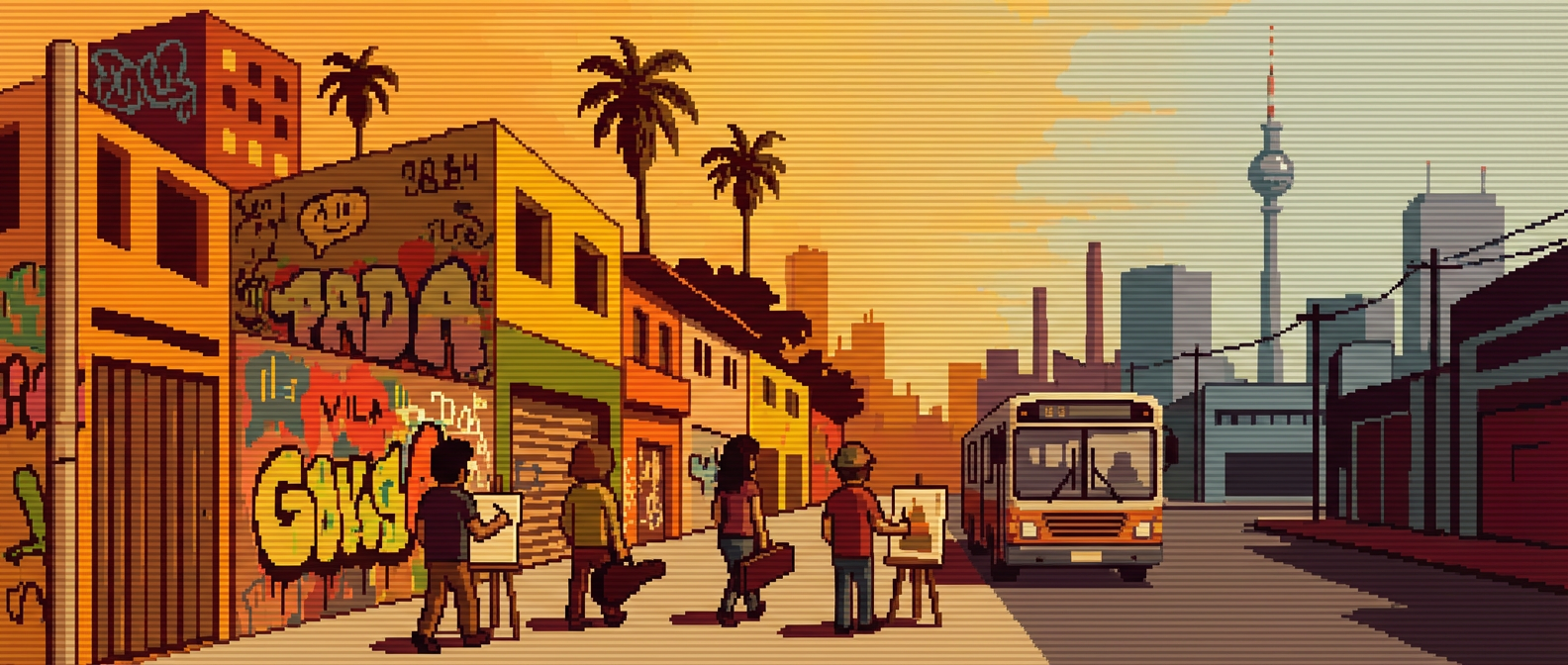
Illustration for The Moment We Peaked: How Vila Madalena Became Berlin Before Becoming Luxury Condos

When the Numbers Started Telling the True Story

Between 2023 and 2025, rental prices in Vila Madalena increased 41 percent according to Brazil’s SECOVI-SP housing index. That’s not gentrification rhetoric. That’s not opinion. That’s the math of displacement written in Brazilian reais. Forty-one percent in two years means that the studio where someone was making work in early 2023 became financially impossible by late 2025. The timeline compressed. The cycle accelerated.

You can trace it through specific losses. The three anchor muralists who made Beco do Batman synonymous with São Paulo’s street art legitimacy all relocated in 2025. Two went to Pinheiros. One to Lapa. They didn’t leave because they wanted new audiences or better weather. They left because the landlords started asking questions about zoning. About what could be charged. About who was moving into the neighborhood above them.

By the end of 2025, at least 14 independent galleries operating in Vila Madalena in 2022 had either shuttered or relocated, according to coverage from ArtNexus Latin American arts coverage. Fourteen spaces. That’s not a trend line. That’s a bloodletting.

The Funding Paradox Nobody Wants to Discuss

Here’s where it gets interesting in a dark way. São Paulo’s municipal government announced a record R$180 million in cultural funding for 2025. Record allocation. Announced by the Secretaria Municipal de Cultura as an achievement worth celebrating. And it was, technically. More money for the arts is objectively better than less money for the arts.

But the money didn’t save Vila Madalena. It couldn’t have. Because funding flows toward institutions, toward registered nonprofits with fiscal accountability, toward the artists who can document their processes and present portfolios to committees. It doesn’t flow to the muralists doing illegal work on walls they don’t own. It doesn’t flow to the collectives operating out of basements without legal business licenses. It doesn’t flow to the exact people who built the cultural ecosystem that made Vila Madalena worth writing about in the first place.

The funding goes to infrastructure. To big art institutions. To the galleries that can survive rent increases because they have wealthy backers. To the artists already insulated enough to accept grants without worrying about immigration status or documentation issues. The record money is real. The cultural investment is real. And somehow it accelerates the very erasure it’s supposed to prevent.

The Moment of Peak Visibility

The 2025 SP-Arte fair felt like the crescendo. Thirty-five thousand visitors. Record attendance for South America’s largest art fair. And something genuinely important happened there alongside the gallery booths and collector networking: the fair platformed explicit conversations about how gentrification erases grassroots visual culture. The irony was almost aesthetic. The institution that draws everyone’s eyes to São Paulo’s art world while simultaneously accelerating the market forces that destroy it.

According to the SP-Arte 2025 fair recap, there were literally panel discussions about this. Artists and curators talking about displacement. About market pressure. About the speed at which neighborhoods get discovered and consumed. It was necessary conversation. But it was also the moment everyone admitted the thing was already dead. The autopsy happened while we were still discussing whether the patient looked sick.

That’s the strangest part about cultural peaks. You don’t recognize them while you’re in them. You only know you were in one by looking backward. By noticing the specific names of people who don’t live there anymore. By checking addresses and finding different businesses. By realizing that the photographs you took were documentation of something that no longer exists.

What Happens to the Moment After It Passes

Vila Madalena will be fine. It’ll be more than fine. It’ll be extremely successful in economic terms. The rents will continue climbing. The galleries will continue opening, but they’ll be showing different work to different people. The tourists will keep coming. The Instagram content will keep flowing. The neighborhood will become more efficient, more comfortable, more completely absorbed into the city’s luxury ecosystem.

But the specific moment that made it worth talking about will be over. The conditions that created it were peculiar and temporary and fragile. A moment when enough artists needed cheap space at the exact same time enough walls became available, when enough international attention turned toward São Paulo and enough people cared about the work enough to build institutions around it. Those conditions don’t repeat. They migrate.

The artists aren’t leaving São Paulo. They’re moving to neighborhoods that are currently affordable. To places where landlords haven’t yet figured out they can charge more. To the next alley that could become the next Beco do Batman before the cycle completes and the moment passes again. It’s exhausting. It’s depressing. It’s also the mechanism by which cities stay culturally alive, even as each individual neighborhood gets gentrified out of recognizability.

If you want to know what’s actually happening in São Paulo’s visual culture right now, stop looking at the articles calling places the new Berlin. Stop looking at the major galleries. Look at where the rents are still chaotic. Where the leases are informal. Where people are making work they can’t easily sell. Where the moment is happening instead of being remembered. What would you find there? What are you missing by looking at the neighborhood that’s already been written up?