
The Venue Died So Indie Cinema Could Live
Remember when going to the movies meant choosing between three multiplexes within a fifteen-minute drive, all playing the same fourteen films? That particular death knell sounded sometime around 2018. What nobody predicted was what would grow from the corpse: a screening culture so fractured, so deliberately small, so aggressively opposed to the algorithm that it’s started feeling like the only genuine counterculture left in American cities.

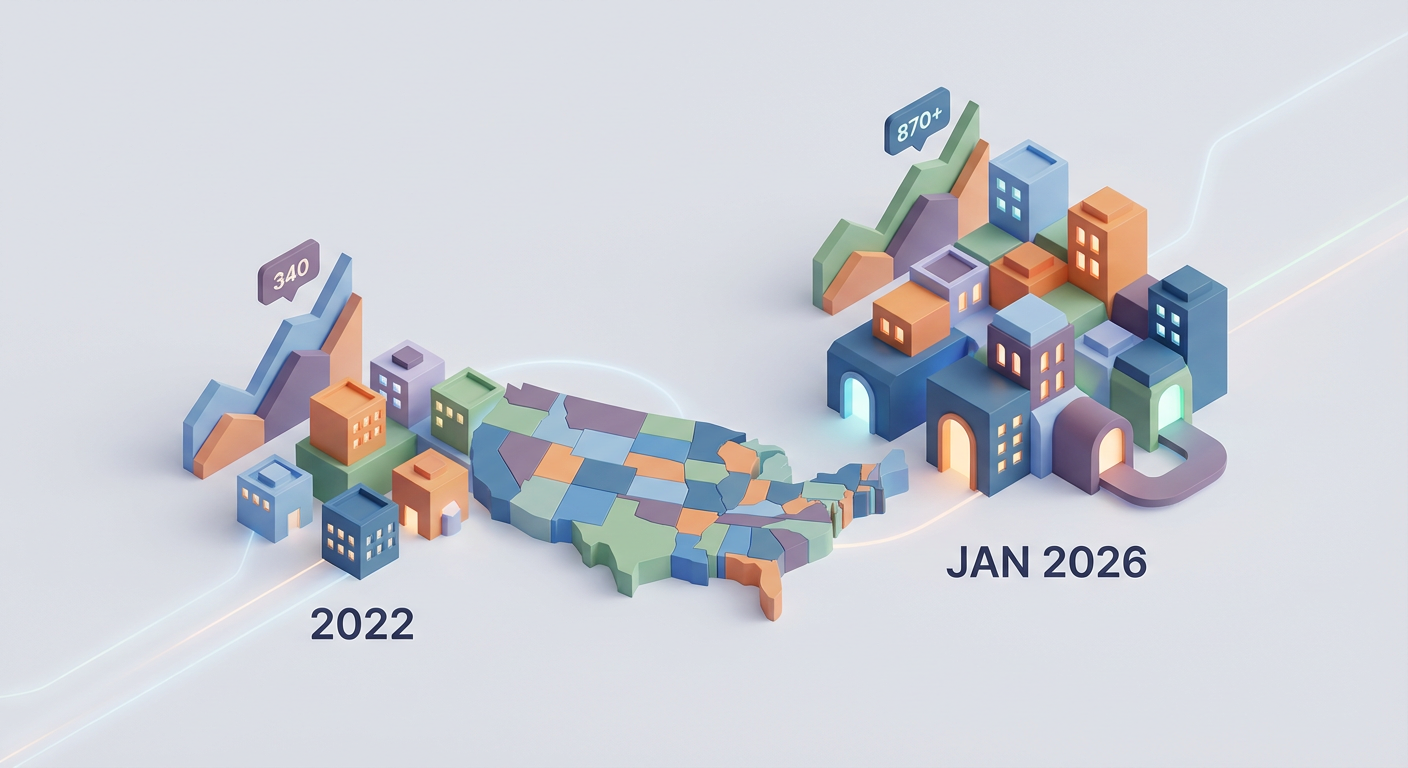
The numbers tell a story that the streaming wars never could. Between 2022 and early 2026, the number of registered micro-cinema venues in the United States more than doubled, jumping from 340 to over 870 according to the Cinema Foundation Independent Venue Census 2026. These aren’t boutique theaters fighting to survive. They’re proliferating. They’re thriving. They’re doing what the traditional film industry swore was impossible: making cinema matter to people again by making it small, local, and deliberately impractical to access.
This isn’t nostalgia. This is structural. When Netflix raised prices again in 2024, when HBO Max fractured into three separate subscription services, when the entire streaming ecosystem revealed itself to be a financial pyramid scheme masquerading as convenience, something shifted in how people thought about cinema. Not as content to be consumed. As an event. As a reason to leave the house. As culture that still requires your physical presence to feel real.
How the Algorithm Lost to the Curated Room
The streaming platforms saw it coming. They had to. Why else would MUBI, the art-film streaming service that spent years insisting its algorithm was superior to human curation, suddenly reverse course and begin aggressively partnering with physical screening spaces? The company reported a 55 percent increase in partnerships with independent venues throughout 2025, funneling content into rooms and theaters that would have seemed like dinosaurs five years ago. The MUBI Go Live Program Details page reads like a surrender. It’s also their most successful initiative to date.
What changed isn’t technology. It’s psychology. Humans spent thousands of years gathering in dark spaces to watch light flicker on a wall. We called it ritual. We called it ceremony. We called it going to the movies. Streaming was supposed to free us from that need. Instead, it revealed that the need was the entire point. The gathering matters more than the content. The room matters more than the algorithm. The person next to you matters more than the recommendation engine.
This is why a ticketed film screening in a 150-person converted warehouse is now growing three times faster than a live music show in the same city. According to a 2025 Eventbrite cultural trends analysis, in cities with populations under 500,000, film screening events grew 78 percent faster than live music events. Let that sink in. Film screenings, which the industry was convinced were dead, are now outpacing the one cultural form that everyone assumed was eternal and unkillable.
The Mickey 17 Moment: When Underground Built the Hype
Bong Joon-ho’s 2025 film “Mickey 17” shouldn’t have needed independent micro-venues. It had a $200 million marketing budget. It had studio backing. It had everything traditional cinema supposedly required. Instead, it got screened at over 200 independent micro-venues before its wide release, and those grassroots screenings generated more pre-release momentum than the entire official marketing campaign, according to Variety’s tracking data. The film didn’t become a cultural moment because it was marketed at you. It became one because someone you trusted invited you to watch it in a room where the room mattered.
This is what the studios couldn’t commodify. They tried. They built prestige. They built scarcity. They built event cinema around tentpole releases, and it worked for exactly as long as people felt obligated to participate in shared culture. Once that obligation dissolved, once streaming made isolation the default, the only way to rebuild cultural commonality was to make the alternative actually good. Not better. Different. Intentional. Curated by humans who actually cared about the films, not by algorithms optimized for watch-time.
The irony is that the biggest film of 2025 succeeded because it trusted the infrastructure the industry abandoned. The underground venues that were supposed to be museums. The screening rooms that were supposed to be hobbies. The distributors who worked with independent theaters out of principle rather than profit. They built the moment that the $200 million marketing budget could only follow.
Cinespia Sold Out, and So Did Everyone Else
Cinespia, the Los Angeles-based collective that pioneered outdoor micro-cinema screenings, sold out all 42 of its events in 2025. Every single one. On StubHub, resale tickets were averaging $85. These are outdoor screenings in a city where you can watch almost any film on demand for $4.99. People were paying seventeen times that markup to sit outside in a specific chair next to specific strangers watching a specific film at a specific time that the algorithm didn’t choose for them.
This is what capitalism tried to kill and accidentally proved was invaluable. The scarcity. The inconvenience. The friction. Every streaming platform spent twenty years optimizing convenience, and what they learned is that convenience is the enemy of meaning. Meaning requires effort. Meaning requires showing up. Meaning requires risking that tonight’s screening might not be for you, might be at a venue you’ve never been to, in a neighborhood that’s three buses away, in a room where the sound might cut out and someone will have to fix it manually.
That risk is the entire thing. That’s what people are paying for. That’s what economy of scale could never replicate and the algorithm could never understand.
The Real Loss and What Comes Next
Here’s the honest part: the growth of micro-cinema doesn’t erase what we lost. The neighborhood multiplex is gone. The cinema as public commons is gone. What we have now is a fractured, boutique, fundamentally unequal system where film culture survives in cities where it’s profitable and disappears everywhere else. Los Angeles has 870 micro-venues. Tulsa has four. The democratization of cinema in 2025 is also the elitification of cinema in 2025, and anyone pretending otherwise is selling something.
What’s happening now is real, though. It’s happening at scale. It’s happening in cities that Netflix forgot and platforms overlooked. It’s the cultural memory of cinema reorganizing itself around the understanding that watching film alone, in a room lit by a screen, is the opposite of why humans made movies in the first place. Movies were always about gathering. We just needed to lose everything else first to remember that.
The micro-cinema boom is one part genuine cultural recovery and one part survival strategy for an industry that realized too late that streaming was a prison, not a revolution. That matters. What comes next matters more. Are you watching? Where are you watching? And who are you watching it with?